XRP Price Prediction AI 2026: ChatGPT, Grok & Gemini Disagree on the Numbers
By Ali Sadikin Ma · · Updated
Category: Technology

XRP price prediction AI 2026 — four AI models, one same question.
“Where is XRP’s price headed in the next 30 days?”
The results: predictions ranged from $1.10 to $14. A spread of over 1,000%. Not because one model got it wrong — all of them had their own coherent logic.
And here’s what’s more surprising than the number gap:
All three major models actually agree on the exact same three catalysts.
Before we get there, there’s important context you need to understand. XRP is sitting at $1.11 as of June 2026 — down 69.6% from its $3.65 peak in July 2025, according to CoinCodex. This drop happened after Ripple won against the SEC, after XRP ETFs launched, after the CLARITY Act passed the Senate committee with a bipartisan vote.
The fundamentals got better. The price went the other way.
That’s the anomaly all four AI models tried to answer. And the answer — plus what none of them can actually predict — is what you need to read all the way through. Because the answer isn’t about the numbers. It’s about what those numbers are actually saying.
30-Day Snapshot: What ChatGPT, Grok, and Gemini Actually Predicted
Before getting into each model’s details, here’s a quick 30-day XRP price prediction AI 2026 summary from each platform, based on Memeburn, 24/7 Wall St., and KuCoin News reports from June 2026:
| AI Model | 30-Day Target | Key Condition |
|---|---|---|
| ChatGPT (OpenAI) | $1.55–$1.80 | Weekly close above $1.15 |
| Grok (xAI) | $1.55–$1.75 | Bitcoin stable, short-squeeze triggered |
| Google Gemini | $1.15–$1.50 consolidation | Q1–Q2 consolidation before rising Q3–Q4 |
| CoinCodex | $1.10 | 88% bearish signals, algorithmic model |
ChatGPT and Grok agree on an almost identical range. Gemini is more conservative for the first 30 days, but the most optimistic for H2 2026. CoinCodex is the most pessimistic of the bunch.
But here’s where it gets interesting:
All three major models point to the same time window as the inflection point. We’ll get there after we understand each model’s logic first.
ChatGPT’s XRP Price Prediction: A Gradual Recovery With Strict Conditions
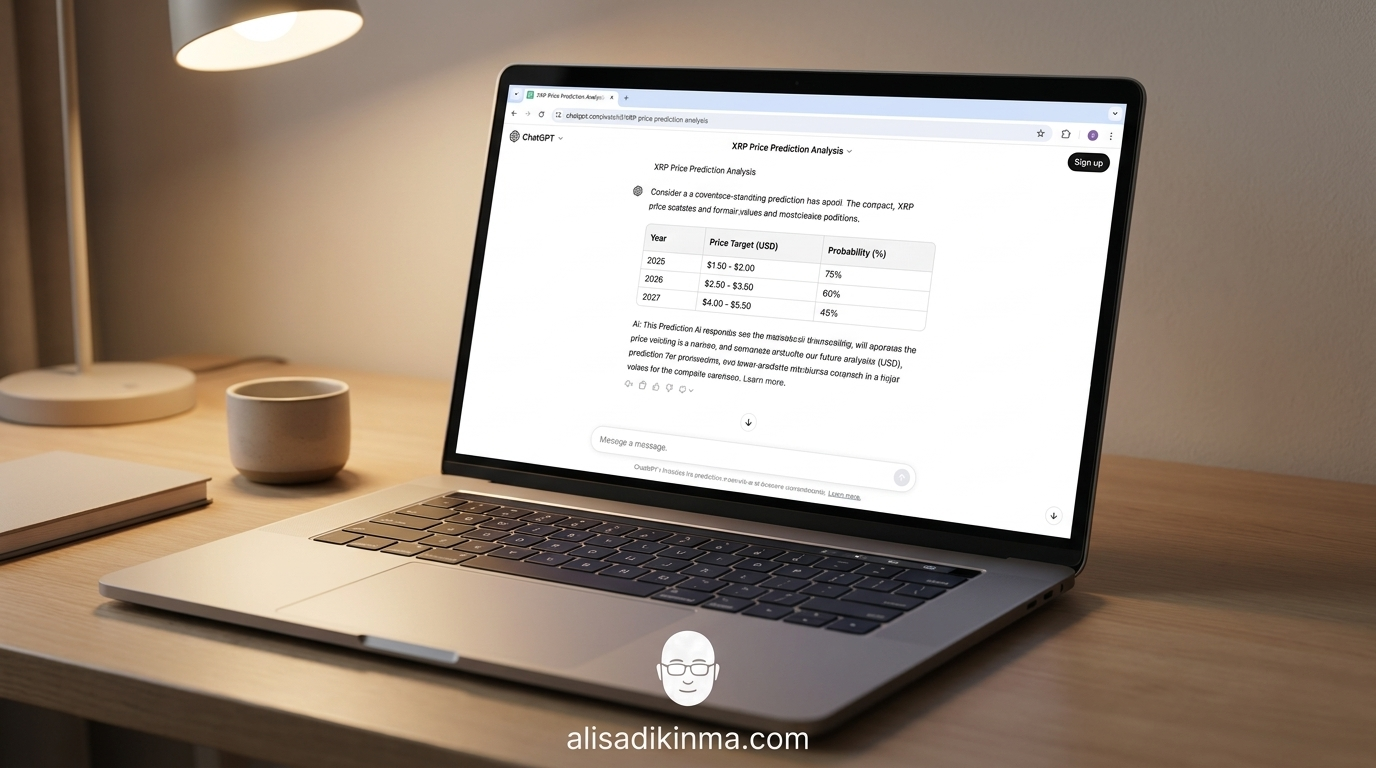
ChatGPT expects XRP to hit $1.55–$1.80 within 30 days from a June 2026 baseline — a 33–55% recovery backed by an RSI of 18.61 (extreme oversold territory) and $131.94 million in XRP ETF product inflows throughout May 2026, with the key condition that price holds a weekly close above $1.15, according to a 24/7 Wall St. report by Sam Daodu, June 2026.
That’s the 30-day summary. But ChatGPT has more detailed scenarios for end of 2026:
- Base case: $2.50–$3.00 — 50% probability
- Bull case: $6+ — 10% probability, needs Bitcoin above $90,000 AND cumulative ETF inflows exceeding $10 billion
- Bear case: $0.95 — 25% probability
That RSI of 18.61 isn’t just a statistic. After a 19% drop in early June 2026, ChatGPT calls this level a “selling exhaustion” signal — a sign that selling pressure has nearly run out of steam.
But ChatGPT also points out something that’s rarely brought up openly:
“The biggest mistake XRP investors make is assuming that regulatory clarity alone guarantees a new all-time high,” ChatGPT said, as quoted by Sam Daodu at 24/7 Wall St., June 2026.
The $6+ bull scenario has strict dual conditions: Bitcoin must be above $90,000 AND ETF inflows must pass $10 billion — both at the same time. Right now, total XRP ETF assets have already surpassed $1.2 billion across 7 active ETF products managing over 840 million XRP tokens, according to Intellectia AI (2026). The gap to the $10 billion threshold is still wide — but that doesn’t mean it’s impossible.
Let’s see if Grok has a bolder thesis — or a more cautious one.
Grok’s XRP Prediction: A Different Short-Squeeze Thesis

Grok expects XRP to reach $1.55–$1.75 within 30 days, with a short-squeeze scenario that could push prices to $1.60–$1.80 once Bitcoin stabilizes and large short positions get caught offside — a thesis backed by data showing XRP held on exchanges dropped 55% since October 2025, signaling institutional accumulation into cold storage at a significant scale, according to 24/7 Wall St.
Grok’s 30-day range is almost identical to ChatGPT’s. But the mechanism is completely different.
Grok focuses on two dynamics ChatGPT doesn’t emphasize:
First: excessive short positions. When too many traders are betting against XRP, one positive BTC move can trigger a short-squeeze — price jumps fast because shorts are forced to close their positions all at once. Grok sees this condition as ripe, not just speculative.
Second: exchange supply dropped 55%. XRP held on exchanges fell 55% since October 2025. Large holders aren’t selling — they’re moving assets to cold storage. This pattern usually precedes a big price move: distribution isn’t happening on the surface, but quiet accumulation is already underway.
For year-end, Grok predicts:
- Base case: $2.00–$3.50 — 50% probability
- Bull case: $5.00–$8.00 — 20% probability
- Bear case: $0.80–$1.10 — 30% probability
Grok’s bear case is lower than ChatGPT’s — $0.80 vs $0.95. And at 30% probability, that’s not a small number. Grok is more willing to acknowledge downside risk than the other two models.
Does the exchange supply data actually support Grok’s short-squeeze thesis? We’ll answer that in the convergence section. But first, Gemini has a completely different angle.
Gemini’s XRP Forecast: Betting on Fed Rate Cuts and the Q3 Window
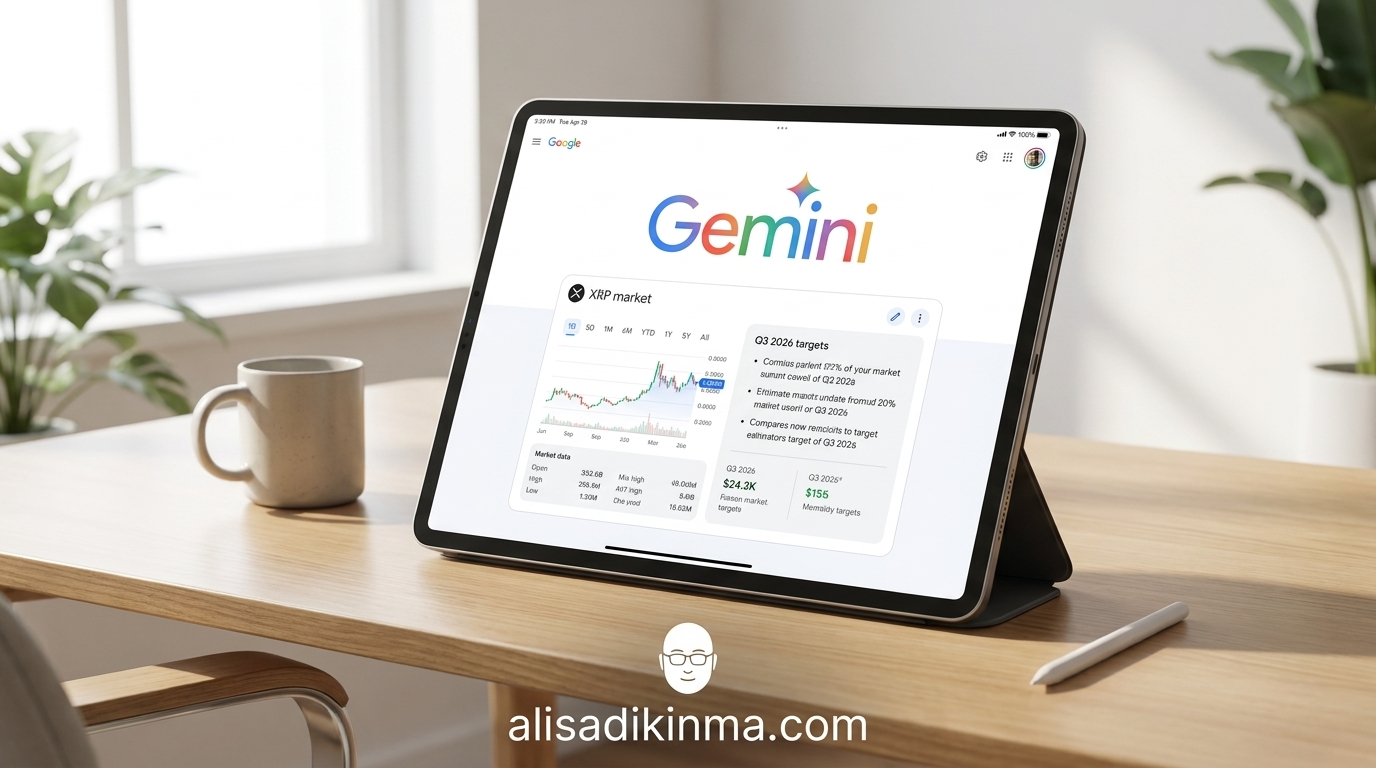
Google Gemini projects XRP will consolidate at $1.15–$1.50 throughout Q1–Q2 2026 before rising to $2.80–$3.50 in Q3–Q4, with a year-end target of $3.15 — making Gemini the most optimistic model for H2 2026, based on two catalysts the other models rarely mention: Federal Reserve rate cuts in mid-2026 and the real-world impact of the CLARITY Act on global institutional capital flows, according to KuCoin News, February 2026.
Gemini is the most conservative for the first 30 days. But for H2 2026, its target is higher than both ChatGPT and Grok.
Why?
Gemini factors in a macro dimension the other two models miss. “If the Federal Reserve cuts rates in mid-2026, fresh liquidity could flow into risk assets like XRP,” Gemini said, as quoted by KuCoin News.
Rate cuts mean a cheaper dollar. Investors go looking for yield elsewhere. Crypto becomes one of the destinations — and XRP, with a regulatory narrative that’s far cleaner post-SEC settlement, becomes the top candidate for that capital flow.
And here’s where all the threads start to come together:
Gemini, ChatGPT, and Grok — with their different 30-day numbers — all point to Q3 2026 as the inflection window. Three models, three mechanisms, one time period. And in the next section, we break down exactly what’s making them all point there.
Where All Three Agree: 3 Catalysts That Could Move XRP in Q3 2026
Regardless of their different 30-day numbers, ChatGPT, Grok, and Gemini all identify the same three catalysts as the deciding factors for XRP’s direction in Q3 2026: the CLARITY Act becoming federal law, ETF inflow growth from $1.41 billion cumulative toward the $10 billion threshold, and Trump’s executive order directing the Federal Reserve to review Ripple’s payment infrastructure access within 90 days — three factors that, if they all land at once, could open the largest institutional liquidity window in XRP’s history, according to 24/7 Wall St.
This isn’t a coincidence. It’s convergence — three models working from the same data.
Catalyst 1: CLARITY Act. On May 14, 2026, the CLARITY Act passed the Senate Banking Committee with a bipartisan 15-9 vote. That day, XRP rose 4.5% to $1.49 and posted a 7.6% weekly gain, according to CoinDesk. If signed into law, this bill would permanently classify XRP as a digital commodity under the CFTC — not a security under the SEC. The White House is targeting a signing on July 4, 2026. Standard Chartered projects $4–$8 billion in additional institutional capital flows the moment XRP’s legal status is finalized.
Catalyst 2: XRP ETF Momentum. Cumulative XRP ETF inflows reached $1.41 billion by May 10, 2026, with $131.94 million coming in throughout May 2026 alone, according to 24/7 Wall St. All three models cite this cumulative figure as the strongest institutional signal available right now. Standard Chartered targets $8 for XRP if total inflows hit $10 billion and the CLARITY Act is signed — a target that finance expert Austin Hilton says is actually still too conservative, with his own projection at $4–$7.
Catalyst 3: Trump’s Executive Order. On May 19, 2026, Trump signed an executive order directing the Federal Reserve to review Ripple’s payment infrastructure access within 90 days — a catalyst that 24/7 Wall St. says is “not yet priced in by most XRP investors.” If the outcome is positive, this opens Ripple’s access to the U.S. financial system at a far deeper level than before.
The first loop’s answered: what do all three models actually agree on in this XRP price prediction AI 2026 comparison? Not the numbers. The catalysts and the time window.
Now for the harder — and more honest — question.
What AI Predictions Still Can’t Tell You — and 3 More Useful Signals

Behind all those numbers that look so precise, there’s a structural limitation in every XRP price prediction AI 2026 that’s rarely acknowledged openly: Monte Carlo simulations from various models place a 60% probability of XRP landing between $1.04–$3.40 by end of 2026, with only a 10% chance of scenarios placing price above $5.90 — and the best machine learning models ever tested only hit 64–66% directional accuracy for crypto price predictions, according to Qureshi et al. in PeerJ Computer Science (2025).
That means: one out of every three directional predictions from the best models out there is wrong.
On top of that, AI crypto forecasting researchers in 2026 documented that AI models tend to “anchor” to dominant market narratives — clustering predictions around consensus rather than capturing extreme tail scenarios. That’s why ChatGPT, Grok, and Gemini have similar ranges for the base case, but can diverge sharply on the bull case.
Here are three concrete signals that are more useful than the prediction numbers themselves:
Signal 1: The $1.15 level as the first gate. ChatGPT and Grok both cite a weekly close above $1.15 as the first condition for recovery. XRP is currently at $1.11, with the 50-day SMA at $1.34 and the 200-day SMA at $1.60 — two resistance levels that need to be broken before the recovery thesis can be proven, according to CoinCodex (2026). The current technical structure is still bearish.
Signal 2: The supply wall at $1.45. Some 36.8 billion XRP — 60% of circulating supply — has a cost basis at $1.45, according to 24/7 Wall St. That’s a massive seller wall. When price approaches that level, watch the volume: are buyers absorbing the pressure or is price getting rejected again? That difference determines whether Grok’s short-squeeze thesis is valid.
Signal 3: CLARITY Act timeline. The White House is targeting a signing on July 4, 2026. If it’s delayed or revised, all three models explicitly lower their bull case probabilities. This is the only catalyst with a concrete date — and that date is close.
And here’s the honest answer to the second loop — is this 69% drop a buy signal or a trap?
Both outcomes are inside the calculated probability range. 60% of scenarios place XRP at $1.04–$3.40 by year-end. The rest could be far higher, or lower. The AI models show that uncertainty — they don’t hide it.
The XRP price prediction AI 2026 spread from $1.10 to $14 isn’t a failure to find the right number. The wide range is the signal: this is an asset with massive structural uncertainty, and anyone who claims to know the number with confidence is someone you should question.
Save this article. Come back after the CLARITY Act gets a floor vote in the Senate. Then check for yourself which model’s logic came closest to reality — and which one you should reconsider weighting.
FAQ: XRP Price Prediction AI 2026 — Most Frequently Asked Questions
Can you trust the XRP price prediction AI 2026 from ChatGPT, Grok, and Gemini?
AI models for crypto price prediction max out at 64–66% directional accuracy, according to Qureshi et al. (PeerJ Computer Science, 2025). Their predictions are useful as a probabilistic scenario framework — not direct buy or sell signals. Use them as a map of possibilities, not absolute certainty.
When could XRP hit $3 or above?
ChatGPT, Grok, and Gemini all point to Q3 2026 as the most likely window — with the condition that the CLARITY Act is signed and XRP ETF inflows keep growing. ChatGPT puts $2.50–$3.00 as the year-end base case with 50% probability. Without the regulatory catalyst, this scenario could push back to 2027.
What makes Grok’s XRP prediction different from ChatGPT’s?
Their 30-day ranges are almost identical ($1.55–$1.80 vs $1.55–$1.75), but the mechanisms are different. ChatGPT focuses on the oversold RSI at 18.61 and $131.94 million in ETF inflows in May 2026. Grok focuses on short-squeeze dynamics and exchange supply data that dropped 55% since October 2025. For year-end, Grok gives a lower bear case ($0.80 vs ChatGPT’s $0.95).
Next Steps
Three XRP price prediction AI 2026 models. Three different mechanisms. One same time window.
The numbers differ — but the catalysts are the same. And that’s more useful than any number they produced.
Subscribe for weekly AI crypto analysis — get the next AI model comparison as soon as it’s published.
Or: save this article and come back after the CLARITY Act gets a floor vote in the Senate. Then see for yourself which model’s logic proved right — and which one you need to reconsider weighting.