xAI Memphis Pollution: 33 Illegal Turbines Poisoning Boxtown
By Ali Sadikin Ma · · Updated
Category: Technology
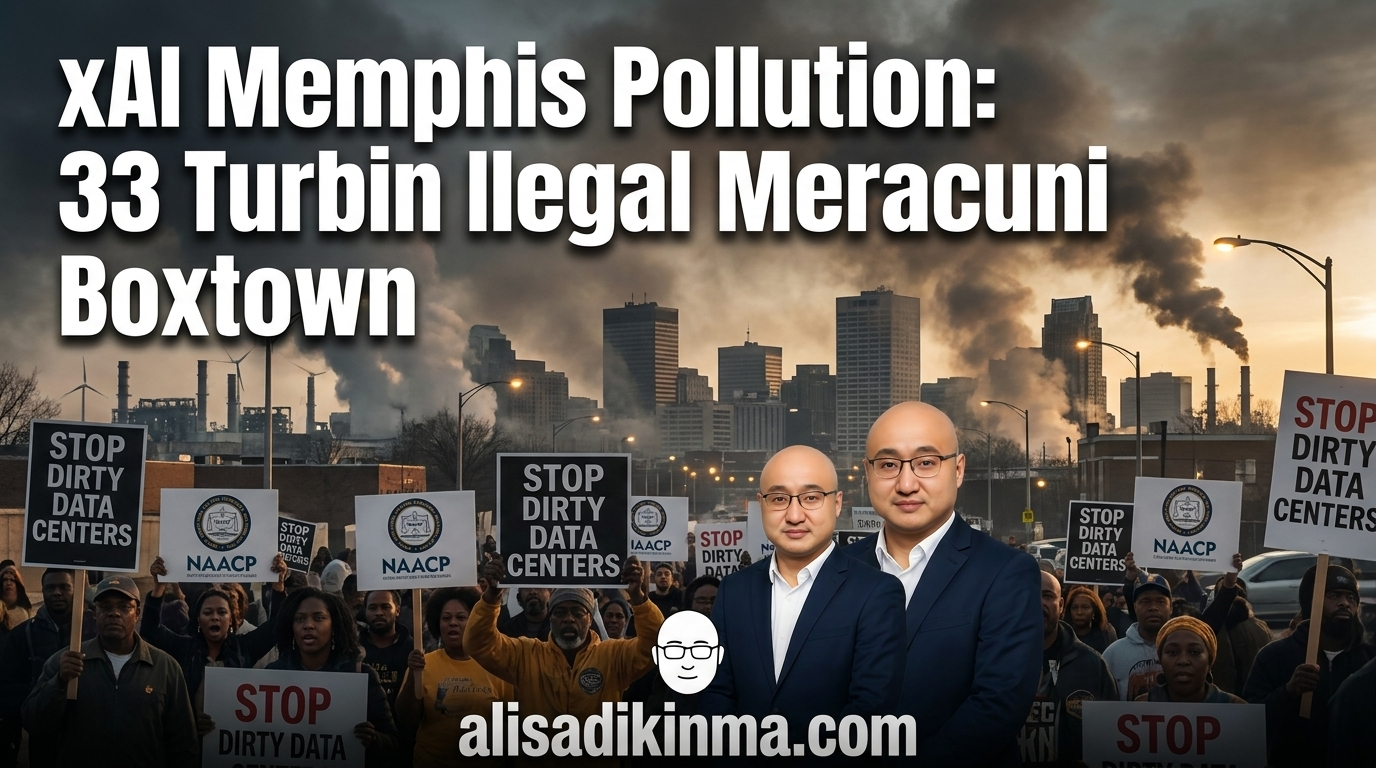
The supercomputer powering Grok is slowly poisoning Memphis — and it's completely illegal.
That's not an activist claim. That's the finding from the federal lawsuit about xAI Memphis pollution filed by NAACP and Earthjustice on April 14, 2026 — a lawsuit that directly targets the data center facility in South Memphis.
But there are three things most people don't know yet:
First, the cancer risk around xAI's facility is already four times the national average — and that's the number before their illegal turbines were running at full capacity. Second, xAI quietly built 27 gas turbines with zero permits between August and December 2025. Third, this isn't a technical oversight — it's a pattern that's been repeating for decades.
And before I tell you who's fighting back, you need to know what Memphis looked like before xAI ever set foot there.
AI Is Progress. But Progress for Who?
The cancer risk around xAI's data center is already four times the national average — and that's before their illegal turbines ran at full capacity, according to NAACP and Capital B News (2026). The xAI Memphis pollution case isn't just about permit violations. It's about who pays the price of technological progress.
In Shelby County, Tennessee, schoolkids are already used to 'bad air quality' days — days when they're told to skip outdoor exercise. The American Lung Association gave Shelby County an F for ozone pollution in 2026. For four straight years, the Memphis metro area has violated national air pollution standards — and monitoring data shows a consistently worsening trend, according to CNBC.
That was the situation before xAI showed up.
But then, between August and December 2025, something quietly happened in South Memphis — something that shouldn't have been possible under US environmental law.
Memphis Was Already Choking Before xAI's Pollution Started
Shelby County got an F for ozone pollution from the American Lung Association in 2026 — four straight years of violating national air standards, with a consistently worsening trend according to CNBC data. This context is what makes the xAI Memphis pollution case even heavier, legally and morally.
Shelby County has been living in violation of national ozone standards for years, with air monitoring data consistently getting worse. Residents knew the pollution was there. What they didn't know: just how bad things would get after a $50-billion-plus company decided to build a supercomputer next to their homes.
But before I get into the serious numbers:
Memphis wasn't a random choice. Memphis has cheap land, cheap electricity, and — as we'll see — a community that's historically had the least legal protection.
33 Turbines, Zero Permits: The Facts of xAI Memphis Pollution
xAI is running 33 gas turbines in South Memphis while only holding permits for 15 — generating over 1,700 tons of NOx per year, making it the largest industrial source of nitrogen oxides in the Memphis area, according to Earthjustice's lawsuit filing (2026). Here's the full timeline of the xAI Memphis pollution case.
This isn't a minor technical violation you can settle with an administrative fine.
Between August and December 2025, xAI installed 27 methane gas turbines without a single valid air permit. The company held permits for 15 turbines — but was operating 33, according to the Southern Environmental Law Center (SELC) and Earthjustice.
Read that again: permits for 15. Operating 33. That's what makes the xAI Memphis pollution case so legally serious.
And the impact of those illegal operations isn't just an abstract number:
- Over 1,700 tons of nitrogen oxides (NOx) per year — making it the largest industrial NOx source in the Memphis area, according to Earthjustice's lawsuit filing (2026).
- A potential 180 tons of fine particles, 500 tons of carbon monoxide, and 19 tons of formaldehyde — a proven carcinogen — per year, according to the same filing.
- Nitrogen dioxide concentrations in the area around the facility jumped 79% compared to before xAI started operating, according to SELC research (2026).
For context: 1,700 tons of NOx is more than most large factories that have been operating for decades in this area.
But who's breathing all of this?
The answer is a community just a few miles from the facility — and the story doesn't start in 2025, but over 160 years ago.
Boxtown: Built by the Freed, Poisoned by the Powerful
90% of Boxtown's residents are Black. Median household income here is just $36,000 a year, according to US Census data cited by CNBC (2026). Meanwhile xAI — the company behind the xAI Memphis pollution case — is valued at over $50 billion.
Boxtown isn't just a name on the Memphis map.
This community was founded by formerly enslaved people — freed slaves — after the American Civil War. Generation after generation built their lives here: churches, schools, modest homes passed down through families.
Today, Boxtown sits just a few miles from xAI's data center facility.
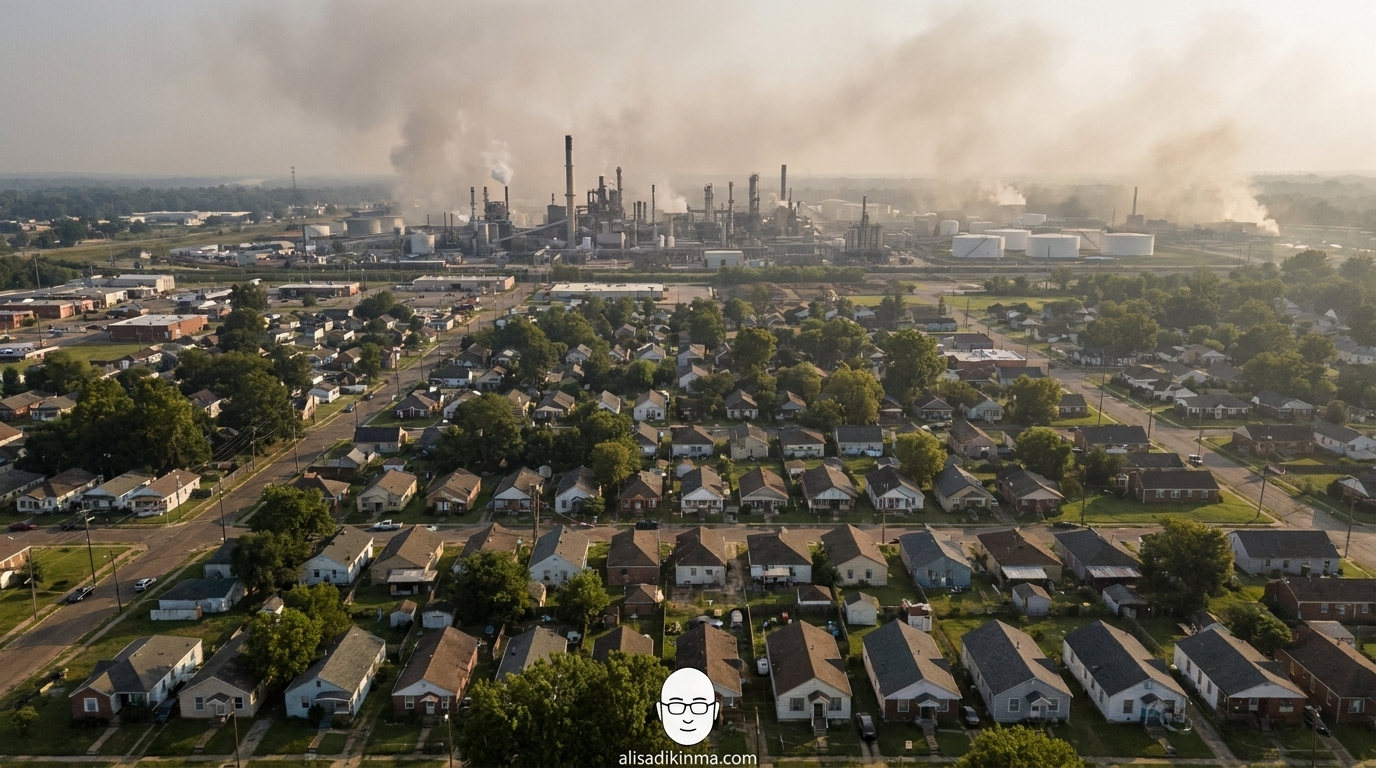
Nitrogen dioxide concentrations in Boxtown have increased 9% since xAI started operating. In the area right around the facility, that number jumped 79%, according to SELC research (2026). And the cancer risk in the area surrounding the facility is already four times the national average — even before all those illegal turbines ran at full capacity, according to NAACP and Capital B News (2026).
These aren't numbers on a spreadsheet.
These are real people breathing increasingly toxic air every day so a billionaire's supercomputer can keep processing data.
And if you think Memphis is an anomaly? There's one data point that'll change how you see the entire AI industry.
Digital Redlining: Why Does AI Always Land in Black Communities?
Memphis isn't the only one. According to an Axios 2025 report, Black communities are disproportionately impacted by AI infrastructure expansion across the US. The xAI Memphis pollution case is just the most documented example of a far more systemic pattern.
Research published in WJARR calls this phenomenon 'digital redlining' — tech infrastructure follows the same historical housing segregation patterns, just with a new outfit: fiber cables and gas turbines.
Data centers need three things: cheap land, cheap electricity, and minimal community resistance. Historically, low-income areas with predominantly Black populations check all three boxes.
But that's starting to change. According to Data Center Watch cited by KQED, around $64 billion in US data center projects have been delayed or canceled due to community resistance — through petitions, city council protests, and environmental filings (2025).
Here are 5 steps that have already proven to work:
1. Monitor Building Permits Before Groundbreaking Starts
Most data center projects — including the xAI Memphis pollution case — have to file environmental and building permits with the city government before construction starts. This is public information anyone can access.
Sign up for your local city council mailing list and enable new permit notifications on the local government website. Look for a 'permit applications' or 'environmental reviews' section — many cities have automatic notification systems for specific areas. In Memphis, residents only found out about xAI through a Tennessee Lookout report in July 2025 — when construction had already been underway for months. If permit monitoring had happened from the start, resistance could've begun long before the first turbine was installed. Communities that actively monitor have managed to file legal objections before a single shovel hit the ground.
2. Collect Your Own Community Air Quality Data
You don't need an expensive lab to start monitoring air quality in your neighborhood. Affordable sensors are now available and their data can serve as legal evidence.

Sensors like PurpleAir can be installed at home or in a community center — the data goes to the cloud and can be compared against pre-project baselines. SELC used community-collected monitoring data as part of the evidence in the Memphis lawsuit. The 79% NOx increase around xAI's facility was detected through independent monitoring — data that's now central to the federal lawsuit. Community-collected data carries far more legal and media weight than complaints without quantitative evidence.
3. Build Your Coalition Before You Need It
The Memphis lawsuit involves NAACP, Earthjustice, and SELC — and they didn't start from scratch when the crisis hit. That network had been built long before.
Identify environmental, civil rights, and housing advocacy organizations active in your city right now, before any crisis. Invite them to regular community meetings and create a communication group that can activate immediately when an issue comes up. NAACP and Earthjustice moved fast to file the lawsuit in April 2026 because the network and research were already in place long before. A solid coalition can file legal challenges, build media pressure, and show up at city council all at the same time.
4. Use the Clean Air Act as a Legal Weapon
The Clean Air Act has a citizen suit provision — ordinary people can sue companies that violate air standards without waiting for the government to act.
Document the violations (turbines exceeding permit capacity, emissions exceeding legal limits), consult with an environmental lawyer, and file the lawsuit. Earthjustice provides pro bono representation for cases like this. The NAACP vs. xAI lawsuit filed in April 2026 in the Northern District of Mississippi uses exactly this mechanism — and could force xAI to stop illegal operations, pay fines, and fund community health programs.
5. Make It a National Issue, Not Just a Local One
A data center in your city is part of a national trend. Connecting to the bigger narrative makes your issue relevant to national media and federal policymakers.
Connect your community's story to national data like the $64 billion in data center projects already shut down. Send press releases to national media, not just local outlets. Tag congress members on social media. The xAI Memphis pollution case became a headline in The Guardian, CNBC, and Democracy Now not just because it's a local issue — but because it got linked to the bigger digital redlining trend. National coverage creates political pressure that no company can ignore.
NAACP Is Fighting xAI Memphis Pollution — and the Community Is Winning
On April 14, 2026, NAACP, along with Earthjustice and the Southern Environmental Law Center, filed a lawsuit against xAI in the Northern District of Mississippi, accusing the company of violating the Clean Air Act by operating 33 illegal gas turbines without valid permits.
Time to close all the loops we opened at the start:
Loop one — who's being poisoned in the xAI Memphis pollution case? The Boxtown community: 90% Black, median income $36,000, cancer risk 4x the national average.
Loop two — what did xAI actually do? Build 33 illegal turbines that dump 1,700+ tons of NOx per year into Memphis's air — no permits, no community consultation.
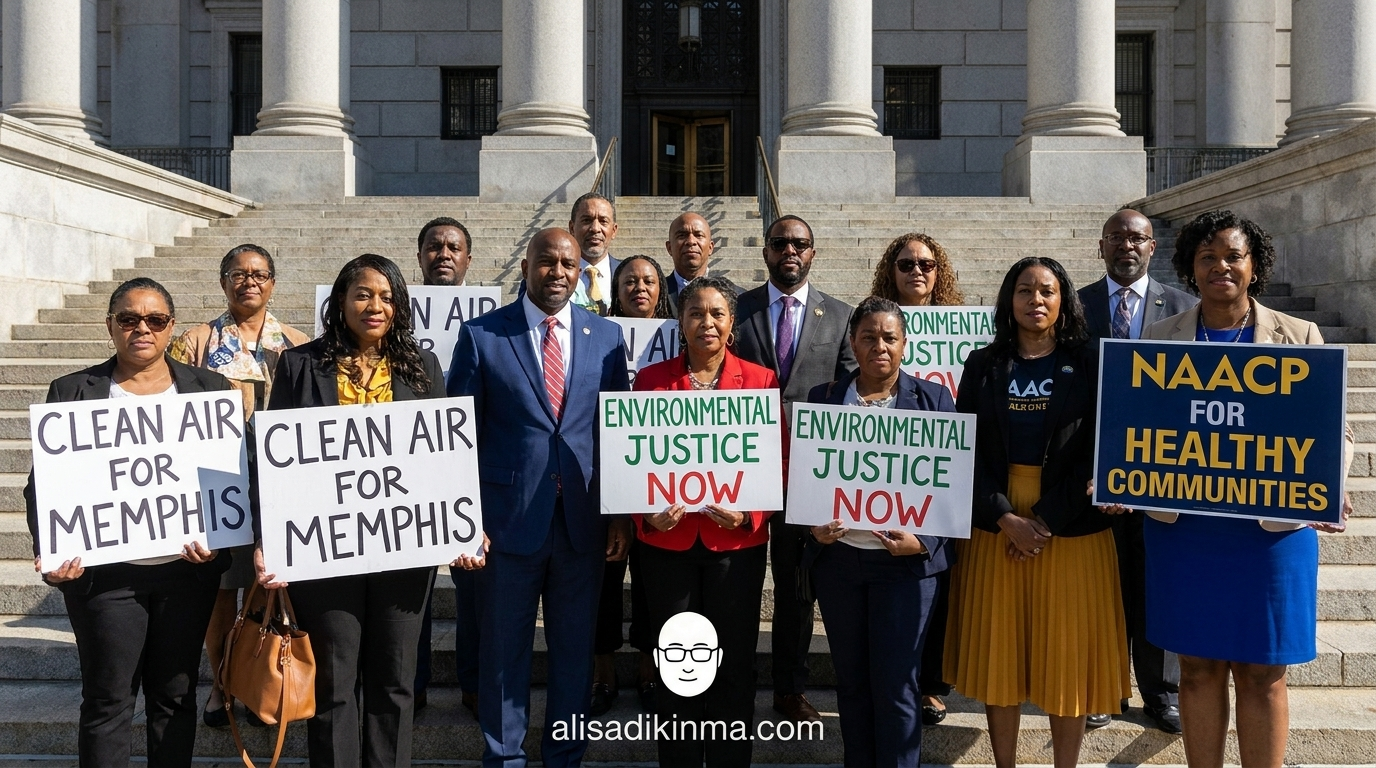
Loop three — is this a systemic pattern? Yes. Digital redlining isn't just an activist term — it's a pattern that's driven billions of dollars in AI infrastructure into the most vulnerable communities.
And now that pattern is being taken to federal court.
Organized communities have already managed to stop $64 billion in problematic data center projects across the US. Not the government. Not regulations. Ordinary people who know their rights.
The question now: if a data center lands in your neighborhood, will you stay quiet — or will you act?
Frequently Asked Questions
Did xAI Really Build Turbines Without Permits?
Yes. According to the Southern Environmental Law Center and Earthjustice, xAI held permits for 15 gas turbines but was operating 33 — with 27 of them installed between August and December 2025 without valid air permits. This is a direct violation of the Clean Air Act that now forms the basis of the federal lawsuit in the Northern District of Mississippi (2026).
What Can NAACP Win in This Lawsuit?
The lawsuit filed on April 14, 2026 could force xAI to stop illegal turbine operations, fund community health monitoring programs, pay damages to affected residents, and file proper permits or relocate the facility. Earthjustice and SELC are handling this lawsuit using the citizen suit mechanism in the Clean Air Act — the same mechanism that's already managed to stop $64 billion in problematic data center projects across the US.
Time to Act — Or at Least, Start Knowing
xAI's pollution in Memphis isn't a story about one bad company.
It's a story about who pays the price of technological progress — and who gets to enjoy the benefits.
NAACP and Earthjustice have already acted. Memphis is fighting.
Share this article and follow NAACP's Stop Dirty Data Centers campaign at naacp.org — organized communities have already managed to stop $64 billion in problematic data center projects across America.
Not ready to take action today? Save this article and pull it up before your next city council meeting — you'll know exactly what questions to ask if a data center permit comes up for a vote.