SpaceX Anthropic Deal 2026: 220,000 New GPUs for Claude
By Ali Sadikin Ma · · Updated
Category: Technology

Elon Musk just handed the world's most powerful computer to his own rival.
220,000 Nvidia GPUs. 300 megawatts of power capacity. All for Claude — that's the heart of the SpaceX Anthropic deal announced in May 2026.
Claude is an AI made by Anthropic — a company founded by former OpenAI executives, the same company Musk is currently suing. And SpaceX just signed an agreement to hand over the entire capacity of Colossus 1, their data center in Memphis, Tennessee, to Anthropic starting May 2026.
This isn't a typo. It's not satire either.
But before you rush to call this a betrayal or madness — there's one part of this story that almost every media outlet skipped right over.
Why would Musk do this when Anthropic competes directly with his own xAI and Grok? What's changing right now for you as a Claude user? And is there a much bigger infrastructure being built behind this deal — one that reaches all the way into space?
The answers to those three questions will completely flip how you think about the AI war.
The Head-Spinning Drama Behind This Deal
Let's set the scene first:
Musk co-founded OpenAI in 2015 alongside Sam Altman. A few years later he left over a difference in vision. Then in 2021, Dario Amodei and a senior OpenAI team — including his sister Daniela — left to found Anthropic. In 2026, Musk is still actively suing OpenAI, accusing the company of drifting from its nonprofit mission.
Now, SpaceX just handed access to 220,000 GPUs to Anthropic — the "ideological offspring" of the company Musk is currently suing.
Sounds like a Silicon Valley thriller.
But there are two data points that completely change the picture.
First: Bloomberg reports Anthropic already has a valuation above $900 billion, with a revenue run rate that's crossed $30 billion ARR as of Q1 2026. This is a company that grew 80x in a single quarter — not some startup you can afford to ignore.
Second: xAI, Musk's own AI company, also announced a compute partnership with Anthropic on the same day (xAI Official, May 2026). This isn't an ideological deal. It's a business deal.
And the best businesses know how to separate product competition from infrastructure monetization.
But the real reason Musk said yes? It's simpler — and bigger — than you'd think.
SpaceX Anthropic Deal: 220,000 GPUs, 300 Megawatts, and What Changes for Claude Users
Colossus 1 is SpaceX's data center in Memphis, Tennessee. Before this deal, its capacity was spread across various clients. After this deal: Anthropic takes all of it.
The numbers are concrete:
- 220,000 Nvidia GPU units — a mix of H100, H200, and GB200
- 300 megawatts total capacity
- Fully active within one month of the May 2026 announcement
For you as a day-to-day Claude user, this change is immediate and real.
Based on Anthropic's official announcement confirmed by Engadget, Claude Code now has double the rate limits across all plans — Pro, Max, Team, and Enterprise. If you used to hit restrictions during peak hours, Pro and Max no longer have capacity reductions at busy times.
Rate limits are one of the biggest frustrations for developers working with Claude Code — especially on large projects that need fast iteration. The deal with SpaceX, which adds 300MW of new compute, directly translates to more tokens available, fewer interruptions, and a much smoother workflow.
But that's just the change for today. What's more interesting is why SpaceX agreed to this deal in the first place.
Why Musk Said Yes: The Business Logic Behind the Confusing Deal

Real talk:
SpaceX isn't an AI company. SpaceX is an infrastructure company. And infrastructure doesn't care who rents it — as long as the payments come through.
Colossus 1 had capacity that wasn't fully utilized before this deal. Anthropic — with a $30 billion revenue run rate and 80x growth in a single quarter (Cryptopolitan, Bloomberg, 2026) — is the highest-paying tenant SpaceX could find in today's market.
This isn't an ideological deal. It's data center real estate.
And there's more:
SpaceX is in the process of heading toward an IPO scheduled around June 2026, according to CoinDesk. One of the strongest narratives for that IPO is positioning SpaceX as an AI infrastructure play — not just a rocket company. The deal with Anthropic, which is in talks to raise $50 billion at a valuation above $900 billion, is a signal far louder than any press release.
And xAI? xAI still has its own models, its own vision, and the direct competition with Claude still runs at the product level. Infrastructure is a different layer.
There's no contradiction here. There's a very rational separation between infrastructure business and product competition.
But this is just one piece of a much bigger map.
Not Just SpaceX: Anthropic Is Building Hundreds of Billions in Infrastructure
The SpaceX Anthropic deal is big. But at the scale Anthropic is building, this is just one piece of the puzzle.
Look at the total infrastructure commitments Anthropic has announced throughout 2026, according to official company announcements:
- Amazon: Deal up to 5 gigawatts, with nearly 1 GW active before end of 2026
- Google and Broadcom: An additional 5 GW deal, starting 2027
- Microsoft and NVIDIA via Azure: Worth $30 billion
- Fluidstack: Infrastructure investment worth $50 billion
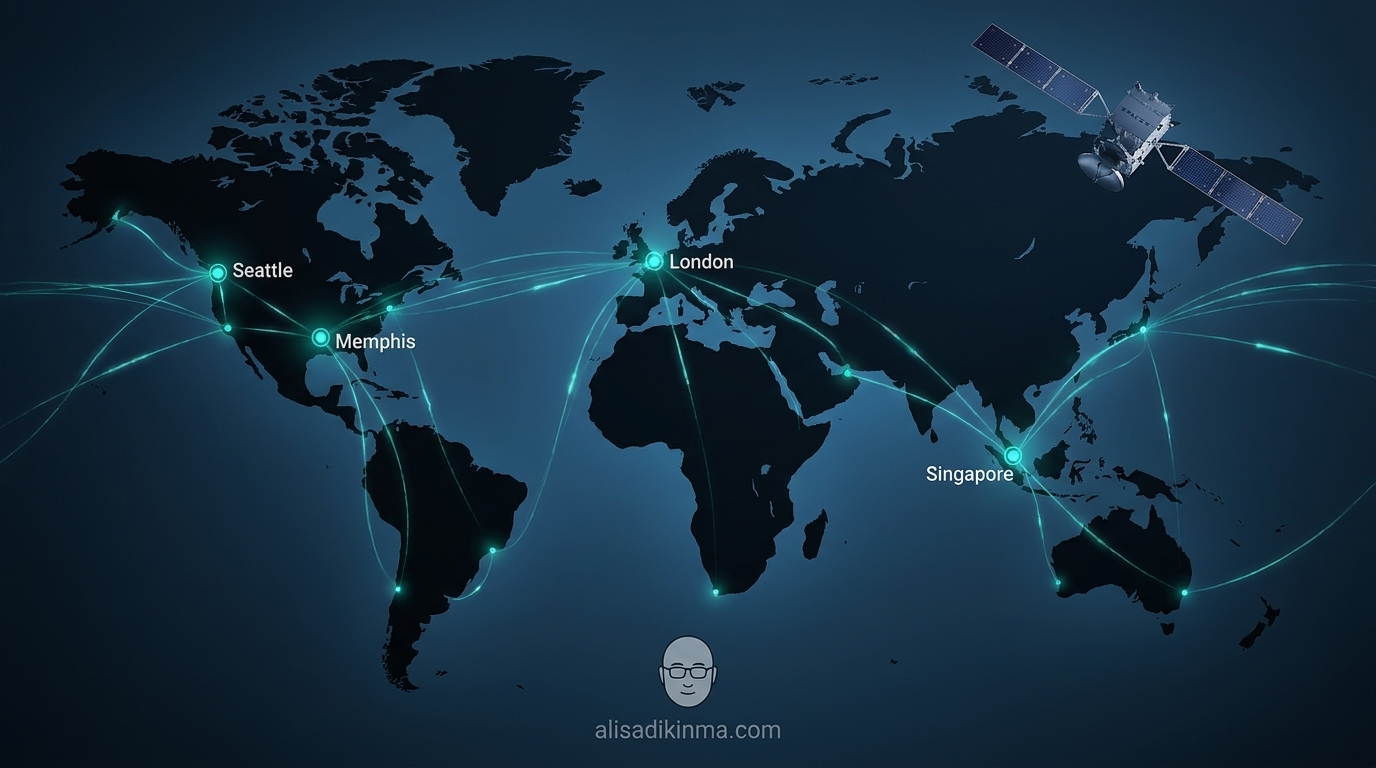
Thousands of megawatts from multiple sources. Data centers spread from Memphis to Seattle, London, and Singapore.
SpaceX's Colossus 1 with its 300MW is the short-term sprint — to handle the demand surge that's already happening now. Amazon, Google, and Microsoft are the long game.
This isn't about Claude vs GPT-4 anymore. It's about who can keep the servers running when demand spikes 80x in a single quarter.
And that's just the part happening on Earth.
The Part Nobody's Talking About: AI in Orbit
Buried inside the SpaceX-Anthropic agreement is a clause that almost every outlet walked right past.
CNBC reports that the two companies are exploring the development of orbit-based computing capacity — with targets that could reach several gigawatts.
Orbital AI compute. This isn't a metaphor.
SpaceX already has launch infrastructure, the Starlink satellite network in low Earth orbit, and big ambitions around computing that doesn't depend on ground power grids. For Anthropic, orbital computing means sovereign capacity: no power outages, no undersea cable bandwidth bottlenecks, no single country's data residency regulations to deal with.
This is also the most ambitious part of SpaceX's IPO narrative: not just getting rockets to Mars, but becoming a cloud provider in space.
The AI war is usually framed as a model competition — who's smarter, faster, cheaper. But since 2026, the battlefield has shifted.
Whoever controls the watts — that's who wins.
What It Means for You Right Now: Claude Is Faster, Starting Today

All those numbers above — gigawatts, hundreds of billions of dollars, orbits — might sound far from your daily life.
But here's what it means for you, opening Claude today:
Claude Code rate limits have already doubled, starting now. If you're on Pro or Max, the restrictions during peak hours are gone. If you're on Team or Enterprise, sessions are longer and interruptions are way less frequent.
This is the direct result of the SpaceX Anthropic deal — and Colossus 1 now running at full capacity.
The AI competition used to be about who had the most advanced model. Now it's about who has enough power to run it when demand explodes. The SpaceX-Anthropic deal is the first proof of that shift — and you're already on the winning side.
Frequently Asked Questions About This Deal
Does this mean Elon Musk is investing in Anthropic?
No. The SpaceX Anthropic deal is a compute rental agreement, not an equity investment. SpaceX is leasing Colossus 1's capacity to Anthropic for commercial payment — no shares change hands, no board seats are given to either party.
When do the new Claude rate limits take effect?
For Pro and Max: already active as of Anthropic's official announcement in May 2026. Full 300 megawatt capacity from Colossus 1 is scheduled to go live within one month of the deal's official announcement.
Does this deal conflict with xAI and Grok?
No. xAI actually announced a separate compute partnership with Anthropic on the same day (xAI Official, May 2026) — proving that infrastructure and AI product competition operate at fundamentally different layers.
Check your Claude plan now at claude.ai — your rate limits may have already changed.
Save this article before your next team meeting — it'll reframe how you think about which AI tools will still be available when demand spikes.