OpenAI Trial Musk Altman AI Safety: The Unanswered Crisis
By Ali Sadikin Ma · · Updated
Category: Technology
Musk says AI could kill us all. The judge says that's not relevant.
Those two sentences sum up the most dramatic week of the OpenAI trial Musk Altman AI safety saga — a legal battle playing out in Oakland's federal court. But this isn't just two billionaires drama over money and contracts.
This is about a much bigger question:
If AI can truly harm humanity — who's responsible? And if not the courts, where's the right place to discuss it? The third question nobody's answered yet: what does Musk actually want from all of this?
The Courtroom Moment That Silenced Everyone
Before the jury entered the courtroom, Musk's attorney Steven Molo made the boldest statement in the history of American tech trials. In front of Judge Yvonne Gonzalez Rogers at Oakland's federal court on April 27, 2026, Molo described AI as a genuine extinction threat to all of humanity, according to CNBC and TechRadar reports.
"This is a real risk — we could all die because of artificial intelligence!" Molo told the jury.
The argument:
OpenAI can't be trusted to build safe AI, because it already betrayed its own mission as a nonprofit organization.
The judge's response?
She banned all testimony about AI extinction risks from reaching the jury. "This is not a trial about the safety risks of artificial intelligence," Judge Gonzalez Rogers said, cited by NBC News 2026.
Then one sentence went viral across the world:
"I suspect there are many people who don't want to hand over the future of humanity to Mr. Musk."
The courtroom went quiet.
The judge was right about the scope of the trial. But the OpenAI trial Musk Altman AI safety debate had already played out in public — with the most important questions still unanswered.
OpenAI Trial Musk Altman AI Safety: What's It Really About?
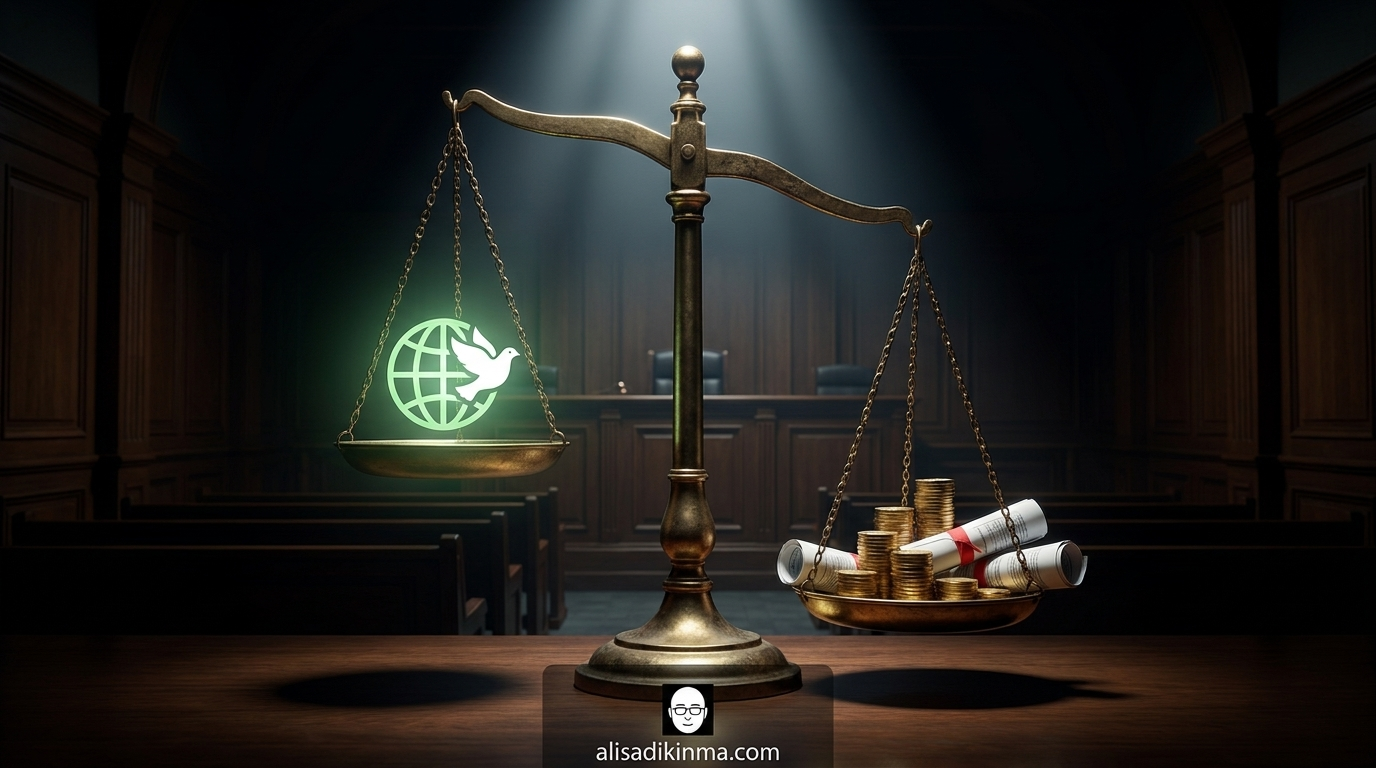
This OpenAI trial Musk Altman AI safety case isn't your typical contract dispute. Of the 26 original claims Musk filed in November 2024, only 2 made it to trial: unjust enrichment and breach of charitable trust, according to MIT Technology Review 2026. OpenAI is now valued at $852 billion after a $122 billion funding round in April 2026 led by SoftBank.
Musk co-founded OpenAI with Altman in 2015 as a nonprofit with one mission: build AI for the benefit of all of humanity. Then OpenAI decided to convert to a Public Benefit Corporation in October 2025 — and Musk wasn't having it.
Musk's demands are serious:
He's demanding the conversion be fully reversed. He's also demanding Altman, co-founder Greg Brockman, and Microsoft return tens of billions of dollars he calls illegal proceeds from charitable donations, according to NPR 2026. One fact rarely mentioned: Musk himself only donated about $38 million to OpenAI between 2015-2018 — far from the $1 billion verbal pledge he once made.
On paper, this is a charitable trust dispute.
But here's what makes it complicated:
If it's just about money and contracts, why is the biggest argument about AI that could kill humanity? And if OpenAI wins outright and operates without strong public oversight — what are the consequences for global AI safety?
The AI Safety Numbers the Jury Will Never Hear
The judge blocked AI extinction risk evidence from entering the courtroom. But the numbers are real: 78% of 111 AI experts agree that catastrophic AI risk deserves serious attention, according to an arXiv 2502.14870 survey in 2025. AI companies estimate extinction risk at 1 in 5 — 200,000 times higher than the standard risk tolerance of the nuclear industry, according to MIT Technology Review 2025.
That's not from street activists. That's from peer-reviewed academic journals.
And it gets more concrete:
Daniel Kokotajlo from the AI Futures Project estimates a 10% chance of a human extinction-level outcome from AI within the next 10 years. Dario Amodei, CEO of Anthropic, cites a 10-25% chance of a "catastrophically wrong outcome," according to MIT Technology Review 2025. Musk himself has publicly stated there's a 20% chance of human civilization's destruction from AI, according to Time Magazine 2026.
But the most shocking thing isn't the risk numbers themselves.
The most shocking thing is this:
Stuart Russell, a UC Berkeley professor testifying as Musk's expert witness at $5,000 per hour, testified that "whichever company first develops AGI will have an enormous advantage over everyone else." Meanwhile Tasha McCauley, a former OpenAI board member, testified on the other side: "If it all comes down to one CEO making that decision, and we have a public interest here — that's highly suboptimal." The jury won't hear these numbers in this OpenAI trial Musk Altman AI safety case. But you just did.
What This Means for You as an Everyday AI User
ChatGPT, Copilot, Gemini, Grok — all products from companies directly involved in this trial. OpenAI posted $25 billion in annual revenue as of February 2026 and plans to spend $50 billion on computing power this year, according to Sacra and Yahoo Finance 2026. Microsoft has invested more than $13 billion in OpenAI since 2019 and is also named as a defendant in this case.
This isn't a conspiracy theory. This is official financial data that's already in the court filings.
The question now isn't "is AI dangerous?"
The question is:
Who's watching?
Judge Rogers says the courts aren't the right place. But if not the courts, not effective regulators, and not the companies that are actively racing toward AGI — then who? This OpenAI trial Musk Altman AI safety case has accidentally exposed a real AI governance vacuum to the entire world. That's the biggest story behind all the legal drama.
Three Things to Watch Before This Trial Wraps Up
Sam Altman is about to take the witness stand. Microsoft CEO Satya Nadella and co-founder Greg Brockman are also scheduled to testify before the liability phase ends on May 21, 2026, according to CNN Business 2026. Musk's odds of winning currently sit at 40%, down from 60% when the trial opened, per Kalshi prediction markets and CNBC 2026.
Three things to watch:
First: Will OpenAI's conversion to for-profit be reversed? If yes, this will set the biggest legal precedent for AI company governance in America — and the impact will be felt globally.
Second: How large a "repayment" will the judge order? Numbers in the tens of billions could dramatically reshape the AI investment landscape — including for products you use every day.
Third — and this is the most important: Will this trial push for more concrete AI regulation? Because if even the US federal courts can't discuss AI extinction risks, who will?
The judge says AI isn't on trial here. She's right about the courtroom.
But this OpenAI trial Musk Altman AI safety case will decide who controls the world's most influential AI company. And that, ultimately, is about AI safety itself.
Frequently Asked Questions
What is Musk actually fighting for in this OpenAI trial?
Musk is demanding the reversal of OpenAI's conversion from a nonprofit to a Public Benefit Corporation. He's also demanding Sam Altman, Greg Brockman, and Microsoft return tens of billions of dollars he claims are illegal proceeds from charitable donations. Of the 26 original claims, only 2 survived to trial: unjust enrichment and breach of charitable trust.
Why did the judge ban testimony about AI extinction risks at trial?
Judge Gonzalez Rogers ruled this trial is a contract law and charitable trust dispute — not an AI safety debate forum. The question of whether AI can kill humans is outside the scope of this case, even though the argument stays relevant in the context of who will control OpenAI going forward.
Bookmark this article — Altman is about to testify. We'll keep updating as the trial reaches its final verdict.
Still not sure what to think about AI safety? Read our breakdown of what experts actually believe — and what score OpenAI got in independent safety assessments.