Musk's $60 Billion Cursor Acquisition: The Most Expensive Admission in AI History
By Ali Sadikin Ma · · Updated
Category: AI Vibe Coding
xAI engineers were quietly using a competitor's tool. Their boss just announced a $60 billion Musk Cursor acquisition to buy it.
That's not satire. That's what actually happened in April 2026.
There are three things nobody's answered clearly yet:
What tools did xAI's own engineers choose, even while working at a lab supposedly building the world's best AI? Why did Musk need $60 billion for this? Why not build from scratch? And what does it mean for Grok — the model that was supposed to outrun OpenAI and Anthropic?
This isn't a story about Musk going shopping. It's a story about the most expensive admission in modern tech history: that building the best AI model and building the best AI coding tools are two completely different problems.
Turns out, xAI failed at both at the same time.
The Story We All Believed About xAI and Grok
The story going around was simple: Grok is powerful, xAI is a serious challenger, and Musk has the vision, capital, and top talent. It was only a matter of time before Grok dominated the developer market.
That narrative made sense. Most of us believed it.
But data from the JetBrains Developer Ecosystem Survey in January 2026 paints a much more complex picture:
GitHub Copilot still leads workplace adoption at 29%. Cursor and Claude Code both follow at 18%. Grok doesn't even show up on the radar of top-tier tools used daily by professional developers.
Among all actively used AI coding tools, xAI is practically invisible.
But that's just the surface of the problem.
Because behind those grim adoption numbers, there's data that cuts a lot deeper. That's what makes this $60 billion Musk Cursor acquisition feel like a late move, not a power move.
What the Benchmarks Actually Reveal — and Why xAI Staff Chose Claude
On SWE-bench Verified, the standard benchmark for real-world software engineering capability, Grok only scores around 59%, while ChatGPT hits 80% and Claude Code clocks in at 80.8%, according to BuildFastWithAI as of April 2026. That 21-point gap isn't a small difference. It's the gap between tools developers trust for production coding and tools they try once and abandon.
But benchmark numbers alone don't explain $60 billion.
What made this deal inevitable is one detail:
Some xAI engineers themselves were using Claude from Anthropic, not Grok, for their everyday coding work. Bloomberg reported this explicitly as part of the public rationale for the Cursor deal in April 2026.
Picture this: employees at an AI lab built to outperform OpenAI and Anthropic, quietly choosing an Anthropic product for real work.
That's not a data point. That's a confession.
When your own internal staff picks your competitor for real work, you've got two options: fix your product, or buy your competitor. Musk chose option two, at a cost of $60 billion.
But if you think the 59% SWE-bench score or the disloyal staff triggered this deal, you're almost right. There's one number more important than the $60 billion itself.
The Real Strategy: 5 Signals from the $60 Billion Musk Cursor Acquisition Deal
Cursor hit $2 billion ARR in February 2026, according to TechCrunch, up from $1 billion in November 2025 and $500 million in June 2025. Its valuation hit $50 billion as of April 2026, with more than 70% of Fortune 1000 companies as customers and over 1 million daily active users, per GetPanto.ai. This isn't a startup that needed saving. This is the fastest-growing revenue machine in SaaS history.
So why did Musk pay $60 billion? Five signals you need to understand:
1. This Isn't a Power Move — It's a Repackaged Admission of Defeat
What happened: SpaceX, not xAI, secured the right to acquire Cursor for $60 billion — or pay $10 billion for collaboration without a full acquisition, per CNBC April 2026. That structure isn't an accident.
Why it matters: By putting the deal under SpaceX (not xAI), Musk separates xAI's failure in coding tools from SpaceX's stronger brand. This frames defeat as strategic expansion — so the headlines read as SpaceX entering AI tools, not xAI admitting Grok isn't good enough.
Real-world example: Google bought YouTube for $1.65 billion in 2006. Not because Google Video was bad, but because building from scratch takes time you don't have. Musk is playing the same playbook, at 36x the stakes.
What you should do: If you're in a position to evaluate AI strategy for your team or company, this deal signals that the build vs. buy window has seriously narrowed. Whoever is late to distribution will pay a much higher premium.
2. The AI Coding Tools Market Is Consolidating — and Whoever's Late Loses
What happened: The AI coding tools market is projected to grow from $7.37 billion in 2025 to $23.97 billion in 2030, a 26.6% CAGR, according to Mordor Intelligence. In a market growing this fast, distribution wins — not the best model.
Why it matters: Cursor has over 1 million daily active users and 70%+ Fortune 1000 coverage. Building that kind of distribution from scratch takes 5-7 years. Musk needed a shortcut. SpaceX's June 2026 IPO target needs a stronger growth story than just trailing on SWE-bench.
Real-world example: Microsoft bought GitHub for $7.5 billion in 2018. Now GitHub Copilot has 29% workplace adoption — highest among all AI coding tools. That distribution is what won, not the underlying model.
What you should do: If you're evaluating AI coding tools for your team right now, adoption matters more than waiting for the perfect tool. The market is consolidating, and tools that survive will get the backing that makes them even harder to compete with.
3. SpaceX's June 2026 IPO Needs a Growth Story Beyond Just Rockets
What happened: SpaceX is targeting an IPO in June 2026 at a $1.75-1.8 trillion valuation, according to Bloomberg. After the $1.25 trillion SpaceX-xAI merger in February 2026, IPO investors need proof of exposure to high-growth tech, not just rocket launches.
Why it matters: Cursor's $2 billion ARR with 2x growth every 6 months is exactly the kind of recurring revenue that makes an IPO prospectus way more attractive. This deal isn't Musk buying a new product — it's financial engineering to push IPO value as high as possible before listing.
Real-world example: Salesforce acquired Slack for $27.7 billion in 2021 — not because Salesforce needed chat. Slack's ARR and user base made Salesforce's story to investors way more convincing. Cursor for the SpaceX IPO is Slack for Salesforce, just 2x bigger.
What you should do: If you're using Cursor right now, this deal will likely close before or right after SpaceX's IPO in Q2-Q3 2026. Factor this potential ownership change into your long-term tooling decisions.
4. Cursor Has a Moat xAI Can't Replicate in 3 Years
What happened: Over 70% of Fortune 1000 companies are already Cursor customers as of April 2026, according to GetPanto.ai. Enterprise distribution like this isn't the result of marketing. It's the result of a product that solves developers' everyday problems, year after year.
Why it matters: When Cursor is already embedded in engineers' workflows at hundreds of Fortune 1000 companies, the switching cost gets really high. Musk knows this. That's why he paid a premium to get inside that moat, instead of trying to attack from the outside with a Grok that's 21 benchmark points behind.
Real-world example: xAI had 18+ months to capture the enterprise market with Grok. The result: not in the top tier of any adoption survey. Cursor achieved the same Fortune 1000 penetration in less than 2 years since launching in 2023.
What you should do: If your team hasn't evaluated Cursor yet, you're already behind 70% of your Fortune 1000 peers. Post-acquisition with SpaceX and xAI backing, that position will only get stronger.
5. This Is About Who Controls the AI Developer Layer — Not Just Cursor
What happened: 92% of developers now use AI coding tools in their workflow, and 73% of engineering teams use them every day as of April 2026, according to GetPanto.ai. AI coding isn't a nice-to-have anymore. It's modern development infrastructure.
Why it matters: Whoever controls this tools layer controls how software gets written going forward. It's more strategic than cloud hosting or model APIs, because it's about the daily work habits of millions of engineers. Musk wants to be part of that layer.
Real-world example: The three biggest AI coding tools right now: GitHub Copilot (Microsoft), Cursor (SpaceX/xAI pending), Claude Code (Anthropic) — all backed by Big Tech or well-funded AI labs. The era of independent tools at the enterprise tier is nearly over.
What you should do: Pick tools with strong backing and solid benchmarks. In a consolidating market, orphaned tools will get harder and harder to update and support at an enterprise level.
What This Means for You If You're Building with AI Coding Tools
The real impact of this Musk Cursor acquisition for your team: the AI coding tools market is growing to nearly $24 billion in the next five years, and 92% of developers already use AI in their workflow every day. What's changing isn't whether you use AI coding tools — it's which ones still exist and keep growing two years from now.
The more important question than Cursor vs GitHub Copilot vs Claude Code is this:
Which tools does your team actually use every day. Does your AI strategy reflect that reality, or is it still based on old vendor pitches?
If Grok isn't even in the top tier of professional developer adoption surveys, and xAI's own engineers chose Claude — that's not a marketing problem. That's a product problem. And the only way Musk solved it was by paying $60 billion.
The practical implications for you:
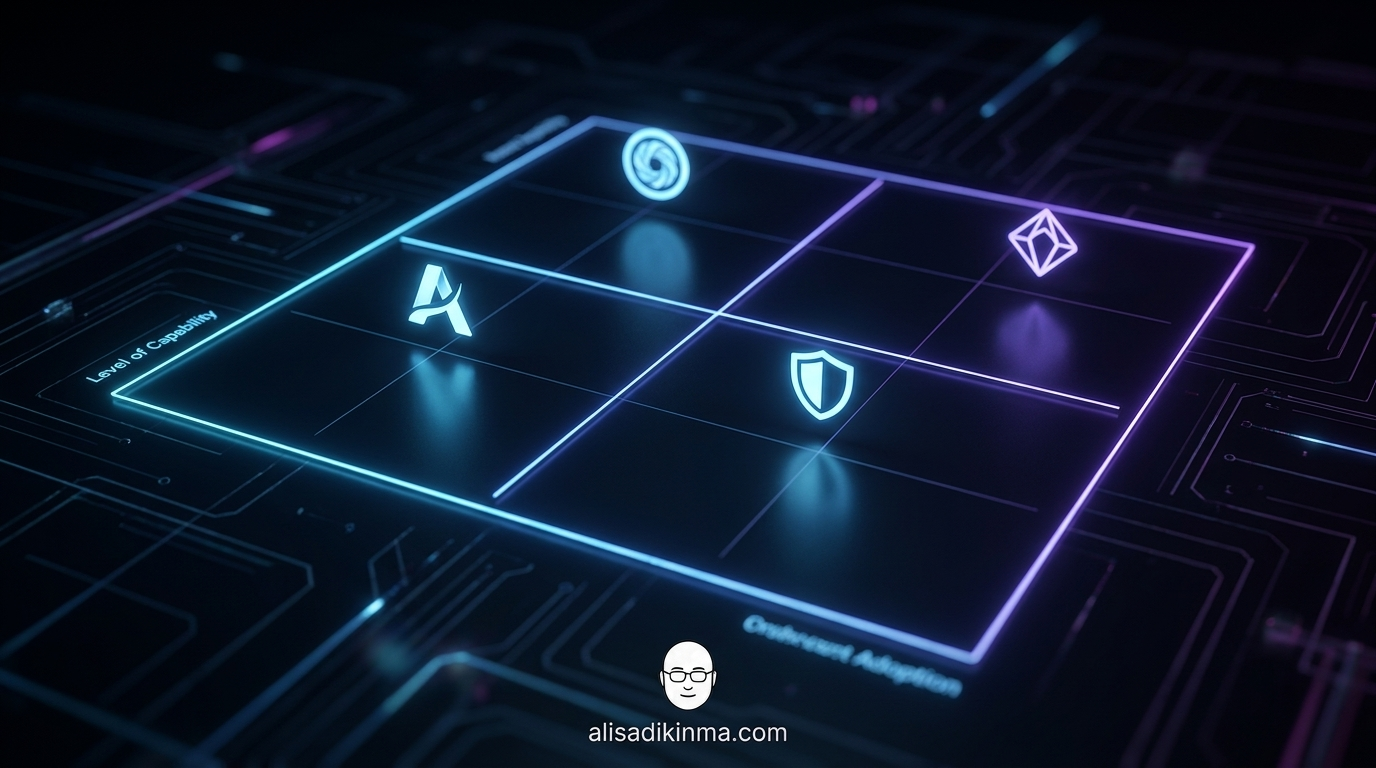
If you're using Cursor, this acquisition will likely strengthen their product development — but watch whether their independence holds post-close. If you're using GitHub Copilot, the benchmark gap between Copilot and Claude Code needs to factor into your next review cycle. If you're still evaluating, deals like this typically trigger consolidation — your choices in 12 months could be fewer than they are today.
What to Watch: SpaceX IPO, Cursor's Independence, and What Comes Next
Now that you know all the numbers, let's go back to the original question: why did Musk wait this long? The answer is in the SpaceX IPO timeline.
SpaceX is targeting an IPO in June 2026 at a $1.75-1.8 trillion valuation, according to Bloomberg. The Musk Cursor acquisition fitting into the pre-IPO narrative isn't a coincidence. Musk needs a story about future technology to justify aggressive valuation multiples to investors.
Three things to watch through the end of 2026:
Will Cursor stay independent post-acquisition? The best products often lose their edge once they enter a large corporate structure. Post-Salesforce Slack, post-Microsoft GitHub — both survived but changed. Track Cursor's product velocity in the 6 months after the deal closes.
Will Claude Code become a more serious challenger? Anthropic is still independent, with Claude Code having the highest benchmark (80.8% SWE-bench) and adoption matching Cursor at 18%. If Anthropic gets strong enterprise backing, it could reshape the market again.
Will this deal actually close at $60 billion? CNBC reported a $10 billion alternative option for collaboration, not a full acquisition. Renegotiation is very possible depending on market conditions and the SpaceX IPO timeline.
Here's the insight that changes how you see all of this:
This deal isn't about Cursor. It's about Musk admitting that building the best AI model and building the best AI coding tools are two genuinely different problems. xAI focused on one problem. Cursor solved the other. And in a market growing to $24 billion, it's the second problem that developers pay for every day. The tools that win aren't the ones with the best model — they're the ones most embedded in the daily workflow of millions of engineers.
FAQ: Most Common Questions About the Musk Cursor Acquisition
Is SpaceX's Acquisition of Cursor Final?
Not final as of April 2026. SpaceX secured the right to acquire Cursor for $60 billion later in 2026, with an alternative option to pay $10 billion for collaboration without a full acquisition, according to CNBC. The deal isn't signed and could change depending on market conditions and SpaceX's June 2026 IPO timeline.
Will Grok Be Integrated into Cursor After the Acquisition?
No official confirmation as of April 2026. The more likely scenario: Cursor keeps supporting multiple models to preserve its existing adoption. Grok integration would first need its SWE-bench score to climb from 59% toward 80%, before it's compelling to developers already used to Claude Code or ChatGPT.
Bookmark this analysis before your team's next AI tools review. The market's moving faster than most teams' quarterly planning cycles.
Not ready to switch tools yet? Save this article and revisit it when the Cursor acquisition officially closes. The situation will look very different by Q3 2026.