Meta's Military Technology: What They Never Tell You
By Ali Sadikin Ma · · Updated
Category: Technology
This article investigates Meta's largely unannounced pivot into military technology — covering its formal partnership with defense startup Anduril Industries to build the EagleEye AI-powered AR combat headset, its decision to open the Llama AI model to 14 US defense contractors and NATO-allied institutions, and the real-world implications for everyday users of Instagram, WhatsApp, Facebook, and Messenger, who may be unknowingly contributing to military AI programs through their platform interactions.
Every time you scroll Instagram, there's something Meta has never told you.
It's not about the algorithm that keeps you hooked. Not about ads that feel a little too personal.
It's about Meta's military technology — where the company's money and ambitions are actually flowing. And the answer is on the battlefield.
Zena Assaad, a senior researcher at Australian National University, wrote plainly in The Conversation: users of Facebook, Instagram, WhatsApp, and Messenger "may be unknowingly contributing to military programs without explicit consent." (The Conversation, November 2024)
You were never asked to choose. There was no checkbox for that.
And the company making this happen isn't some star-spangled defense contractor. You know it as the place where you post vacation photos and message your family.
But there's one more name you need to know before reading on. A name whose connection to Meta will change how you see all of this.
We've Always Known Meta as a Social Media Company — And That's No Longer Accurate
Meta has invested $80 billion in VR and AR technology since 2014, while Reality Labs lost $19.19 billion in 2025 alone — cumulative losses nearing $90 billion total. But behind those red numbers, a far more impactful new strategy is taking shape, moving in a direction the company has never announced to its users.
Instagram. WhatsApp. Facebook. Messenger. That's the Meta most people know.
We've long known Meta as a social media company. But the reality of Meta's military technology has drifted far from that consumer image.
You read that right. $80 billion — not million.
The result? Reality Labs lost $19.19 billion in fiscal year 2025 alone. Total cumulative losses over seven years are approaching $90 billion. (Shacknews / CNBC, 2025)
But something has shifted. And the shift is bigger than you'd think.
Amid those massive losses, Meta found something that's starting to work. Ray-Ban Meta smart glasses sold 2 million units between October 2023 and the end of 2024. In the first half of 2025, that sales figure tripled year-over-year. (CNBC, Q2 2025)
Consumer hardware that was once written off as a failure turned out to have far greater potential — in a place its users never imagined.
And someone saw that potential faster than anyone else. Someone who was pushed out of Meta years ago.
Why the Consumer Picture Is Outdated: Meta Has Gone Deeper Into Defense Than Anyone Expected
On May 29, 2025, Meta and Anduril Industries announced a formal partnership.
Anduril isn't a household name. But in the defense world, it's the startup that's reshaping how America fights wars. Anduril was founded by Palmer Luckey — the same person who founded Oculus before selling it to Facebook, then was controversially fired.
The facts:
- Anduril raised $2.5 billion in June 2025, at a $30.5 billion valuation. (Fortune, June 2025)
- Its revenue doubled to $1 billion in 2024.
- As of March 2026, the company is targeting a $60 billion valuation — double from a year prior. (TechCrunch, 2026)
That's the scale of Meta's military technology pivot — one that's never been announced to everyday users.
What are they building together?
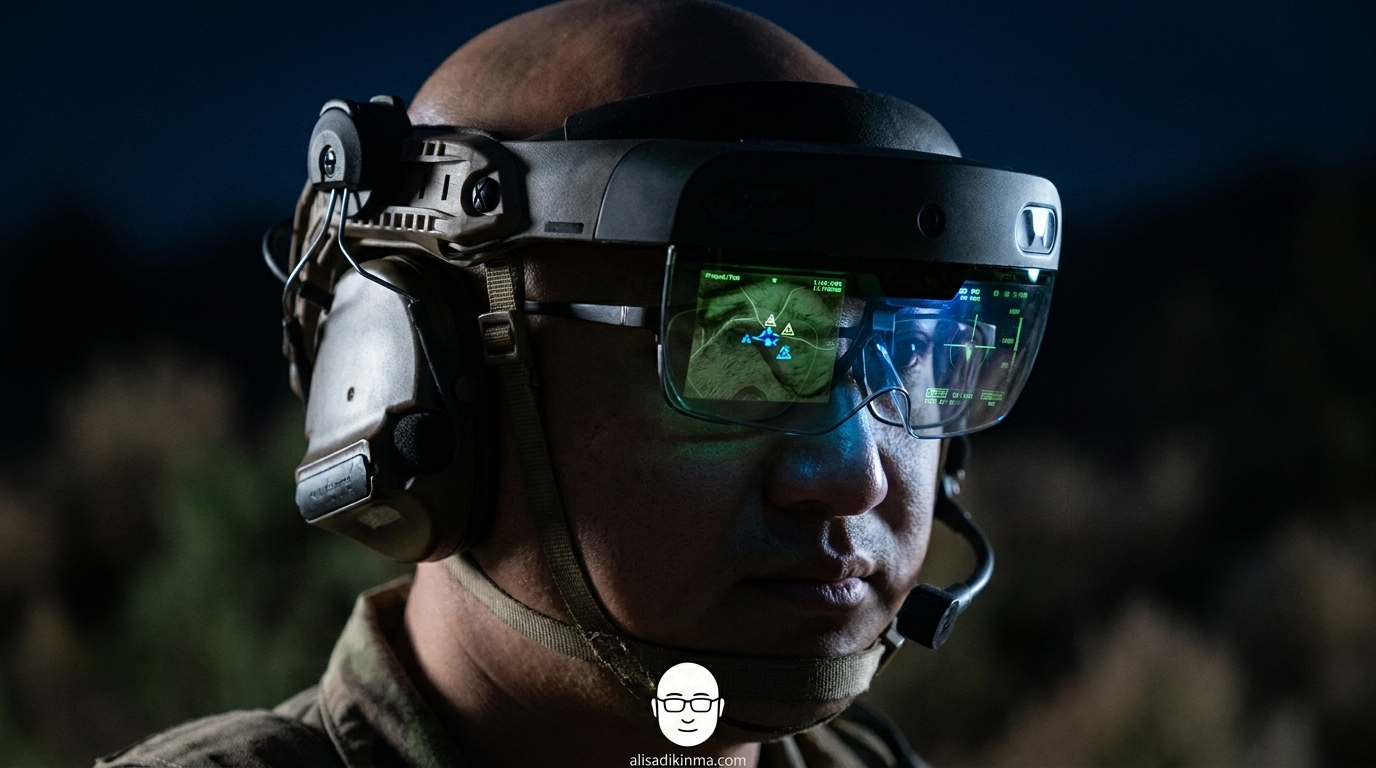
It's called EagleEye — an AI-powered AR headset designed specifically for soldiers. Not a gaming headset. Not a remote work tool. Palmer Luckey isn't shy about his ambitions:
"Eagle Eye is gonna be the best AR and VR device that's ever been made. It's not even close. It's several times higher resolution in capability than even Apple Vision Pro." — Palmer Luckey, CEO Anduril Industries (Road to VR, 2025)
And this is just the beginning.
Meta and Anduril jointly bid on an Army VR contract worth up to $100 million. (CNBC, May 2025) Meanwhile, Anduril has already secured a $159 million Soldier Borne Mission Command contract from the US Army in September 2025 — with plans to deliver around 100 initial units to select infantry brigades in 2026. (National Defense Magazine, November 2025)

EagleEye's end target? Hundreds of thousands of soldiers, across four headset variants sharing 90% of the same components.
But the headset is only half the story. There's something happening behind the scenes that's far harder to see — and far more impactful for you as an everyday user.
The Full Picture: Meta's Military Technology Has Reached the US, NATO, and 14 Defense Contractors
In November 2024, Meta opened Llama access to 14 US defense contractors, including Lockheed Martin and Palantir. In September 2025, access was expanded to NATO institutions in France, Germany, Italy, Japan, South Korea, and the European Union. This is the full picture that was never shared with its users.
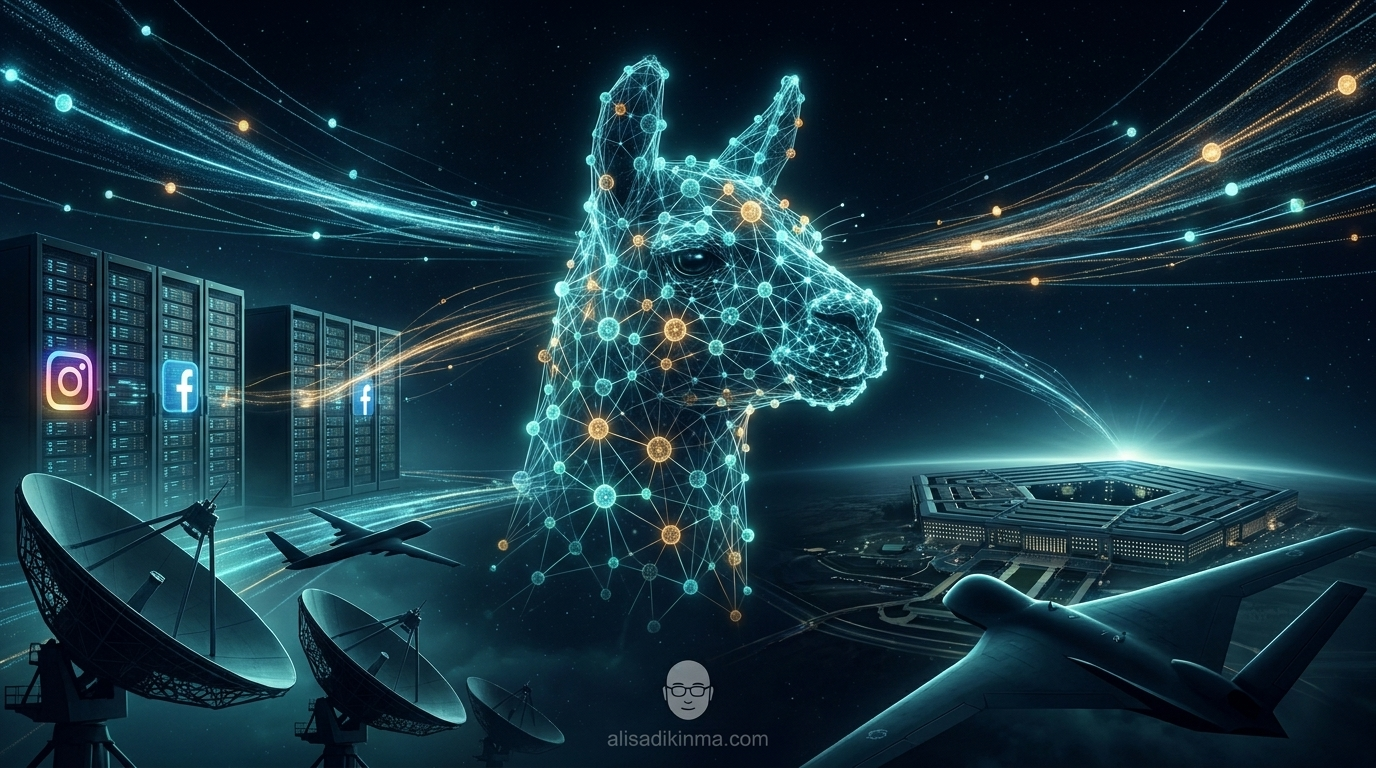
Meta's military technology isn't just about hardware. In November 2024, Meta officially opened access to Llama — their open-source AI model — to 14 defense contractors for US national security applications, including Lockheed Martin, Palantir, Anduril, Booz Allen Hamilton, Scale AI, and Oracle. (TechCrunch, November 2024)
Think about it:
Every interaction you have on Meta's platforms — every WhatsApp message, every Instagram comment — has helped shape the language model now running inside the military infrastructure of US-allied nations.
And that's just the first step.
In September 2025, Meta expanded Llama access to allied nations: France, Germany, Italy, Japan, South Korea, NATO institutions, and EU institutions. (Meta official blog, September 2025) Joel Kaplan, Meta's Chief Global Affairs Officer, said it plainly:
"The US and its closest allies should have the best tools at their disposal to defend themselves and keep their citizens safe."
This isn't coincidence. This is strategy.
The Pentagon itself proposed $179 billion for Research, Development, Test & Evaluation in the FY2026 budget — up 27% year-over-year, one of the largest military R&D allocations in US history. (IDGA, 2025) The total US defense budget for FY2026 reaches $1 trillion. (StartUs Insights, 2026)
And this is the part of Meta's military technology that's hardest for everyday users to sit with:
Chinese researchers affiliated with the People's Liberation Army have reportedly used Llama 2 — an earlier version of Meta's AI — to build military chatbots designed for intelligence gathering and operational decision-making. (Reuters, October 2024 via TechCrunch)
One open-source AI. Two countries. Two sides of the same geopolitical conflict.
And that raises questions with no easy answers — the hardest ones hit closest to home for you as a user.
This Is a Real Moral Dilemma: What It Means for You as an Instagram and WhatsApp User
This isn't about who wins the military technology race. It's about you — an ordinary person who uses Instagram to scroll content and WhatsApp to chat with family.
This isn't a conspiracy theory — it's the stated consequence of Meta's military technology pivot, documented in the company's own official announcements.
Zena Assaad from Australian National University wrote directly: Meta platform users "may be unknowingly contributing to military programs without explicit consent." (The Conversation, November 2024)
There's no form you signed for that.
On the other side, there's a geopolitical reality that's hard to ignore. 80% of global drone production is currently controlled by China. (Jacobin, October 2025) That's the real argument being used to justify US defense investment and Silicon Valley's entry into the sector.
But meanwhile, 166 countries backed a UN resolution to limit lethal autonomous weapons in 2024. UN Secretary-General António Guterres called lethal autonomous weapons "politically unacceptable and morally repugnant." (UN News, May 2025)
Inside Silicon Valley itself, resistance keeps eroding. When Google faced a new Pentagon contract in 2026, only around 1,000 employees signed a protest petition — far fewer than the 5,000+ signatures on the 2018 Project Maven petition. (Fortune, May 2026)
There are no easy answers here.
But there's something you can do. And it starts with knowing your options.
What You Can Do About Meta's Military Technology: 3 Concrete Steps Right Now
You can't fully opt out of the Meta ecosystem. But there are 3 concrete steps you can take in 5 minutes today — and each one gives you real control over your digital footprint within an AI system that now serves the military.
Now you know where Meta's military technology is headed. The question is: what can you do about it?
This isn't about panicking or deleting your account today. It's about making more informed choices, starting now.
1. Review and Restrict Your Meta Privacy Settings
What to do: Open the privacy settings in Instagram or Facebook and restrict how your activity data is used for AI training.
How to do it: On Instagram, go to Settings → Privacy → Off-Instagram Activity. On Facebook, find "Privacy Settings" → "Off-Facebook Activity" → disconnect your activity history from your account. Two steps, under five minutes.
Real example: The Electronic Frontier Foundation (EFF) notes that this step doesn't block all access, but significantly limits the activity data Meta can use to train their AI models going forward.
The result: You don't disappear from Meta's systems, but you shrink the data footprint feeding their AI pipeline. Do it now — before you close this tab and forget.
2. Diversify Your Messaging Apps
What to do: Add one alternative messaging app outside the Meta ecosystem for more sensitive conversations.
How to do it: Signal is the most straightforward option — end-to-end encryption, no Meta affiliation, no conversation metadata collection. Download Signal and invite one important person in your life to try it for a week. No need to ditch WhatsApp entirely right away.
Real example: Journalists, activists, and lawyers already use Signal as the professional standard for sensitive communications. Not because they're paranoid — but because they understand the data chain and who can access it.
The result: You don't leave WhatsApp entirely, but you have one layer of communication that's genuinely outside the reach of Meta's AI ecosystem.
3. Follow AI Policy, Not Just New Products
What to do: Add one tech policy information source to your regular reading — beyond gadget news and feature updates.

How to do it: Bookmark the Electronic Frontier Foundation (eff.org), follow the Mozilla Foundation, or subscribe to the Tech Policy Press newsletter. Every time Meta changes its Terms of Service or Llama access policies, you'll know — not six months later after everyone has forgotten.
Real example: Meta's expansion of Llama access to NATO institutions in September 2025 was barely covered in the media — but it's a direct part of Meta's military technology developments, which keep moving. The information is always there; the issue is knowing where to look.
The result: When Meta changes its AI access policies going forward — and it will — you'll be among the first to know. Information is the only leverage you have as a user.
FAQ: Questions You Might Have After Reading This
Q: Is my Instagram and WhatsApp data sent directly to the military?
A: Not directly. Meta doesn't send your personal data to the military. What happens is that access to the Llama AI model — trained on large-scale data — has been granted to 14 defense contractors and national security institutions since November 2024. Your interactions on Meta's platforms contribute to training the model that's now available for military use, even without a direct transfer of your personal data.
Q: Is the EagleEye headset already being used in actual combat?
A: Not yet, as of mid-2026. But the US Army already allocated $159 million for the SBMC contract with Anduril in September 2025, with plans to deliver around 100 initial units to select infantry brigades in 2026. Anduril is targeting EagleEye for deployment to hundreds of thousands of soldiers, with 90% of components shared across four planned headset variants. (National Defense Magazine, November 2025)
Q: How are other platforms like Google and Microsoft handling similar pressure?
A: Microsoft previously secured a $22 billion IVAS contract for 120,000 combat HoloLens headsets — but the program was paused after soldiers reported headaches and nausea during field testing. Google faced far smaller internal protests in 2026 — only around 1,000 signatures — compared to the 5,000+ signatures on the 2018 Project Maven petition. Internal Silicon Valley resistance to defense contracts keeps declining. (Fortune, May 2026)
Now you know what Meta has never told you when you open Instagram in the morning.
Share this article with a friend who scrolls Instagram every day — they need to know this.
Want to go deeper on Silicon Valley and the defense industry? Read the next article on how Big Tech is reshaping modern warfare.