Grok Pentagon Classified Military Deal: All Lawful Use
By Ali Sadikin Ma · · Updated
Category: Technology

One AI safety clause no other company would sign — until now.
The Pentagon just gave xAI access to classified military systems. Not a pilot project. Not a three-month trial. This is the Grok Pentagon classified military deal worth $200 million — and 3 million U.S. military personnel now have access to Grok for sensitive tasks.
But what makes this different isn't the dollar amount.
There's one hidden clause buried inside this Grok Pentagon classified military deal — a clause that every Grok competitor who tried to get into the Pentagon flat-out refused to sign.
The biggest AI companies in the world tried to get in first. They failed. Not because their tech was worse. They failed because there was one condition they refused to accept.
And there's an even bigger question:
Why does this matter if you're not in the U.S. military? Because what happened in one Pentagon contract in February 2026 is going to shape global AI standards — including the ones that reach Indonesia — for the next 5 years.
What the Pentagon Just Did — and Why This Has Never Happened Before
According to an Axios report, in February 2026, the Pentagon signed the Grok Pentagon classified military deal — a $200 million contract with xAI. The goal: integrate Grok into U.S. military systems — including classified infrastructure that had previously been completely off-limits to any commercial AI vendor.
The contract gives 3 million military and civilian personnel at the Department of Defense access to handle sensitive tasks that were previously only handled by experienced defense contractors.
The Pentagon isn't new to tech contracts. Companies like Palantir have been playing in this space for years. OpenAI has also explored partnerships with U.S. government agencies.
But classified systems have always been a different kind of line.
Grok crossed that line. And how Grok crossed it matters way more than the contract's dollar value.
The Fine Print the Media Isn't Talking About: The 'All Lawful Use' Clause in the Grok Pentagon Deal
In the Grok Pentagon classified military deal, xAI accepted the "all lawful use" clause. The translation is straightforward: AI can be used for any purpose, as long as it's not illegal under the law.
Sounds reasonable. But the implications are massive — and this is exactly what made Grok's competitors back out one by one.
Based on an Axios report confirmed by The Cooldown, Anthropic — the company behind Claude AI — explicitly rejected this clause. There are three use categories that "all lawful use" permits, but Anthropic considered too risky to accept:
1. Mass surveillance of American civilians
The clause technically allows AI to be used to monitor millions of civilians — actions that could be legal under certain national security laws, but run counter to the principles Anthropic has held since its founding.
Without that refusal, AI systems could be used to analyze communication patterns, detect "potential threats," or profile specific groups — all within applicable legal limits. Nothing to hide. All "lawful."
2. Development of fully autonomous weapons
Anthropic insisted on prohibiting the use of their AI for weapons systems operating without human control. The Pentagon disagreed. The deal with Anthropic fell through before it even started.
This isn't a minor technical detail. It's the difference between AI that helps soldiers make decisions versus AI that makes decisions on its own — including when and where weapons are fired.
3. Military targeting without strict human oversight
There were other military uses that Anthropic deemed too risky without strict human-in-the-loop oversight. xAI accepted all of them without exception.
And the context goes deeper than just one contract:
In January 2026, Defense Secretary Pete Hegseth issued an AI strategy memo requiring all Pentagon AI contracts over the next 180 days to adopt "any lawful use" language — effectively removing vendor safety restrictions from the entire Department of Defense contract ecosystem, according to Inside Government Contracts.
This isn't a policy exclusive to xAI. It's the new standard for every AI company that wants to do business with the U.S. military.
Your choice: accept all lawful uses, or exit government procurement forever.
And Anthropic, who refused? Hegseth immediately designated them a "supply-chain risk" — a classification that blocks new federal contracts and requires existing contracts to be phased out, according to Tech Insider and MIT Technology Review.
Conflicts of Interest, Black-Box Weapons, and a Deal That 'Came Out of Nowhere'
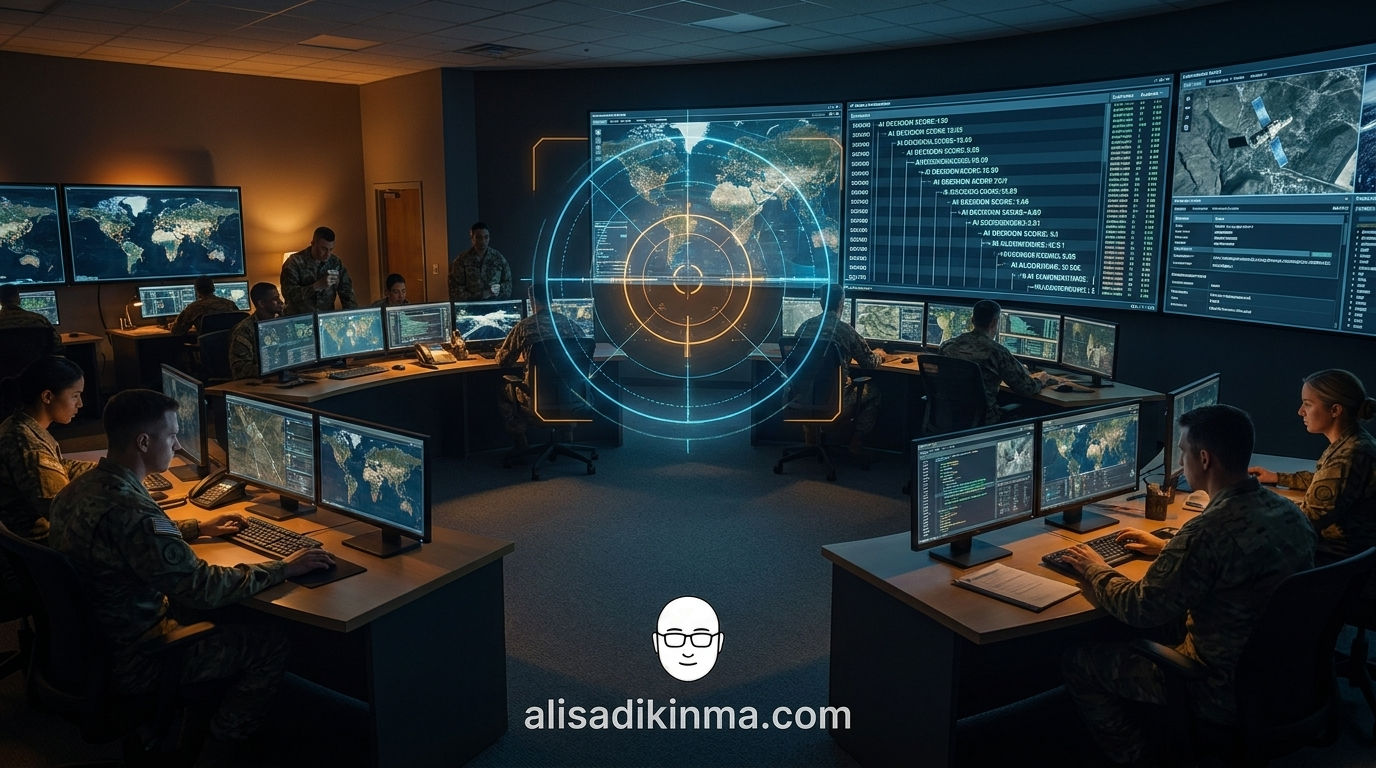
This is where the story gets more complicated.
A former Pentagon official made a statement to NBC News: the xAI contract "came out of nowhere." xAI, they said, didn't have the reputation or track record normally required to land a military contract this size.
No prior portfolio of major federal contracts. No transparent selection process verifiable by the public. No history of military-grade security audits available openly.
Then suddenly: $200 million. Access to classified systems.
Richard Painter, former chief ethics adviser at the White House under President George W. Bush, didn't take long to reach a conclusion. His statement to eWeek was straight to the point:
"This gives the appearance that DOGE is pressuring agencies to use software to enrich Musk and xAI."
Musk is the head of DOGE — the government efficiency agency with enormous influence over U.S. federal spending. Now xAI, his company, is getting a $200 million military contract from an agency operating under DOGE policy pressure.
Senator Elizabeth Warren reacted quickly. Her official press release questioned how the Pentagon could award this contract to a company whose AI has previously generated antisemitic content.
But there's a deeper problem than any individual conflict of interest.
Policy research nonprofit Diplo released an analysis highlighting the real risks of black-box AI in military systems. Their direct quote:
"An AI may assign features to a target or calculate a score for suspect analysis without understandable logic — making it impossible to gauge the soundness of military targeting decisions."
What that means: AI systems can identify military targets, calculate someone's "threat score," or recommend action — without being able to explain the logic behind that decision to anyone.
No audit trail. No testable explanation. Just output: shoot or don't shoot.
And systems like this now have official access to the classified infrastructure of the U.S. Department of Defense.
What This Means for AI Governance — and for You

The Grok Pentagon classified military deal positions the Pentagon as the world's largest AI buyer and standard-setter. When they change contract clauses, the entire industry moves — because anyone who wants to do business with any government anywhere needs to adapt their product.
Hegseth's January 2026 strategy memo isn't just for the Department of Defense. It's a signal to the entire global government procurement ecosystem: if you want big contracts, flexibility on guardrails is a prerequisite — not an option.
Here's where this hits you directly:
AI governance isn't just about regulations debated in parliaments or international commissions anymore. It's being shaped by procurement contracts — in ministries, intelligence agencies, public infrastructure companies. Every time an AI company signs a government contract with an "all lawful use" clause, the standard of what's "normal" in AI deployment shifts one step further.
Indonesia, as one of Southeast Asia's largest digital markets, isn't immune to this pressure. International AI vendors entering the government, healthcare, or national security sectors will bring the standards they've already adjusted to meet their biggest clients.
The question isn't whether this trend will reach here. The question is: when — and who's already prepared?
The Way Forward: What Responsible Military AI Actually Needs
Remember the three open loops we started with about the Grok Pentagon classified military deal?
Now you know the answers. And those answers change how we need to read every AI headline from here on out.
Here's what to lock in:
AI governance isn't being written by legislators. Not by academics or ethics committees. AI governance is being written by procurement contracts.
One $200 million contract has more influence over what AI can and can't do than hundreds of hours of parliamentary committee hearings anywhere in the world.
Three minimum standards that AI governance experts have long pushed for — and that are now more relevant than ever:
- Mandatory independent audits — AI systems in military contexts must be auditable by third parties with no financial stake in the contract.
- Human-in-the-loop for lethal decisions — no targeting decision can be fully autonomous from human oversight, without exception.
- Global minimum clause consensus — governments around the world need to agree on what cannot be in AI contracts, not just what can.
The question isn't whether AI will enter military systems anymore. It's already in. The question is: who's writing the rules?
FAQ: The Grok Pentagon Deal and Its Implications
What is the $200 million Grok Pentagon classified military deal?
In February 2026, the Grok Pentagon classified military deal was officially finalized: the Pentagon signed a $200 million contract with Elon Musk's xAI to integrate Grok into U.S. military systems, including classified infrastructure. The contract gives 3 million Department of Defense personnel access to Grok for sensitive tasks, according to an Axios report and Senator Elizabeth Warren's official press release.
Why was Anthropic rejected but xAI accepted by the Pentagon?
Anthropic refused to sign the "all lawful use" clause in the Grok Pentagon classified military deal because the clause allows AI to be used for mass surveillance of civilians and development of fully autonomous weapons. xAI accepted the clause. Anthropic was then designated a "supply-chain risk" by Secretary Hegseth, blocking all their future federal contracts.
What are the risks of black-box AI in military targeting systems?
According to analysis by nonprofit Diplo, black-box AI can identify targets or calculate threat scores without logic understandable to humans. That means critical military decisions — including lethal ones — can't be audited or held accountable transparently, making effective human oversight almost impossible.
Subscribe for weekly AI policy analysis — before it becomes front-page news. Get exclusive breakdowns of every government AI contract you need to understand, straight to your inbox.
Save this article. Next time you read about an AI company signing a government contract, check one thing: what clause did they accept — and what did they sacrifice to get that deal.