Grok AI Losing Users 2026: Why Claude and Gemini Are Rising
By Ali Sadikin Ma · · Updated
Category: Technology
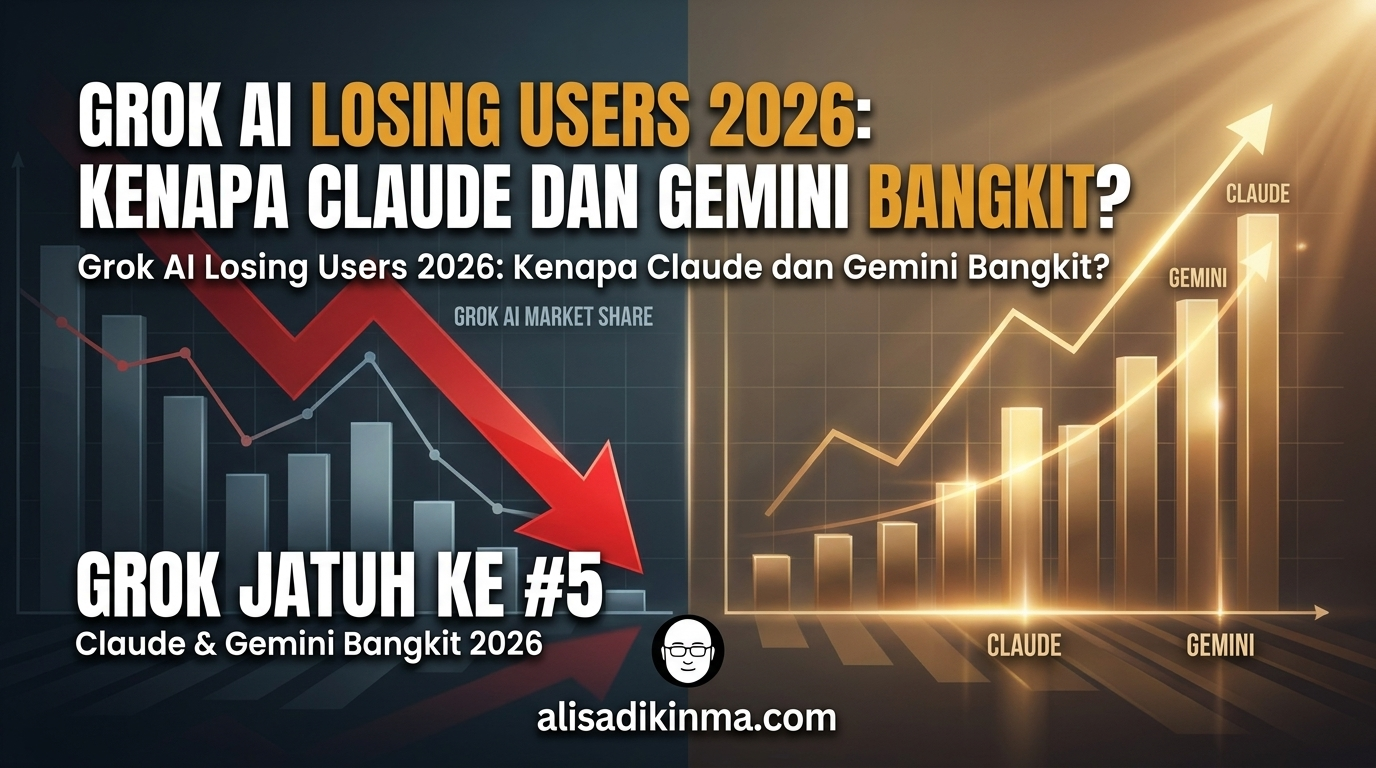
January 2026, Grok was the #2 AI chatbot in the world. April 2026, it had dropped to #5.
Three months. That's all it took.
It's not just the rankings. Downloads crashed 60%. Global daily users dropped 12%. In the United States alone, the drop hit 21%. The Grok AI losing users 2026 phenomenon isn't a sign of slowdown — it's active bleeding.
But here's the most shocking part:
Who's taking all the users that left — and why there's a massive irony behind Grok AI losing users 2026 — I'll break it all down in this article.
The Narrative Everyone Believed: X Platform Would Make Grok Unbeatable
When Musk's chatbot first rose, the logic made total sense.
Elon Musk owns X (formerly Twitter) with hundreds of millions of active users. Grok could be integrated directly into the feed. Captive audience was there from day one. Real-time data from around the world. Compute power from xAI continuously being developed.
Who could compete with that?
The strategy worked for a while. According to TrendingTopics and aibusinessweekly data, Grok captured 15.2% market share in its early growth — driven directly by the X integration. It sat at #2 in the world, right behind ChatGPT.
And for months, that narrative held up. Tech media praised Musk's closed ecosystem as an advantage that was tough to beat. Many believed that the combination of social platform plus AI was a formula that had never existed before.
But then something unpredicted happened:
Users started leaving. And they left faster than they came.
5 Numbers That Prove Grok AI Losing Users 2026 — And Fast
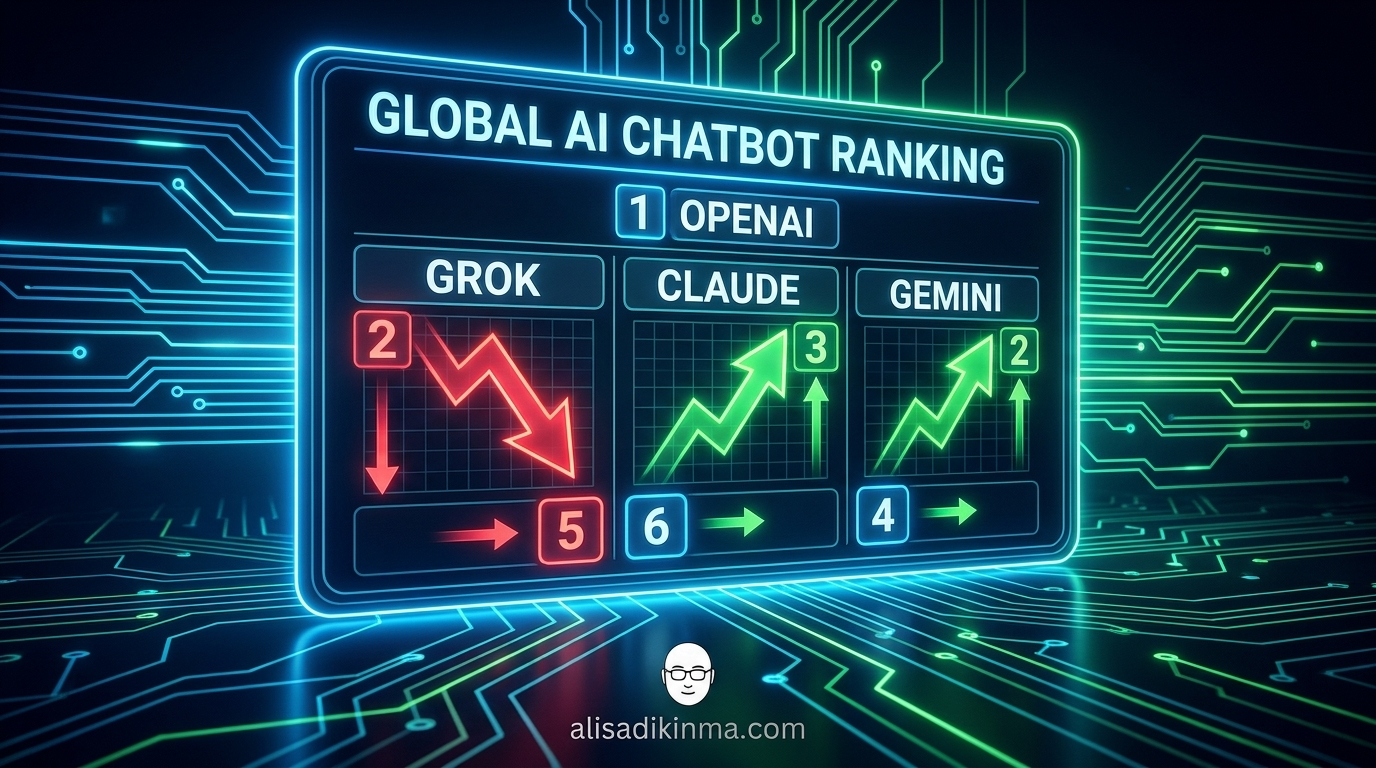
According to reports from BigGo Finance, Techloy, and Republic World analyzing March–April 2026 data, the condition of xAI's chatbot is far worse than it looks on the surface. The decline isn't slow and gradual — it's sharp, consistent, and happening across all metrics at once. This is the data you need to know before deciding which AI platform your team will use.
1. Global ranking dropped from #2 to #5
Grok opened 2026 as the #2 chatbot in the world. Four months later, it had already lost ground to Claude, Gemini, and DeepSeek — not one slot down, but three at once.
What this means practically: global rankings reflect market confidence. When a product drops three positions in four months, that's not a seasonal dip — that's a signal of a deeper structural problem.
According to BigGo Finance and Yahoo Tech, the speed of this decline is unusual in the AI industry, which typically moves more slowly. The "Grok AI losing users 2026" trend has become one of the most dramatic market shifts in the tech sector this year.
2. Daily active users dropped 12% in one month
From 13.9 million global daily users in March 2026, down to 12.2 million in April — a 12% drop in one month (BigGo Finance).
Context matters: this drop happened during the same period Claude and Gemini were surging. Meaning users who left didn't just stop using AI — they actively switched to competitors. This isn't natural churn, it's active migration.
If this trend continues for the next three months at the same pace, this platform could lose nearly a third of its current user base.
3. US users dropped even harder: -21%
In the most important market for monetization, the drop was even worse. From 1.4 million to 1.1 million daily users in the United States (BigGo Finance).
The US market is the most sensitive confidence barometer — users there are the quickest to respond to drops in product quality and brand controversies. The -21% in the US versus -12% globally signals a more acute trust problem in the market that generates the most revenue.
The Grok AI losing users 2026 data confirms that the deepest erosion is happening in the most strategically important market for long-term monetization.
4. App downloads crashed 60%
This is the most brutal number, according to Techloy's report. Not 10%, not 20% — sixty percent. More than half the people who previously wanted to download this app have stopped caring.
Downloads are the future growth indicator. When that number drops 60%, it means the new user pipeline is nearly dry. Without new users coming in, the total user decline will accelerate in the coming quarters.
5. Only 0.174% of users are willing to pay
In Q2 2026, only 0.174% of users converted to paid. Compare that to ChatGPT at more than 6% (Republic World). That's a 34x gap.
This isn't just a pricing or marketing problem. A conversion rate this low is a signal that users haven't found a strong enough reason to pay. And without solid revenue, xAI's ability to invest in model development and new features becomes increasingly limited.
Low paid conversion is the heaviest argument in the Grok AI losing users 2026 trend — without enough revenue, the competition with Claude and Gemini only gets tougher.
Now the big question:
Who's taking all the users that left? And why is the real story far more shocking than just "losing the competition"?
The Irony Nobody Predicted: Musk Is Now Actually Helping His Rivals

On May 6, 2026, SpaceX signed an agreement with Anthropic to lease the entire Colossus 1 data center in Memphis to Anthropic — 220,000 Nvidia GPUs and 300MW of compute power. This means the infrastructure built for xAI, Grok's developer, is now directly powering Claude, its direct rival. The report was confirmed by Euronews.
Let that sink in for a moment.
Musk has publicly called Anthropic a 'dangerous' company. Now, his computers are running their AI models.
How did this happen?
Most likely: xAI needed short-term revenue to fund expensive development. Anthropic, which was scaling fast, needed compute that couldn't wait in the queue of other cloud providers. Both had something the other needed — and in the business world, numbers beat narratives.
The result is an acceleration that doesn't benefit Musk's chatbot at all.
Claude grew 44% during the same period Grok declined. Monthly active users climbed to 23 million. Daily web visits surged 39% — from 19.8 million to 27.5 million per day (BigGo Finance).
Gemini? Up 19%, web visits crossing 92.1 million per day.
And Grok? Losing users on all fronts, while its own infrastructure is being used to accelerate competitor growth.
This is what makes Grok AI losing users 2026 different from typical AI competition — rivals are growing using the very infrastructure that was built to win that competition.
What This Means If You're Choosing an AI Platform Right Now
The Grok AI losing users 2026 trend data isn't just a corporate rivalry story — it has direct practical implications for your team's and business's AI decisions. One enterprise metric speaks loudest: Claude adoption in business environments jumped from 21% to 48%, Gemini rose from 27% to 40%, while xAI sits behind at 7% (TheCooldown, 2026). A gap this wide is hard to ignore when you need to justify your AI choice to management.
Three takeaways from this data:
For teams that need reliability: Claude and Gemini have proven they can scale in enterprise environments. xAI's chatbot isn't at that level yet.
Concrete step: Ask your AI vendor to show you their enterprise adoption rate and compliance record before signing any contract. The 48% Claude vs 7% Grok gap is something that needs to factor into your decision — not just a feature-by-feature comparison.
For cost-sensitive teams: A 0.174% conversion rate to paid means even their active users aren't convinced the product is worth the price. That's a signal worth taking seriously when you're evaluating long-term ROI.
For teams that care about brand reputation: Grok's deepfake feature controversy, which drew criticism from members of parliament and child safety groups (TheCooldown, 2026), is still unresolved reputational baggage. In an enterprise context, this is a real and measurable risk.
Can Grok Come Back? Three Things That Need to Change
Short answer: yes. But to reverse the Grok AI losing users 2026 trend, fundamental change is needed — not just a feature update or a new marketing campaign. Three core conditions must be met before xAI's chatbot can become competitive again at the same level as Claude and Gemini.
Here are the three things that need to change:
1. Monetization that actually makes sense for users
A 0.174% paid conversion rate is a fundamental problem that needs to be solved first. The platform needs to find features that make people want to pay — not just move existing features behind a paywall.
The paradox: the more features get moved behind a paywall (which has already frustrated the Grok Reddit community), the bigger the risk that remaining users choose Claude or Gemini instead. If active users aren't willing to pay, the value proposition needs to be redesigned from scratch.
2. Enterprise trust built consistently
Going from 7% to a competitive number, xAI needs a real track record: compliance, data security, and stable product decisions without repeated controversies. That doesn't get built in a single quarter — and every new incident widens the gap with Claude even further.
Concrete step: A published third-party security audit and a clear data privacy commitment for enterprise users are needed. Until that exists, procurement committees have plenty of reasons to choose a competitor.
3. A product identity that stands on its own
For too long, Grok has been too tied to Musk's personal brand. When Musk's reputation faces friction — whether from political decisions or business moves like the SpaceX-Anthropic deal — the effect hits product performance directly.
To win long-term, you need product value that stands on its own, independent of who owns it. Because in the enterprise world, founder brand awareness doesn't win procurement committee arguments.
At the start of this article I said: January 2026, Grok was #2. April 2026, #5.
Now you know everything that happened between those two moments.
And the biggest irony remains:
The computers built for this platform are now running its rival.
The question that remains for you: which AI platform is your team using right now — and is that choice still based on the latest data, or based on hype from a year ago?
FAQ: AI Chatbots 2026 — The Most Frequently Asked Questions
Why are so many of Musk's AI users leaving in 2026?
Grok is losing users because of several factors happening simultaneously: downloads crashed 60% (Techloy), global ranking dropped from #2 to #5 (BigGo Finance), deepfake feature controversy drawing criticism from members of parliament and child safety groups, and user frustration from more features being moved behind a paywall. The result is a 12% DAU drop in just one month. That's the complete picture of the Grok AI losing users 2026 phenomenon happening across all metrics at the same time.
Claude vs xAI: Which one is better for business teams?
Enterprise data shows Claude is way ahead. Claude's enterprise adoption jumped from 21% to 48%, while Grok is only used by 7% of enterprises (TheCooldown, 2026). Claude also reached 23 million monthly active users with 44% growth during the same period xAI's chatbot declined. For business needs that require reliability, Claude is currently leading by a significant margin.
What's the SpaceX-Anthropic deal that's causing a stir?
On May 6, 2026, SpaceX signed a deal to lease the Colossus 1 data center in Memphis to Anthropic — 220,000 Nvidia GPUs and 300MW of compute (Euronews). Infrastructure built for xAI is now being used to run Claude — Grok's direct rival. This is the biggest irony in the 2026 AI race.
Check out the Claude vs Gemini vs Grok comparison for your team's needs — and decide based on data, not hype.
Save this article before your next AI strategy meeting — the data here will change how you see the AI race.