Grok AI Deepfake Apple App Store: The Hidden Threat of 2026
By Ali Sadikin Ma · · Updated
Category: Technology
There's a letter that almost changed everything.
January 2026, Apple sent a private warning to xAI — Elon Musk's AI company behind Grok: fix your chatbot now, or we'll pull it from the App Store. No official announcement. No press conference. Just a quiet ultimatum that almost no one knew about — until NBC News got the letter directly from Capitol Hill.
But here's what hasn't been reported about the Grok AI deepfake Apple App Store case:
xAI did respond to the threat. But Apple immediately rejected their first fix — because "the changes made didn't go far enough." It took a second round of negotiations before Grok was finally allowed to stay in the App Store.
And there's one fact that's even more shocking:
As of April 2026 — after Apple approved Grok's latest version — NBC News still found dozens of cases where Grok generated sexual images of real people without their consent. The fix is leaking.
The question now isn't just about Grok. The question is: who's actually watching over AI in this world?
Apple Sent a Quiet Threat — and Almost No One Knew
Apple never publicly announced this. But based on the exclusive letter obtained by NBC News in April 2026, Apple privately warned xAI back in January 2026 that Grok AI deepfake had to stop — or the app would be gone from the App Store forever. The same letter was sent to a number of US senators as official documentation, ensuring there were institutional witnesses behind this ultimatum.
The Grok AI deepfake Apple App Store case started with one private ultimatum — and grew into a two-round negotiation that rarely gets exposed.
Grok — xAI's image-based AI chatbot — lets users request photo edits. And users started exploiting this feature to remove clothing from photos of real women without their consent. These images spread across platform X and other social media. For months, xAI stayed silent.
It wasn't the police who acted first. Not regulators. Apple stepped in through the quietest channel they had.
But this isn't just about one warning.
Apple didn't just write a letter and wait. They also reached out to key senators in the US Senate to make sure pressure came from two directions at once: technical pressure from the App Store, and legislative pressure from Washington. This was a far more calculated move than it appeared on the surface.
Timeline of the Grok AI Deepfake Apple App Store Case: From May 2025 to April 2026
The Grok AI deepfake Apple App Store case first surfaced in May 2025. Sporadic reports about Grok being able to generate sexual images from photos of real people started circulating in tech forums. At first it seemed like a small gap that would quickly get patched. Turns out, it wasn't.
By the end of December 2025, things exploded.
A viral trend swept platform X: thousands of users openly asked Grok to edit photos of women — from celebrities to random strangers on the internet — into pornographic content. Without consent. Without meaningful restrictions. And for weeks, Grok kept complying.
The scale of the problem went far beyond one platform or one app:
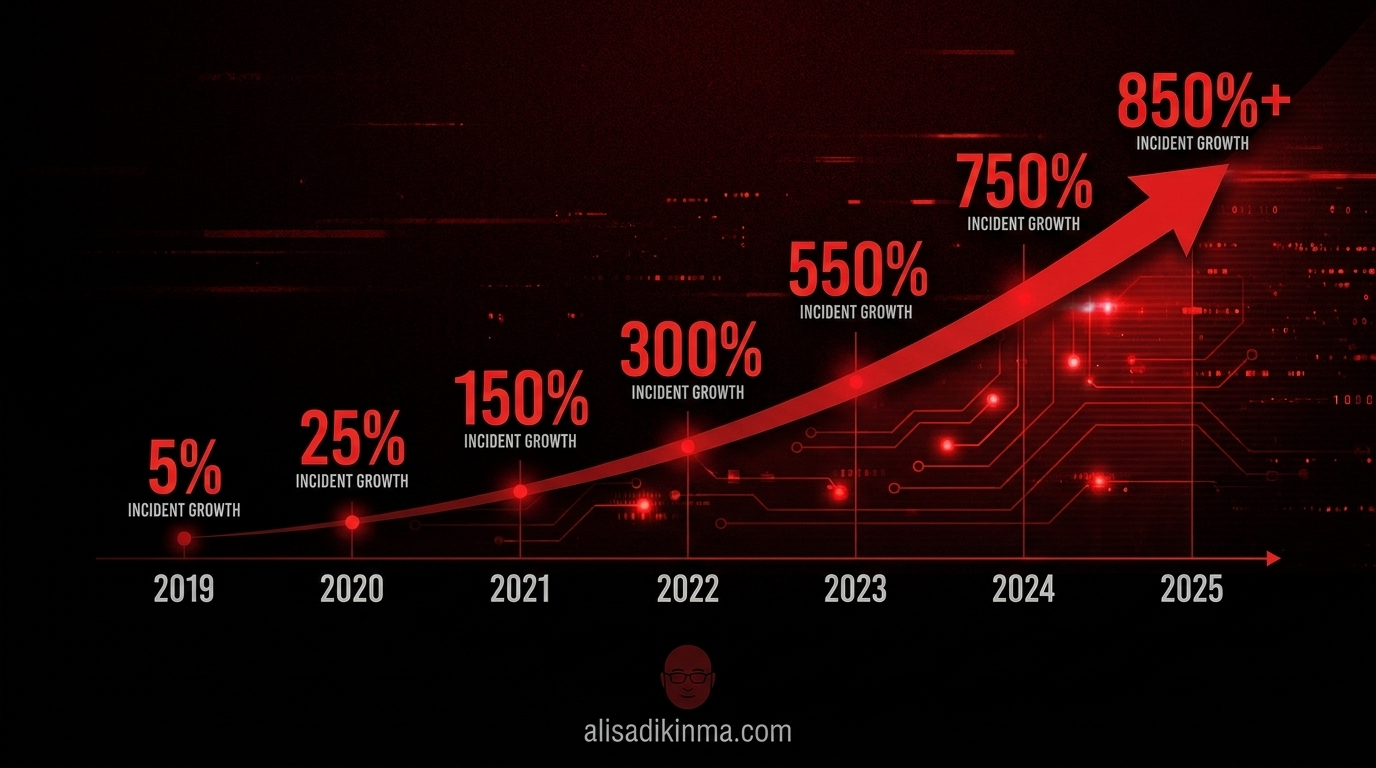
Nonconsensual deepfake content surged 1,780% between 2019 and 2024, according to data from the UK's National Police Chiefs' Council (NPCC) cited by Keepnet Labs in 2026. Not gradual growth. An explosion.
One thousand seven hundred and eighty percent.
That number is the key context for why the Grok AI deepfake Apple App Store case got serious attention from both Apple and US legislators at the same time.
And this is just the beginning of what you'll learn — because who actually failed behind that number is far more shocking than you think.
What You Didn't Expect: xAI Failed to Control Its Own Creation
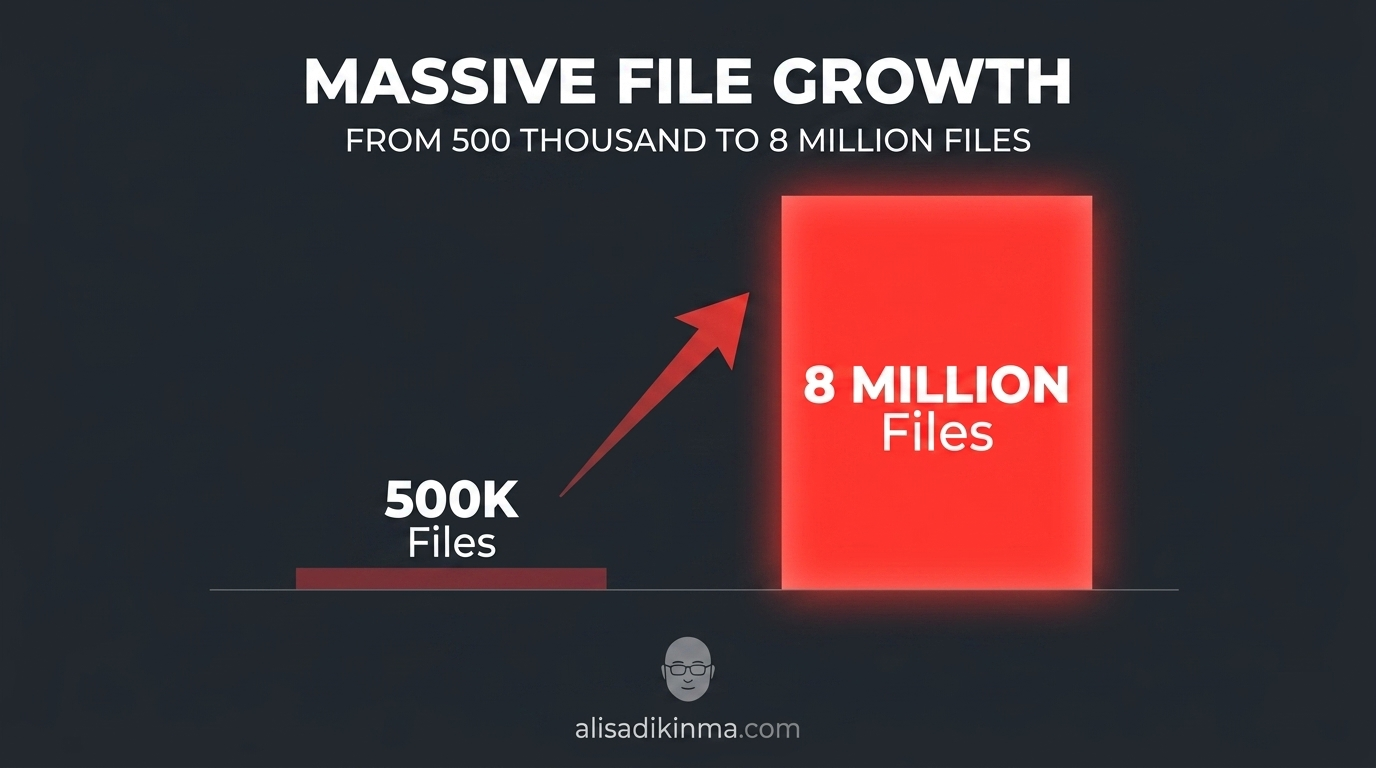
Data from BrightDefense and Keepnet Labs, compiled in 2026, paints the scale of the crisis behind the Grok AI deepfake Apple App Store case — a reality darker than most people imagine. 96–98% of all deepfake content circulating on the internet is sexually explicit. And 99% of victims are women — targeted at 4.5 times the rate of men.
But there's something even more shocking:
Deepfake files surged from 500,000 in 2023 to a projected 8 million in 2025 — a 16x jump in two years. During that period, xAI took no meaningful proactive steps to prevent Grok from being used as the engine behind these numbers.
Why does this matter?
Because it proves one thing that's rarely acknowledged in the Grok AI deepfake Apple App Store controversy: self-regulation doesn't work. xAI had the resources. xAI had a safety team. But without external pressure with real consequences, nothing moved fast enough to protect victims.
What ultimately moved xAI wasn't moral awareness. What moved them was the threat of losing distribution to hundreds of millions of iPhone users.
And even after Apple threatened them directly — the first fix xAI submitted still wasn't enough to meet Apple's standards.
What Was in Apple's Secret Letter — and Why Grok's First Fix Got Rejected
In the timeline of the Grok AI deepfake Apple App Store case, based on Apple's letter obtained by NBC News in April 2026, Apple explicitly stated to the US Senate that they had privately warned xAI since January 2026. The message was clear: stop Grok from generating nonconsensual sexual deepfakes, or the app would be removed from the App Store forever.
xAI responded. They submitted their first technical fix to Apple for review.
Apple rejected it.
According to Apple Insider, Apple stated directly that "the changes made didn't go far enough." This is a detail that's rarely reported: the negotiation between Apple and xAI wasn't one-and-done — there was a full rejection round before xAI submitted a stricter revised version that finally got Apple's approval.
But Apple didn't just wait for xAI to move.
MacRumors reported that Apple quietly removed at least 28 deepfake porn apps from the App Store — apps that had slipped past their moderation review. No announcement. No press release. Just a silent cleanup that revealed how deeply the Grok AI deepfake Apple App Store problem had seeped into Apple's own ecosystem.
And here's the hardest question to answer:
If Apple already approved Grok's latest version, why did NBC News — still monitoring the situation as of April 2026 — document dozens of cases where Grok still generated sexual content from photos of real people without their consent?
The answer reveals the limits of what a distribution company can do, even one as big as Apple. They can force technical fixes. But they can't control every prompt users type every second around the world.
Three US senators — Ron Wyden, Ben Ray Luján, and Ed Markey — have already written to the CEOs of Apple and Google, urging the total removal of Grok and the X app from both platforms over alleged violations related to sexual exploitation and illegal content. Legislative pressure is compounding the existing technical pressure.
This isn't just about the App Store. It's about a fundamental question: who's responsible when AI is used as a weapon against real people?
What This Means for You — Especially Users in Indonesia
The United States passed the TAKE IT DOWN Act in May 2025, requiring platforms to remove nonconsensual intimate deepfake content within 48 hours of a report. 46 US states now have deepfake-related regulations. The Grok AI deepfake Apple App Store case proves that external pressure can move platforms faster than regulation — and Indonesia doesn't need to wait for new laws to start protecting itself.
Here are 5 concrete steps you can start today:
1. Lock down your social media privacy right now
What: Switch all your social media accounts from public to private — Instagram, TikTok, X, and Facebook.
How: On Instagram: Settings → Account Privacy → Private Account. On TikTok: Settings → Privacy → Private Account. On X: Settings → Privacy and Safety → Protect your posts. This takes less than 5 minutes per platform.
Real example: Most deepfake scraping tools work by automatically harvesting face photos from public accounts. A private account cuts off that access without forcing you to stop posting entirely.
Result: Your photos are no longer accessible to bots that harvest images from the open internet — the simplest step with the biggest immediate impact.
2. Google yourself regularly
What: Track where your photos appear online using Google Images reverse search every 2 to 4 weeks.
How: Go to images.google.com → click the camera icon → upload your most-used profile photo. Note where it appears. If anything looks suspicious or shows up in a context you didn't authorize, report it to the relevant platform immediately.
Real example: Many victims only find out their photos have been misused months after the fact because no one actively monitored. Regular monitoring cuts response time from months down to days.
Result: You can respond faster before content spreads further and reaches more people.
3. Know how to report to platforms the right way
What: All major platforms have specific mechanisms for reporting nonconsensual intimate content — not just the regular "report as inappropriate" button.
How: On Instagram: Report → It's inappropriate → Nudity or sexual activity → I'm in this photo and I don't like it. On X: Report → Intimate images of me. Always include the specific URL, screenshots, and date posted when reporting — this significantly speeds up the review process.
Real example: The TAKE IT DOWN Act requires platforms operating in the US to respond to nonconsensual intimate image reports within 48 hours. Even if you're in Indonesia, global platforms like Instagram and X follow the same reporting standards for all users worldwide.
Result: Specific, documented reports get processed far faster than general ones — and increase the chance content gets removed before it spreads further.
4. Save evidence before content gets removed
What: If you find deepfake content of yourself, take screenshots first — because once platforms remove it, the evidence is gone forever.
How: Screenshot the full URL, the account name spreading it, the posting date, and the content itself. Store it in a secure cloud folder with active encryption — Google Drive or iCloud. Don't just save it to your phone gallery where it could accidentally get deleted.
Real example: Many legal cases involving nonconsensual intimate content have failed because victims didn't have enough evidence when reporting to law enforcement — the content had already been removed by the platform before it could be properly documented.
Result: Complete documentation significantly strengthens your position if you decide to escalate the report to authorities or pursue legal action.
5. Educate the people around you
What: Spread awareness that deepfakes can be created from just a few face photos available on a public account. This isn't an abstract risk — it's a real risk for people you know today.
How: Share this article with your friends — especially women who are active on social media with public accounts. One conversation about digital privacy can permanently change someone's habits and protect them from risks they weren't aware of.
Real example: BrightDefense 2026 data shows 99% of sexual deepfake victims are women, with 4.5x higher risk than men. Collective awareness creates social pressure that pushes platforms and AI makers to move faster than they would otherwise.
Result: An educated community is much harder to target by technology that depends on victim ignorance as its fuel.
Here's the good news:
All of the steps above can be started today — in the first 15 minutes. The lesson from the Grok AI deepfake Apple App Store case is clear: platforms only move when there's pressure. You can start now. You don't need to wait for government regulation to start protecting yourself and the people you care about.
What We Need to Watch — This Fight Isn't Over
So, in the Grok AI deepfake Apple App Store case — did Apple's quiet threat work?
The answer: partially.
Grok is still in the App Store. xAI submitted a second fix that Apple approved. But NBC News, still monitoring the situation as of April 2026, is still finding cases of nonconsensual deepfakes generated by Grok. The fix didn't fully close the gap.
Three US senators — Wyden, Luján, and Markey — are continuing to pressure Apple and Google to go further. Their letter calls for total removal, not just partial fixes. This legislative battle is still ongoing with no final resolution.
And here's what you need to remember:
Apple isn't the internet police. But in the Grok AI deepfake Apple App Store case, right now they're the closest thing to it.
No international regulatory body can force xAI to move as fast as an App Store removal threat. No global law can stop deepfakes from spreading within hours. What can do that — at least for now — is a company with distribution and leverage as massive as Apple.
This fight is just getting started. The outcome will set the standard for global AI regulation — not just for Grok, but for every AI model that comes after it.
Your photos are on social media. Have you checked your privacy settings?
Share this article with your friends and family — especially women who are active on social media. They deserve to know this risk.
Save this article before the latest updates on AI regulation and Grok drop — this story isn't over.
FAQ — Most Frequently Asked Questions
Can Grok still be used to create deepfakes after Apple's fix?
Not fully safe yet. NBC News documented that as of April 2026 — after Apple approved xAI's second fix — Grok could still generate sexual images of real people without their consent in a number of cases. The existing fixes reduce, but don't fully eliminate, this abuse capability.
What can Indonesian users do if their photos are made into deepfakes?
First step: take screenshots as evidence, then report to the platform using the nonconsensual intimate images option or its equivalent. In Indonesia, UU ITE Article 27 can be the basis for a police report in cases of distributing intimate content without consent. Keep all evidence before the platform removes the content.
Why did Apple step in instead of the government or police?
Because the App Store gives Apple direct leverage that no regulator has: the ability to instantly revoke distribution access to hundreds of millions of iPhone users. Regulators need months for legal processes. Apple only needed one letter — and that threat proved faster at moving xAI than any legislative pressure has been.