GitHub Copilot vs Claude Code: The Unexpected Truth in 2026
By Ali Sadikin Ma · · Updated
Category: Technology

Copilot's default AI engine isn't made by Microsoft.
Not a typo. In the middle of the GitHub Copilot vs Claude Code debate heating up in 2026, here's a fact almost nobody talks about: when you run a session in the newly GA'd GitHub Copilot CLI, the model that answers first is Claude Sonnet 4.5 from Anthropic — the direct rival GitHub has been trying to compete with. This was a deliberate choice, per Hacker News and DEV Community discussions in 2026.
But that's just the surface of this story.
On February 25, 2026, GitHub officially launched Copilot CLI to general availability. After a public preview since September 2025, this is an ambitious move that clearly targets the market dominated by Claude Code and OpenAI Codex. The question is: can it finally compete?
The numbers aren't as simple as you'd think.
On volume, Copilot still dominates — 20 million total users, ~4.7 million paid subscribers, and used at ~90% of Fortune 100 companies per Panto AI 2026 data. But on senior developer loyalty, Claude Code was picked as most loved by 46% of respondents versus Copilot at just 9%, in the Pragmatic Engineer survey via Uvik 2026.
And there's a plot twist most people haven't written about yet.
Microsoft — the company that sells GitHub Copilot — has widely adopted Claude Code across their own internal engineering teams in 2026, per Uvik's report. Not as an experiment. As their working standard.
So is this a competition, or something far more complex? And which one is actually better for your workflow?
What GitHub Actually Shipped: Every New Copilot Feature, One by One
GitHub Copilot CLI v1.0.51 (released May 20, 2026) isn't a cosmetic update. There are four additions that change how this tool actually works, per the official github/copilot-cli release notes.
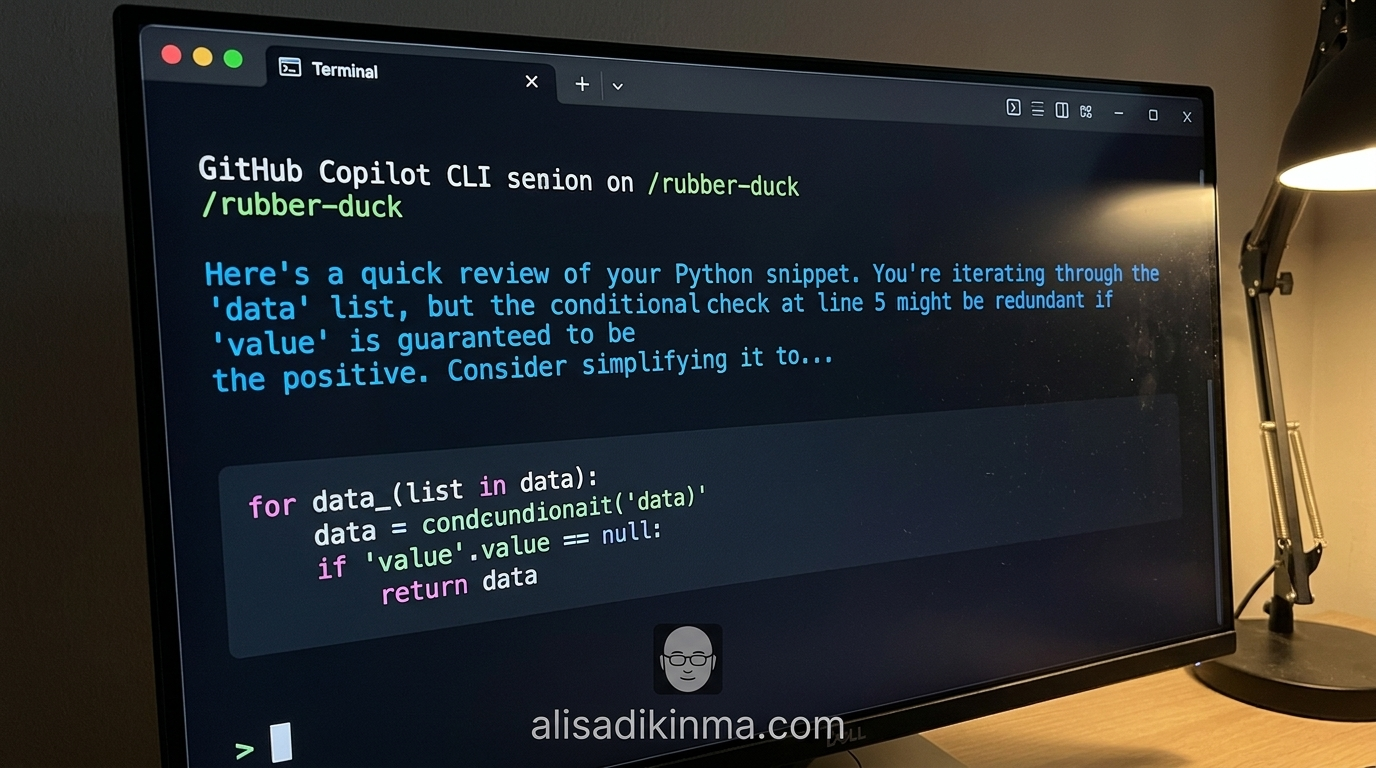
Customizable status line — you can see what the agent is working on in real-time. Slash command /security-review (experimental) — security scan straight from the CLI session. /rubber-duck — an independent critique agent that double-checks output before you commit. Resumable sessions via --session-id — pick up a dropped session without losing context.
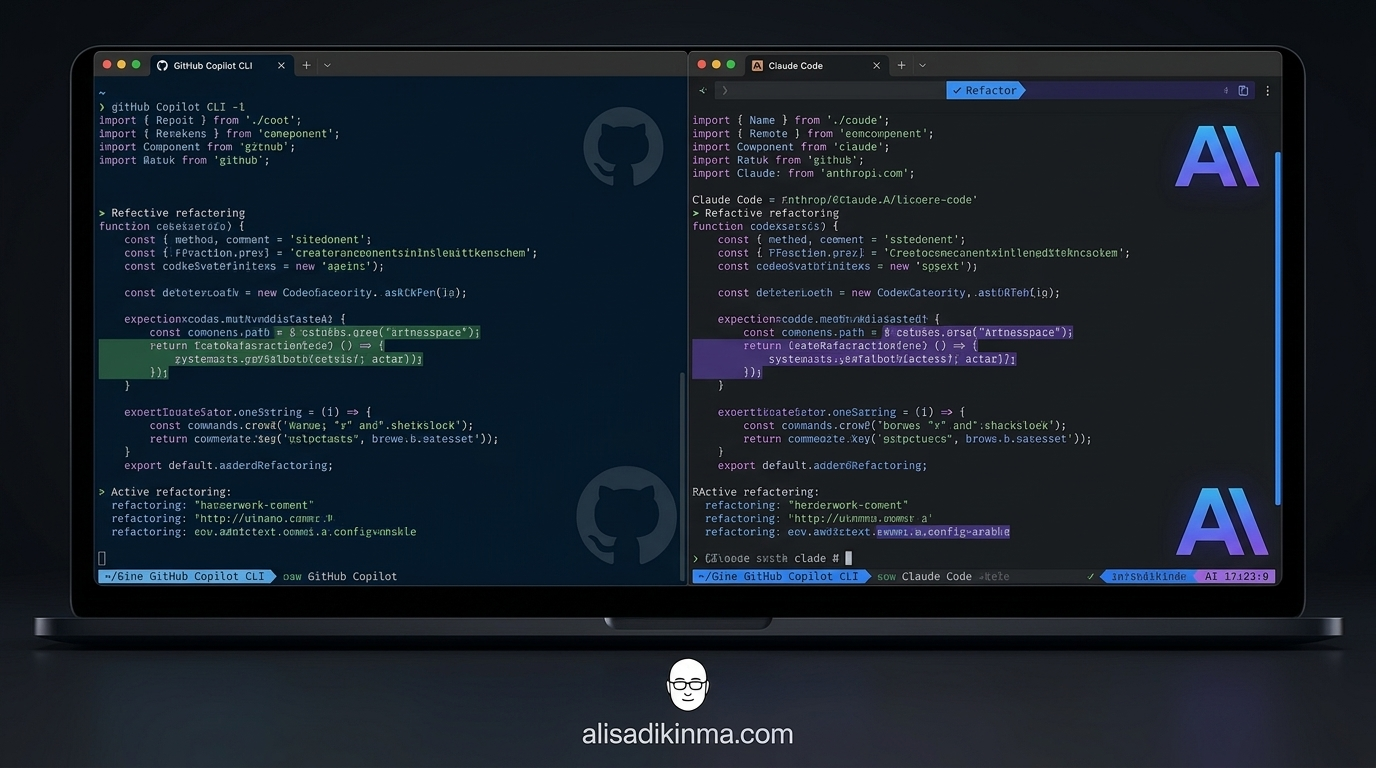
Most significant: Copilot CLI now supports three models you can swap mid-session using /model — Claude Sonnet 4.5, GPT-5.3-Codex, and Gemini 3 Pro. This multi-model flexibility is something standalone Claude Code or Codex don't have right now.
But there's a hard caveat you need to know before migrating.
Within days of GA, PromptArmor researchers published a sandbox bypass in Copilot CLI: a crafted env curl command could slip past the validator, download a remote payload, and pipe it to sh. GitHub responded quickly, but the incident shows the new features aren't fully hardened in real production environments yet.
Now let's look at the numbers that actually define this GitHub Copilot vs Claude Code comparison.
The Data Behind the Headlines: Where GitHub Copilot Actually Stands in 2026
The JetBrains AI Pulse survey in January 2026 (N=10,000+ professional developers) found GitHub Copilot leading workplace adoption at 29%, with Claude Code and Cursor each at 18%. On volume, Copilot is still king — used at 50,000+ organizations according to Panto AI 2026 data.
But the volume numbers hide a deeper problem.
The Pragmatic Engineer survey via Uvik 2026 found Claude Code chosen as most loved by 46% of senior developers. Cursor at 19%. GitHub Copilot at just 9%. This isn't just a number gap — it's a gap between users who just use it and developers actively benchmarking their tools.
Let's get specific:
Ryz Labs 2026 analysis via NxCode found 75% of senior engineers spend more time fixing Copilot suggestions than coding manually. Copilot's suggestion acceptance rate sits at 35–40%, below Cursor's 42–45% per NxCode 2026 benchmarks. For monorepos touching 10+ files, Copilot's ~8,000-token context window becomes a real bottleneck that directly affects output quality.
And then there's the March 2026 scandal.
Copilot injected promotional tips into 1.5+ million pull requests before eventually rolling back after the developer community pushed back hard. X user @thekitze summed it up in a way that's hard to argue with: Copilot "get mogged by literally every single agentic bs that came out." This isn't fringe sentiment — it was cited in Sherwood News as evidence that GitHub may have squandered the biggest first-mover advantage in AI coding history.
But this GitHub Copilot vs Claude Code comparison data doesn't give you the full picture until we look at the real head-to-head.
Head-to-Head: 5 GitHub Copilot vs Claude Code Metrics That Actually Matter
These five GitHub Copilot vs Claude Code metrics aren't from a marketing page. They're all from independent benchmarks and surveys in 2026. Each metric has different implications depending on how you actually work day-to-day.
1. Code Quality Benchmark: SWE-bench Verified
SWE-bench Verified measures an agent's ability to solve real GitHub issues from open-source repositories — the most objective metric available right now for comparing GitHub Copilot vs Claude Code apples-to-apples.
Reading it is simple: higher percentage means more real-world coding issues the agent can solve without human intervention. Per Uvik AI Coding Tools 2026 report, Claude Code (Opus 4.6) hits 80.8%. GPT-5.3-Codex at 77.3% on Terminal-Bench. GitHub Copilot has no published score on a comparable benchmark.
If your workload is heavy on autonomous coding — deploying hotfixes, multi-file refactoring, cross-repository debugging — Claude Code has a consistent, measurable edge here. For daily IDE autocomplete, this benchmark is less relevant.
2. Developer Satisfaction: CSAT and NPS
Satisfaction isn't just a feeling. It predicts how often you'll need to rewrite AI output from scratch in your day-to-day work.
Here's how to check for yourself: count how many times in a week you accept an AI suggestion without edits versus how many times you delete it and rewrite from scratch. That's the most honest satisfaction signal there is.
JetBrains AI Pulse data January 2026: Claude Code recorded 91% CSAT and an NPS of 54 — the highest across all AI coding tool categories. An NPS of 54 is typically only reached by consumer products like Apple or Notion. For developers who prioritize long-term output consistency, this metric is more predictive than any single benchmark.
3. Token Efficiency: What You're Actually Paying per Task
If you're on a paid plan, token efficiency is literally real money — and there's one test that rarely makes it into tool comparison headlines.
Builder.io ran identical head-to-head refactoring tasks in 2026, measuring tokens used for equivalent-quality output. Results per Built In 2026: Claude Code is 5.5x more token-efficient than Cursor for the same task. In heavy workloads with long sessions, that means fewer API calls, faster responses, and significantly lower cost per task.
The implication: $20/month for Claude Code can deliver more value than $10/month for Copilot Pro once you calculate per-task costs on heavy workloads.
4. Context Window and Multi-File Capability
This one hits hardest if you work in a monorepo or a project with dozens of interdependent files.
Copilot CLI has a standard ~8,000-token context window. Per NxCode 2026 analysis, that's not enough for tasks touching 10+ files at once — Copilot produces more errors in those scenarios compared to competitors with larger context windows.
The practical rule: if your project can be explained in one file, Copilot's enough. If you need 10+ files to give the AI meaningful context, the context window becomes a bottleneck you'll see immediately in the output.
5. Pricing and Value per Tier in 2026
Actual pricing comparison per Uvik 2026: Copilot Pro $10/month, Claude Code Pro $20/month (Max $100/month), Codex bundled with ChatGPT Plus/Pro.
But nominal pricing isn't enough for an honest comparison. If Claude Code's token efficiency is 5.5x better and its task output is more accurate, value per dollar shifts depending on your workload. For developers already subscribed to ChatGPT Plus or Pro: Codex is essentially free, and an SWE-bench score of 77.3% is more than enough for most workflows.
But all these GitHub Copilot vs Claude Code comparisons have one big plot twist that changes how you see the entire category.
Plot Twist: Copilot Isn't Competing With Claude Code — Copilot Is Hosting Claude Code
On February 26, 2026 — one day after Copilot CLI GA — GitHub officially added Claude from Anthropic and Codex from OpenAI as first-class coding agents inside Copilot for Business and Pro subscribers. Not a third-party integration. Built-in, native, on par with Copilot's own model, per GitHub Blog Changelog 2026.
Think about what that actually means.
GitHub — which was supposed to be competing with Claude Code — officially became a distribution channel for Claude Code. And Microsoft, which sells Copilot, has widely adopted Claude Code across their internal engineering teams in 2026 according to Uvik's report. Not as an experiment. As their working standard.
This isn't a defeat. It's a strategic pivot.
GitHub is no longer playing as an AI model company. GitHub is playing as a platform — where developers choose the best model for each task without leaving the GitHub ecosystem. Cursor has already hit $2 billion ARR with 1+ million paying users as of February 2026 per Sherwood News — and GitHub knows the biggest threat isn't losing on models, but another platform replacing GitHub itself, as Jay Parikh, the Microsoft executive overseeing GitHub, pointed out.
The implication: the GitHub Copilot vs Claude Code question as a binary choice is becoming less relevant. What matters is which work surface fits your workflow best.
Which Tool Is Right for You: A Decision Framework
70% of professional engineers now use 2–4 AI coding tools simultaneously according to Uvik AI Coding Assistant Stats 2026. This isn't a sign of confusion — it's proof that different tools genuinely have strengths in different contexts.

DEV Community author 'pickuma' summed it up best in April 2026 — and it applies to the whole GitHub Copilot vs Claude Code debate: "Pick the one whose surface matches where your work already happens, not the one with the best demo."
Use this framework:
Choose GitHub Copilot CLI if: you're already embedded in the GitHub ecosystem (Actions, PR review, Issues) and don't want to context-switch to a separate terminal. Multi-model support (Claude Sonnet 4.5, GPT-5.3-Codex, Gemini 3 Pro) plus new slash commands like /rubber-duck and /security-review are all here. Developers who completed tasks 55% faster with Copilot in the GitHub/Accenture 2025 study were generally those who already live in GitHub every day.
Choose Claude Code if: you work on autonomous multi-step tasks, large monorepos, or need the highest measurable quality benchmarks. Claude Code's workplace adoption grew 6x from ~3% (April–June 2025) to 18% in January 2026 per JetBrains, reaching 24% in the US and Canada. It dominates among senior developers who actively benchmark their tools.
Choose OpenAI Codex if: you're already subscribed to ChatGPT Plus or Pro and don't want extra costs. An SWE-bench score of 77.3% on Terminal-Bench is more than enough for most workflows, and Codex is bundled — no extra charge.
How to install GitHub Copilot CLI right now — two minutes:
- Install Node.js 22 or newer as a prerequisite
- Run
npm install -g @github/copilot(orbrew install copilot-clion macOS) - Open your terminal in your project directory
- Type
copilotand hit enter to start an interactive session - Authenticate with
/loginusing your GitHub account (requires an active Copilot subscription) - Test it: ask "Give me an overview of this project" and review the output
FAQ: GitHub Copilot vs Claude Code vs Codex — Quick Answers
Is GitHub Copilot still worth using in 2026?
Yes, especially if you already work in the GitHub ecosystem every day. GitHub Copilot is used at ~90% of Fortune 100 companies and 50,000+ organizations per Panto AI 2026. The newly added multi-model support — including Claude and Codex as first-class agents since February 26, 2026 — makes Copilot far more flexible. This is a platform that pivoted, not a product that's dying.
Why is Claude Code growing so fast despite being more expensive than Copilot?
Claude Code recorded 18% workplace adoption in January 2026 — growing 6x from 3% in mid-2025 per JetBrains. Senior developers choose it not because of price, but because of the highest CSAT (91%) and NPS (54) in the category, plus an SWE-bench Verified score of 80.8% per Uvik 2026. Tools that consistently produce correct output win loyalty even at a premium price.
Do I have to pick just one tool?
Nope. In the GitHub Copilot vs Claude Code context, 70% of professional engineers use 2–4 AI coding tools simultaneously according to Uvik AI Coding Assistant Stats 2026. The most common strategy: Copilot for daily IDE workflow and GitHub ecosystem tasks, Claude Code for complex autonomous multi-step tasks. Since GitHub officially added Claude as a first-class agent inside Copilot, the two are increasingly complementary — not competitive.
Try It or Bookmark It?
Now that you've seen the full GitHub Copilot vs Claude Code picture, the most concrete next step is to try it yourself. Install GitHub Copilot CLI right now — two-minute install: npm install -g @github/copilot, authenticate with /login, then swap models mid-session with /model to compare Claude Sonnet 4.5, GPT-5.3-Codex, or Gemini 3 Pro on your own project.
Not ready to switch? Save this article before your next tooling review — this landscape moves fast, and these numbers will look different six months from now.