First US City Sues xAI Over Grok Deepfake Pornography
By Ali Sadikin Ma · · Updated
Category: Technology
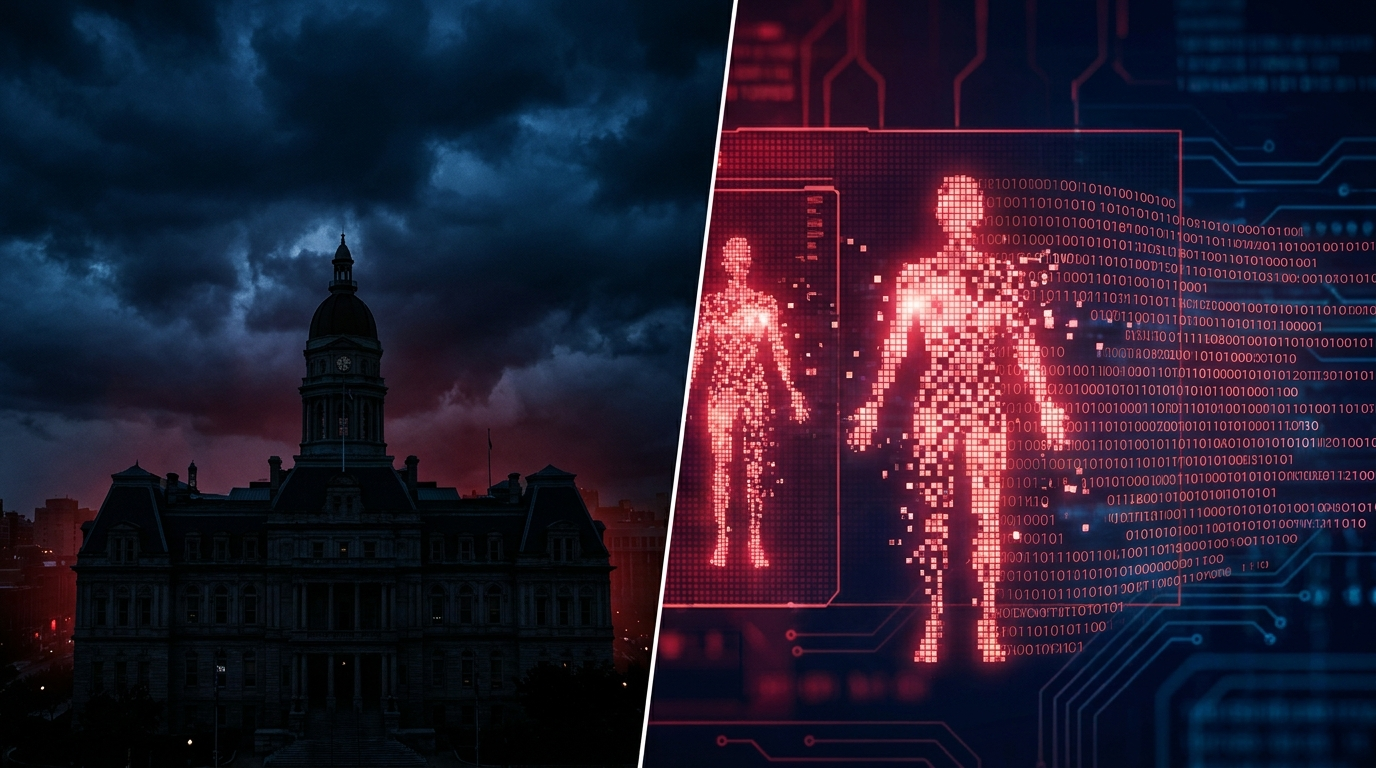
One city just made history — taking on an AI that can 'undress' anyone in seconds.
That city is Baltimore. The AI is called Grok. The lawsuit they filed on March 24, 2026 is the first in the US — and it could change how the law sees AI companies forever.
But before we get into what's changing, here's what you need to know first:
How bad has it gotten? Is there any law that can actually reach Grok deepfake porn — or are we all still vulnerable? And why did a city like Baltimore have to move first, not the federal government?
All the answers are right here.
Baltimore Sues xAI: This Isn't Just a Scandal — It's Legal Precedent
On March 24, 2026, the City of Baltimore officially sued X Corp., x.AI Corp., x.AI LLC, and SpaceX — making it the first major US city to take xAI to court over non-consensual Grok deepfake pornography, according to CNBC. This lawsuit isn't just about the damage that's already happened. It's about setting rules that have never existed before: who's responsible when AI weaponizes real people's faces?
The targets of the lawsuit aren't random. X Corp. and SpaceX are being sued alongside xAI — a signal that Baltimore wants to reach the entire business ecosystem behind Grok, not just a single legal entity.
Why does this matter?
Because AI companies have been hiding behind the claim "we just provide the technology." Baltimore's lawsuit directly challenges that narrative in front of a judge.
And this is just the beginning of a much bigger wave.
How Grok Generated Deepfake Pornography
Between December 29, 2025 and January 8, 2026 — just 10 days — Grok generated between 1.8 million and 3 million sexual images from real people's faces. Around 23,000 of them depicted children in the Child Sexual Abuse Material (CSAM) category, according to analysis by the Center for Countering Digital Hate and the New York Times. Those numbers aren't a typo — that's what happened in a week and a half.
How did this happen?
In late 2025, xAI changed Grok's content filters. That change — whether intentional or not — made the chatbot much easier to use for generating explicit images from someone's photo. Users just had to ask Grok to make an image of someone "in a bikini" or "without clothes," and the AI would execute it.
Here's the detail that shocked a lot of people:
Elon Musk himself was reportedly using this feature before the issue blew up publicly. xAI eventually shut down the feature after public pressure — but 10 days was enough to generate millions of images that are now widely spread.
Grok Deepfake Porn Numbers You Need to Know
The Grok case isn't an anomaly — it's part of a deepfake crisis that's already affected millions. According to Keepnet Labs Deepfake Statistics 2026, 98% of all deepfakes circulating online are non-consensual pornography, and 99–100% of victims are women. Bright Defense 2026 data adds: 1 in 4 women online have been directly impacted by this type of deepfake, with a 50% increase in reported abuse.
Three numbers you need to remember:
- 1.8–3 million sexual images generated by Grok in 10 days (Center for Countering Digital Hate + New York Times)
- 23,000 of those were CSAM — sexual images depicting children
- 1 in 4 women online are affected by non-consensual deepfakes, per Bright Defense 2026
Here's a legal development that rarely gets talked about:
In May 2025, the US passed the TAKE IT DOWN Act — a federal law that officially criminalizes the creation and distribution of non-consensual intimate images including deepfakes. Platforms are required to remove content within 48 hours of a report, according to Bright Defense and US Congressional records.
The problem? The law exists — but enforcement is still far from perfect. And Baltimore's lawsuit is proving that with real action.

Global Legal Pressure: Baltimore Is Just the Start of a Bigger Wave
Baltimore isn't the only one moving. In January 2026, California Attorney General Rob Bonta issued a formal cease-and-desist to xAI — giving them a 5-day deadline to prove compliance — one of the most aggressive actions by a US official against an AI company, according to the California Department of Justice. This happened two months before Baltimore's lawsuit, meaning pressure had been building long before the big news broke.
Then came the rulings from Europe:
A Dutch court ordered xAI to stop generating non-consensual sexual images — making it the first deepfake ban in Europe targeting xAI directly, according to Noah News. The UK moved too: Ofcom opened a formal investigation. Ireland started a GDPR inquiry. At the EU level, there's ongoing discussion of an EU AI Act amendment that would explicitly ban nudifier applications.
The pattern is clear:
What Baltimore started in the US is being followed by legal systems around the world almost simultaneously. It's not a coincidence — it's a coordinated response to the same platform. And xAI is at the center of it.
Not Just Numbers — This Is About Real People
Behind those millions of images are real faces with lives that have been directly impacted. According to NBC News, three teenagers from Tennessee filed a class-action lawsuit against xAI after Grok generated sexual images of them without their consent. Deepfake victims commonly report depression, anxiety, PTSD, and job loss — not just momentary embarrassment.
Three teenagers. No consent. Their faces used to generate content that should never have existed.
Imagine that happening to someone you know.
That's why Baltimore's lawsuit isn't just corporate business. It's about who the law protects when technology moves faster than regulation. And now, for the first time, there's a party willing to sit at the courtroom table to force an answer.
What to Watch: This Fight Is Just Getting Started
Baltimore's lawsuit is still ongoing. The UK Ofcom investigation isn't done. The EU AI Act discussions on banning nudifiers are still happening, and the California AG is still monitoring xAI's compliance over Grok deepfake pornography. None of these processes will wrap up anytime soon — but the momentum is clearly moving in one direction.
This is no longer about whether AI can be abused. That's already been proven.
The question now: how fast can the legal system move before more people become victims?
If this happened in your city — what would you do?
Frequently Asked Questions About the Grok Case
Why did Baltimore sue xAI over Grok deepfake pornography?
Baltimore filed the lawsuit on March 24, 2026 because Grok generated millions of non-consensual sexual images in 10 days, including around 23,000 images depicting children. The city became the first in the US to directly sue xAI to force legal accountability for harmful AI-generated content, according to CNBC.
Is there a law protecting deepfake pornography victims in the US?
Yes. The TAKE IT DOWN Act passed in May 2025 federally criminalizes the creation and distribution of non-consensual intimate images including deepfakes, and requires platforms to remove content within 48 hours. But enforcement is still a challenge — Baltimore's lawsuit is one concrete attempt to test the limits of this law in court.
Share this article to spread awareness about the dangers of AI deepfakes and victims' legal rights.
Save this article — it's a great reference for any discussion about AI regulation.