Claude Tag Slack: 4 Features, 3 Risks & Verdict 2026
By Ali Sadikin Ma · · Updated
Category: Technology
Anthropic launched Claude Tag Slack in beta on June 23, 2026, for Enterprise and Team subscribers, replacing the old Claude Slack app with a mandatory migration deadline of August 3, 2026. The tool operates as a multiplayer AI teammate in open channels with four key upgrades over its predecessor: public channel presence, ambient proactive monitoring, per-channel memory isolation, and DM support for sensitive data. Anthropic's internal data shows strong productivity gains — including 65% of their own product code written by an internal predecessor — but enterprise IT teams face three documented risks: incomplete audit logs for regulated workloads, unpatched security vulnerabilities including an open Files API exfiltration issue, and significant vendor lock-in concerns. The tool is included at no extra cost for existing Enterprise and Team plans, requires Primary Owner or Owner role to configure, and positions against competitors Viktor, Glean, and Salesforce AI in Slack.
The AI that writes 65% of Anthropic's own code just landed in your Slack.
On June 23, 2026, Anthropic launched Claude Tag Slack in beta for Claude Enterprise and Team subscribers — replacing the old Claude app in Slack, with a mandatory migration deadline: August 3, 2026.
That immediately raises three questions for anyone using Slack at work:
What exactly is Claude Tag? Is it safe for my team? And should our company use it?
This article answers all three — with documented data, real risks, and concrete steps if you decide to deploy.
What Is Claude Tag Slack and How Does It Differ from the Old Claude App?
Claude Tag Slack is an AI teammate that lives inside Slack — not a bot that answers questions, but a virtual colleague you can tag like any person with @Claude in any channel. Unlike the old Claude app that worked privately, Claude Tag Slack operates in open channels so the entire team can see, direct, and correct its work in real time. This isn't a minor upgrade — it's a mandatory replacement, with a deadline of August 3, 2026.
Claude Tag Slack runs on Claude Opus 4.8 — Anthropic's most advanced model at launch. And to set it up, you need at least the Primary Owner or Owner role in Slack. Admin alone isn't enough, according to the Anthropic Claude Tag Help Center (2026).
Cat Wu, Head of Product for Claude Code and Cowork at Anthropic, explained the fundamental difference to Fortune:
"Claude Code, Cowork, and chat are single-player. Claude Tag Slack is built to be multiplayer."
If you're still using the old Claude bot, here are four things it can't do that Claude Tag Slack now can.
4 Things Claude Tag Can Do That the Old Bot Can't
Claude Tag Slack brings four fundamental changes over its predecessor. Each of these features is available right now — but there's one thing you should know before turning them all on at once.
1. Works in Public Channels — Not Just Private DMs
What it is: Claude Tag Slack shows up in open Slack threads, not just private chats. Every channel member sees its output, can redirect it, and can correct its results right in the thread.
How to use it: Tag @Claude in a channel you've authorized. Type a clear task — for example, "@Claude summarize all this week's sprint updates from the #engineering thread." Claude Tag Slack replies in that thread, and the whole team gets the output instantly — no copy-pasting required.
Real-world example: Rob Seaman, General Manager at Slack, called it "making AI multiplayer" in Fortune (2026) — one team member tags Claude, the whole channel benefits. No more "ask AI yourself, paste results to the channel."
The result: AI work transparency becomes a natural part of team communication — not a hidden activity teammates can't verify.
2. Ambient Mode — Proactive Without Being Tagged
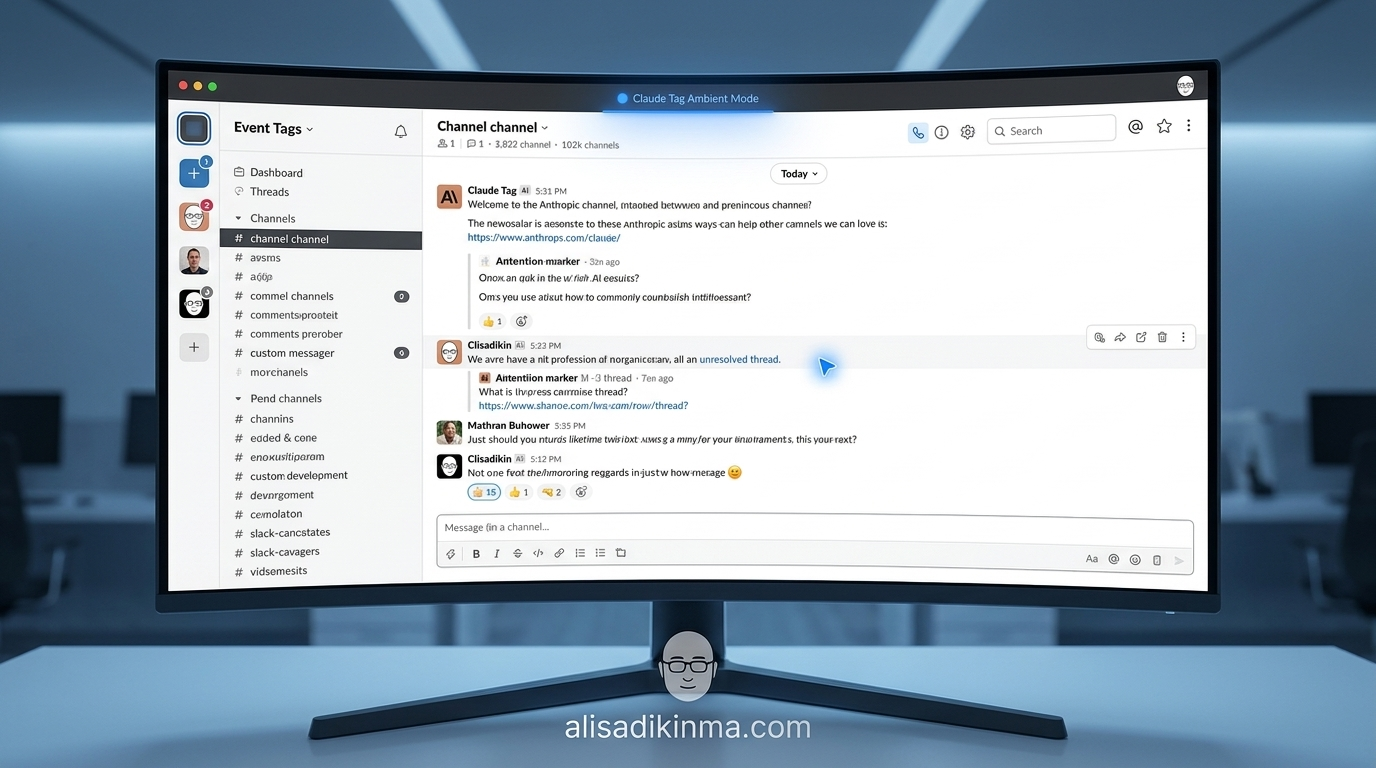
What it is: When enabled, Claude Tag monitors channels autonomously — flagging important updates, following up on unresolved threads, and surfacing insights without anyone needing to tag @Claude first.
How to use it: Enable it from channel settings. For initial deployment, turn this feature off for the first two weeks. Let your team get comfortable with tag-based interactions before the AI starts acting on its own.
Real-world example: An engineering team that keeps forgetting to follow up on bug reports can let Claude Tag automatically nudge threads that have gone two days without a response — without anyone having to remember to check manually.
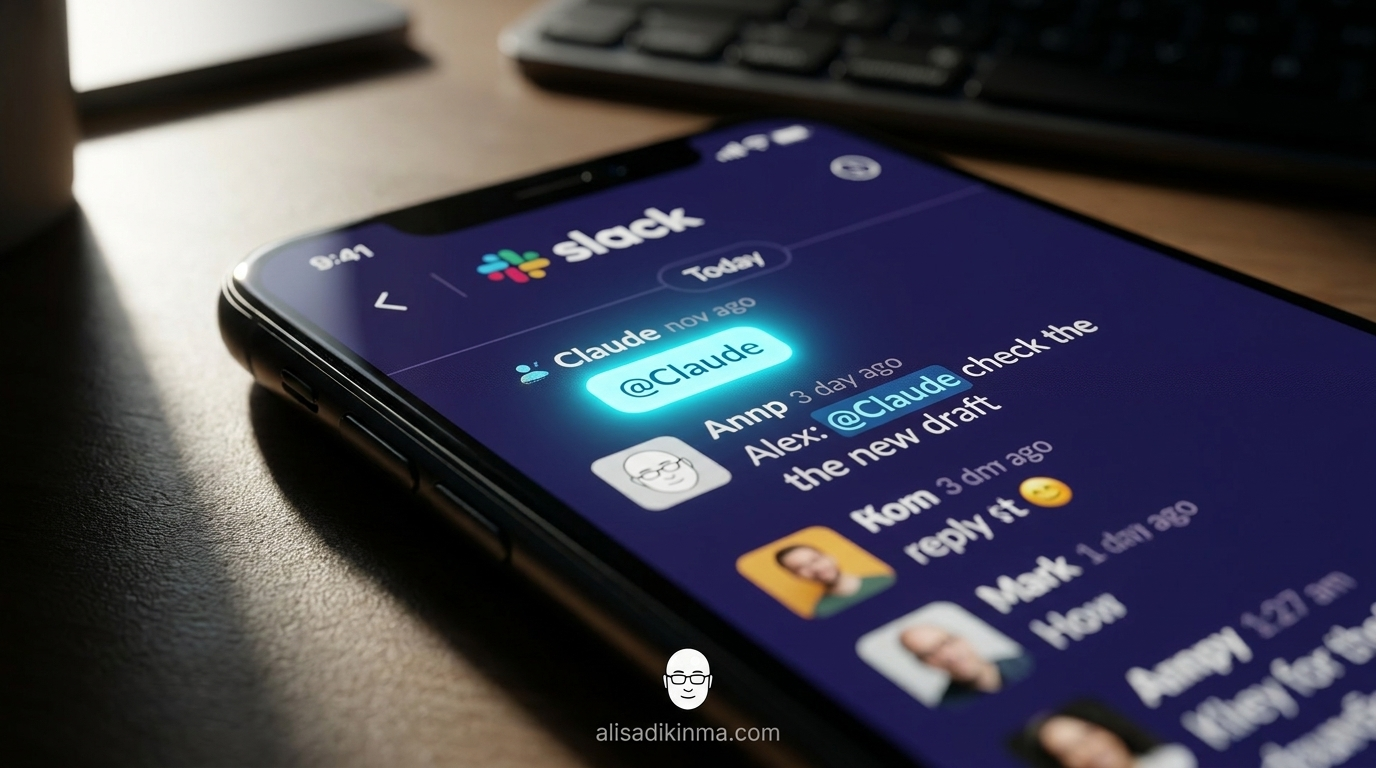
The result: Recurring tasks that usually fall through the cracks because nobody's watching — now someone is.
But take note:
This is the feature most questioned by enterprise IT teams. We'll get into why in the next section.
3. Per-Channel Isolated Memory
What it is: Claude Tag Slack stores context per channel, not globally. The Claude configuration in your sales channel can't access data from the engineering channel, and vice versa. Every action is logged in a centralized audit log with attribution to whoever made the request.
How to use it: During setup, define specific tools and data sources for each channel. Don't grant broad access to the entire organization in a single configuration — separate it by team or function.
Real-world example: According to CyberPress (2026), this isolation ensures that HR personnel data doesn't leak into the ops channel, even when both use Claude Tag Slack in the same workspace.
The result: Data boundaries between departments are enforced technically — not just through policies that rely on human discipline.
4. DMs for Sensitive Data
What it is: You can use Claude Tag Slack via DM for tasks involving sensitive data — without any output being visible to any public channel.
How to use it: For questions about personnel data, financial figures, or confidential client information — use a DM to @Claude, not a team channel.
Real-world example: Cat Wu explained to Fortune: "If you're handling very sensitive data like personnel data, you can DM Claude Tag … So you can be sure sensitive information doesn't leak."
The result: Flexibility between open collaboration in channels and context-appropriate data privacy — in the same tool.
Where Claude Tag Actually Delivers — 3 Real Productivity Wins
Before getting to the risks, it's worth looking at the internal data behind Anthropic's confidence in launching this. According to Anthropic research (2026), Anthropic employees now use Claude in 59% of their daily work — up from 28% twelve months ago. Average reported productivity gain: +50%, compared to +20% a year earlier.
More concretely:
65% of Anthropic's own product code was written by an internal version of Claude Tag Slack — before this tool was ever released to the public.
This isn't a marketing number. It's internal performance data — and it's why Anthropic was confident enough to make this a public product.
Three scenarios where Claude Tag Slack has proven most effective:
Engineering teams with heavy async work: Claude Tag cuts down the time spent re-explaining project context every time a new team member joins or someone returns from extended leave. Its per-channel memory preserves decisions that would otherwise get buried in scroll history.
Ops teams with recurring reports: Weekly status reports, meeting summaries, and standard updates can be handed off to Claude Tag. The output is consistent and team-reviewable before sending — not AI output that fires off without any review.
Teams that constantly lose context: When someone quits or takes extended leave, their project context usually disappears with them. Claude Tag's per-channel memory breaks that cycle.
But before you deploy, here are three questions your IT team will definitely ask.
3 Red Flags Enterprise IT Teams Have Already Raised About Claude Tag
Claude Tag Slack carries documented risks — not speculation. Here are the three most critical ones before August 3.
Red Flag 1: Incomplete Audit Logs for Regulated Workloads
Cowork activity — Claude Tag's direct predecessor — is excluded from Anthropic's audit logs, Compliance API, and standard data exports. This creates a real compliance gap for workloads subject to SOC 2 Type II, HIPAA, PCI-DSS, and GDPR. According to MintMCP Blog (2026), this isn't a bug — it's an architectural limitation that requires internal policy mitigation, not just a technical configuration fix.
Red Flag 2: Unpatched Security Vulnerabilities
CVE-2026-21852 (CVSS 5.3) — an API key exfiltration vulnerability via ANTHROPIC_BASE_URL override — was patched in January 2026. But a data exfiltration vulnerability through the Files API remains unpatched as of mid-2026, according to MintMCP Blog. Beyond that, in March 2026, Oasis Security demonstrated a full attack pipeline they dubbed "Claudy Day" — combining invisible prompt injection with conversation history exfiltration from unmodified default sessions.
Red Flag 3: Real Vendor Lock-in
81% of enterprise leaders are worried about AI vendor dependency. 47% report that at least one critical business function would stop if their primary AI vendor experienced significant downtime — according to Zapier's Enterprise AI Survey from early 2026. Giving a single AI vendor persistent access to the communication layer where all your institutional knowledge lives is a strategic decision, not just an IT one.
Who Can Use Claude Tag and What Does It Cost?
Claude Tag Slack is available in beta for Claude Enterprise and Claude Team subscribers starting June 23, 2026 — at no additional cost on top of existing subscriptions. It runs on Claude Opus 4.8, Anthropic's most advanced model at launch.

One technical requirement that often gets overlooked:
You need at least the Primary Owner or Owner role in your Slack workspace. Admin alone isn't enough for initial configuration — make sure the right person is handling setup from the start.
If you're still on the old Claude app, migration must be completed before August 3, 2026. Anthropic will automatically migrate any workspace that hasn't switched by that date. You don't have a choice about whether to migrate — only about who controls the process.
3 Alternatives If Your Team Isn't Ready to Commit to Claude Tag
Not ready to deploy Claude Tag Slack? Here are three other players worth considering before the deadline — each with a different positioning.
Viktor: An AI coworker for Slack and Teams built specifically for team collaboration. Viktor hit $15M ARR just 10 weeks after its public launch in February 2026, with 12,000+ active teams, and raised a $75M Series A from Accel in May 2026 — with Slack co-founders Stewart Butterfield and Cal Henderson as angel investors (Fortune, 2026). This is the closest direct competitor to Claude Tag Slack.
Glean: An AI knowledge layer for enterprise that indexes all work tools and team communications into one searchable knowledge base. Valued at $7 billion as of 2026 according to TechCrunch. More focused on knowledge retrieval than task execution — a more conservative choice for teams not yet ready for agentic AI.
Salesforce AI in Slack: Salesforce announced 30+ new AI capabilities for Slackbot in March 2026 — the biggest overhaul since the $27.7B acquisition — with some capabilities powered by Anthropic's Claude models for Business+ and Enterprise+ customers (Salesforce, 2026). The natural choice if your team is already in the Salesforce ecosystem.
Final Verdict: Should Your Team Adopt Claude Tag Before August 3?
The three questions raised at the start now have answers.
What is Claude Tag Slack? A multiplayer AI teammate that lives in Slack — replacing the old Claude app with a mandatory migration deadline of August 3, 2026. Migration isn't optional; the transition is already decided.
Is it safe? Depends on your industry. If you operate in a regulated sector — healthcare, finance, legal — the audit log compliance gap is a real problem that needs to be resolved before deployment. If you're in engineering or operations with less sensitive data, that risk is more manageable with clear internal policies.
Should you adopt it? Anthropic's internal evidence is strong: 65% of their own product code was written by Claude Tag Slack's predecessor before public release. But the strength of that evidence also reveals its limits — Anthropic built this tool for their engineering team at an AI company, not for law firms or hospitals.
Think about the last person who left your team. How much project context walked out the door with them?
Claude Tag Slack is Anthropic's answer to that question. Whether it's the right answer for your industry depends on how regulated the data in your Slack actually is.
August 3 isn't a deadline for deciding whether AI enters your team's Slack. Anthropic already made that call. The deadline is for deciding: who controls how it arrives.
Set up Claude Tag Slack this week — use the step-by-step guide in section 3 for a safe pilot on one channel before August 3.
Not ready to deploy? Save this article and share it with your IT team before the August 3 deadline — the compliance gap in section 5 is the first question they'll ask.
Frequently Asked Questions About Claude Tag Slack
Is Claude Tag Safe for Regulated Industries Like Healthcare and Finance?
For regulated industries, Claude Tag Slack has compliance gaps that need to be addressed first. Claude Tag activity is excluded from Anthropic's audit logs and the standard Compliance API — creating real exposure for SOC 2 Type II, HIPAA, and GDPR. Legal and IT teams need to evaluate policy-level mitigations before deployment, not just technical configuration. Run a pilot on non-sensitive channels while waiting for Anthropic's clarification on their compliance roadmap (MintMCP Blog, 2026).
What Happens If We Miss the August 3, 2026 Migration Deadline?
Anthropic will automatically migrate all workspaces still using the old Claude app in Slack on August 3, 2026. The transition happens either way — the only difference is whether your IT team controls the process, or Anthropic sets the default configuration for your workspace (Anthropic Official Announcement, 2026).
Can We Restrict Which Slack Channels Claude Tag Can Access and Remember?
Yes. Claude Tag Slack implements per-channel memory isolation — the configuration in one channel cannot share data or context with another channel. During setup, you define specific tools and data sources for each channel separately, not broad access across the entire workspace. Every action is also logged in a centralized audit log with attribution to whoever made the request (CyberPress, 2026).