Claude Code Pro Plan Removal: What Actually Happened?
By Ali Sadikin Ma · · Updated
Category: Technology
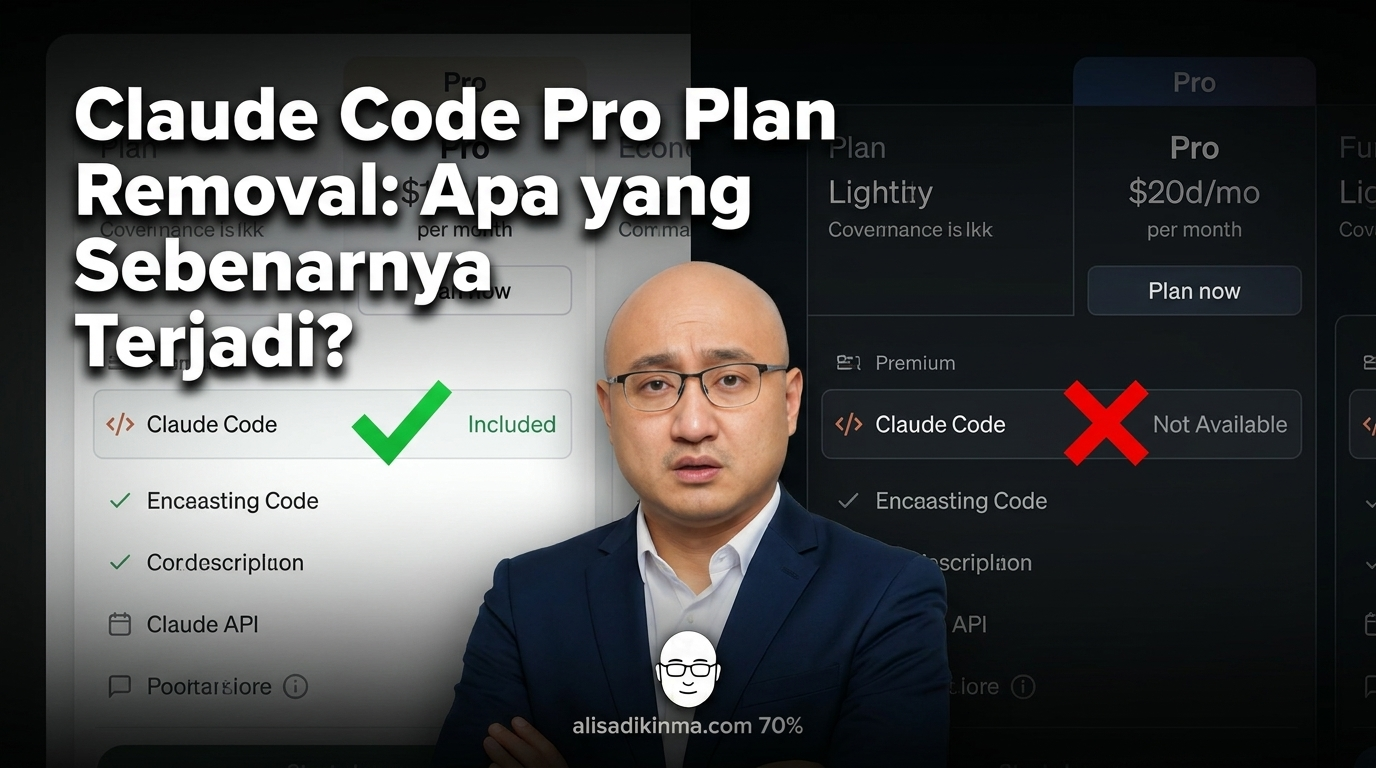
It disappeared. Then came back. Without a single word from Anthropic.
On April 21, 2026, Claude Code — the AI coding tool that thousands of developers rely on — quietly vanished from the $20/month Pro plan pricing page. This claude code pro plan removal wasn’t announced to anyone. No email. No notification.
Less than 24 hours later, the tool was back.
Still without an official explanation.
Until the internet started raising hell and Anthropic was finally forced to speak up — that’s when the real story came out.
And if you think this was just a technical glitch, hold on. There’s a much bigger story behind this “small test” they never announced. It’s about the business math that’s cracking across the entire AI industry.
The Tool That Vanished Overnight — and Came Back Without Explanation
According to The Register’s report on April 22, 2026, Anthropic removed Claude Code from the Pro plan pricing page on April 21, 2026, then reversed the change in less than 24 hours. There was no official announcement before, during, or after the change — until the developer community started questioning it publicly.
Claude Code isn’t just any tool. It’s an agentic coding tool that lets developers run automated AI agents — writing code, debugging, deploying — straight from their terminal. For a lot of developers, it’s the backbone of their daily workflow.
Then suddenly, the tool was gone from the pricing page. No message. No explanation.
Here’s what makes this claude code pro plan removal more than just a regular bug:
It wasn’t until the discussion blew up on X and developer forums that Amol Avasare — Anthropic’s Head of Growth — acknowledged a “small test.” According to XDA Developers, the test only touched around 2% of new prosumer signups. Existing Pro and Max subscribers weren’t affected.
But why did it need to be tested in the first place?
This Wasn’t a Glitch — Here’s What Anthropic Didn’t Want to Tell You
On March 31, 2026, Anthropic officially acknowledged that usage quotas for paid subscribers were “running out too fast” (Where’s Your Ed At). At the same time, Anthropic released Opus 4.7 on April 16, 2026 with a new tokenizer that can charge up to 35% more tokens for the same text, according to Verdent Guides. Two major changes in less than a month — before the claude code pro plan removal happened without any announcement.
But here’s the part that barely got any coverage:
Since the latest models dropped, developers have been reporting that Claude Code sessions run 3x longer than before — often running automated background workflows for hours on end (Where’s Your Ed At 2026).
Here’s what that means:
Every active Pro subscriber using Claude Code is consuming way more tokens than what was calculated when that $20/month price was first set. And Anthropic, quietly, is running out of room to cover that gap with flat-rate.
Still curious how big that gap is? The actual numbers will surprise you.
The $20 Math vs the Real Cost of Claude Code
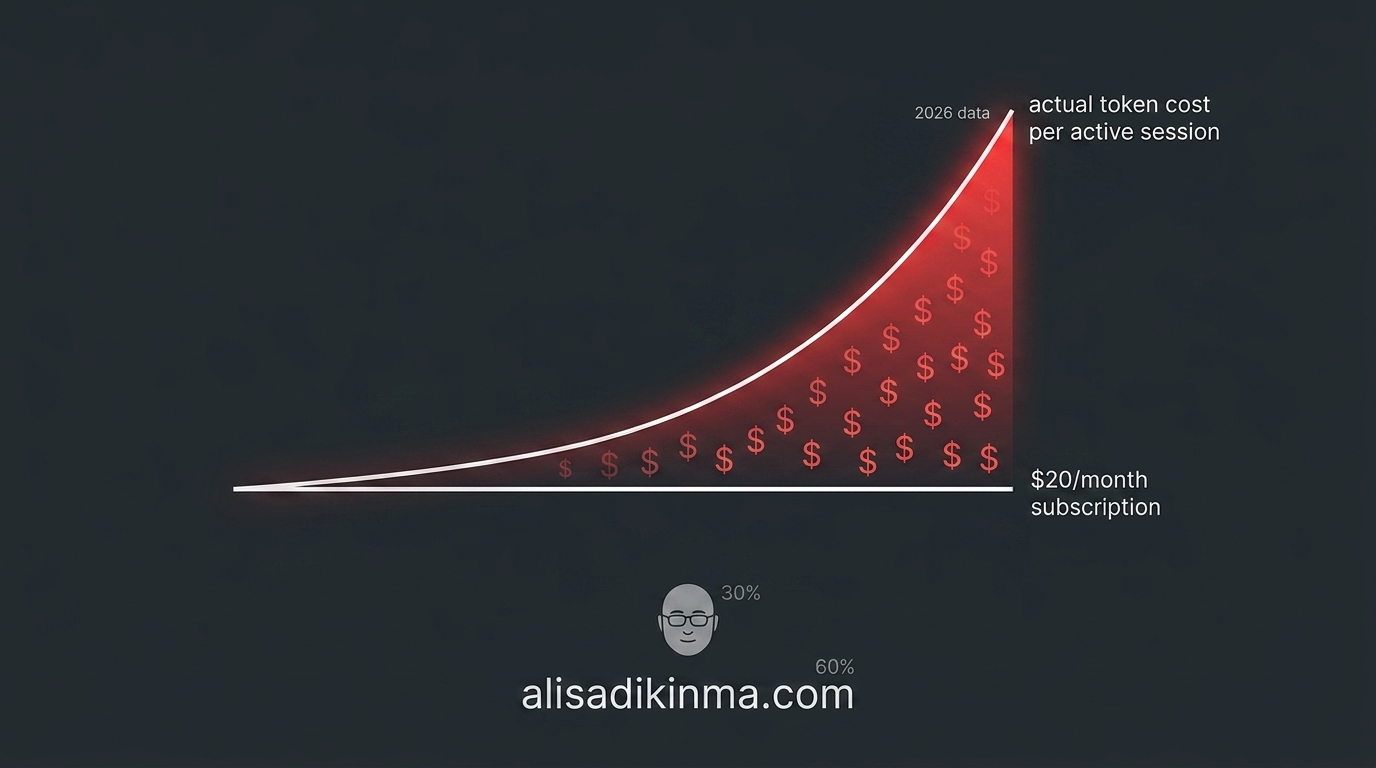
Claude Code alone has hit around $2.5 billion in annualized revenue, and Anthropic’s business subscriptions have grown 4x since early 2026 (The New Stack). But behind those big numbers, there’s a gap that’s becoming increasingly unsustainable between the flat-rate price and the actual token costs consumed by active users.
Here are the numbers:
A single orchestrated agentic session — 49 sub-agents, running 2.5 hours — is estimated to consume between $8,000 and $15,000 in token costs (Verdent Guides 2026).
Eight thousand to fifteen thousand dollars. For one session.
Is that what Anthropic is trying to cover with a $20/month price? Obviously not. But this is what they’re trying to manage with various limits and tests. Here are three concrete things you need to understand:
1. Pro Plan Has a Much Smaller Token Window Than Max Plan
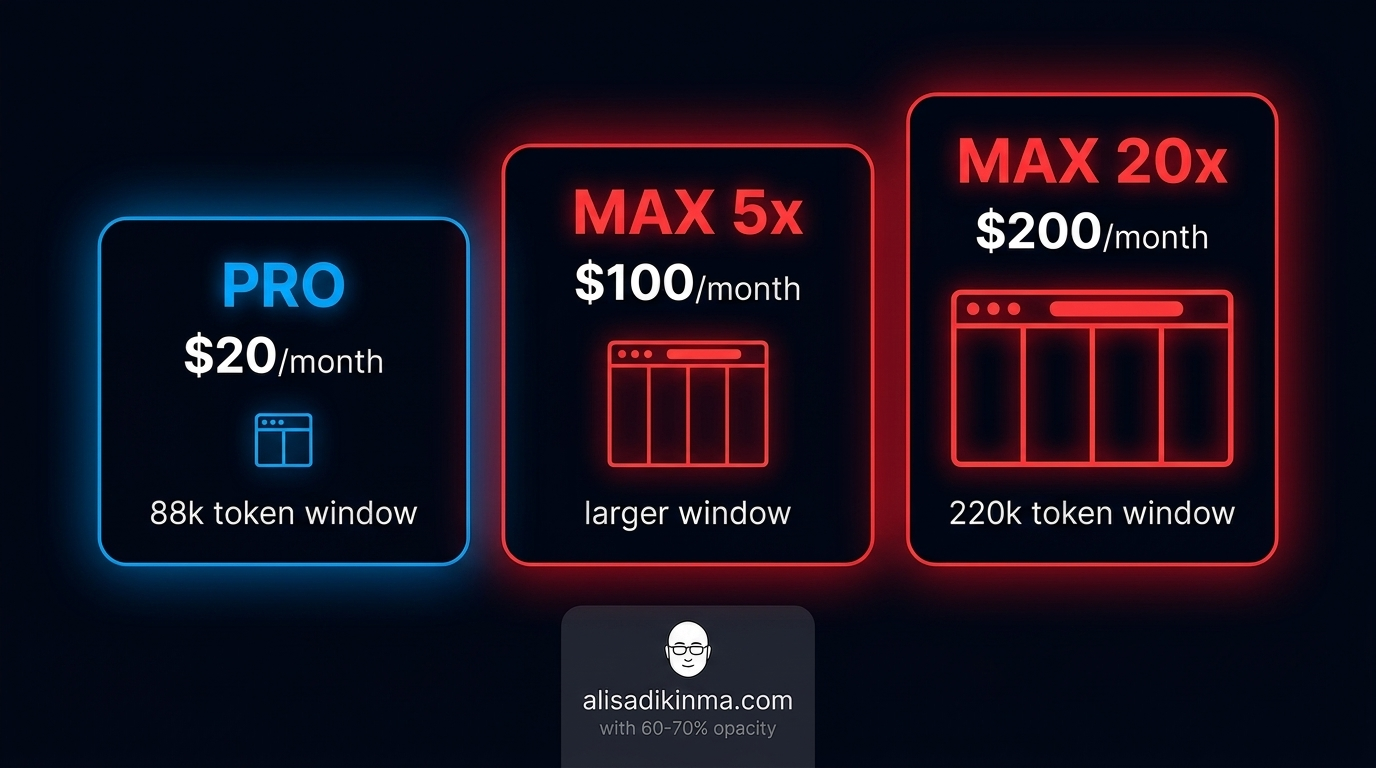
The $20/month Pro plan provides a very limited token window compared to the Max plan. Max 5x ($100/month) gives 5x more capacity. Max 20x ($200/month) gives 20x more — around 220,000 tokens per 5-hour window vs 88,000 tokens at lower tiers (Claude.com pricing + Verdent Guides). If you’re running long agentic workflows, the Pro plan wasn’t designed for that.
What to do: Audit your average Claude Code session length. If you’re averaging over 1 hour per session, you’ve most likely already exceeded what the Pro plan can sustainably handle.
2. Opus 4.7’s New Tokenizer Changes All Your Old Calculations
Since Anthropic released Opus 4.7 on April 16, 2026, the tokenizer being used can charge up to 35% more tokens for the same text (Verdent Guides). That means workflows that were just barely within quota can now easily blow past the limit — without you changing anything about how you work.
What to do: Don’t use token consumption estimates from before April 2026. Recalculate from scratch using the latest Opus 4.7 model metrics.
3. Modern Agentic Sessions Are Built to Run Long
Developers using modern Claude Code report sessions that can run for hours, managing dozens of sub-agents at once (Where’s Your Ed At 2026). This is very different from the usage model assumed when the flat-rate $20 was first set. And in the same week, GitHub Copilot announced parallel pricing changes — signaling this is an industry-wide shift, not just Anthropic’s own decision (The Register 2026).
What to do: Calculate the actual value of your agentic workflow before assuming the Pro plan will always be enough.
What You Should Do After the Claude Code Pro Plan Removal
Existing Pro and Max subscribers weren’t affected by the claude code pro plan removal that happened in April 2026 — the test only touched around 2% of new prosumer signups (XDA Developers). But this removal is a strong signal that Anthropic is actively exploring pricing model changes for agentic AI.
Concrete steps you can take right now:
First, check your position on the current plan. The $20 Pro plan is still available now. But if your workflow depends on long Claude Code sessions, upgrading to Max ($100 or $200/month) gives you a much more appropriate token window for agentic use.
Second, document your dependency on Claude Code now. Before the next pricing change, make sure you know exactly which workflows depend most on this tool — and what the alternative costs would be if pricing changes.
Third, actively monitor Anthropic’s official communications. The silent April 2026 test proved that changes can happen without major notice. Don’t wait until it affects you to realize what’s going on.
Frequently Asked Questions
Is Claude Code still available on the Pro plan after the April 2026 test?
Yes, Claude Code is still available on the $20/month Pro plan after Anthropic reversed the change in less than 24 hours on April 21, 2026. Anthropic confirmed the test only touched around 2% of new prosumer signups — existing subscribers weren’t affected. (The Register, XDA Developers 2026)
What’s the reason behind this claude code pro plan removal?
Because the operational costs of agentic AI far exceed the $20/month flat-rate model. A single orchestrated agentic session can consume between $8,000 and $15,000 worth of tokens (Verdent Guides 2026), while the new Opus 4.7 tokenizer charges 35% more tokens for the same input. The gap between actual costs and subscription pricing can no longer be sustainably covered.
The Signal You Need to Watch — This Isn’t Just About Anthropic
In the same week as the Claude Code Pro plan removal test, GitHub Copilot also announced parallel pricing changes — showing that this isn’t one company’s decision, but an industry-wide shift from flat-rate subscriptions toward models that better reflect real consumption (The Register 2026). Two major players. One week. Same direction.
And here’s the real insight:
The flat-rate AI era isn’t dead. But the flat-rate era for agentic AI — running dozens of sub-agents for hours at a time — might already be nearly over. Anthropic isn’t the only one testing these limits. They’re just the first one to get caught.
This claude code pro plan removal may be reversed. But the questions it left behind aren’t answered yet.
How many of your workflows depend on tools that are still priced based on old usage models?
Check our complete Claude pricing guide to find the right plan before prices change again.
Save this article — AI pricing is moving fast, and this won’t be the last test you don’t know about until after it’s already happened.