Today's Top Global News: 5 Big Things Happening Right Now
By Ali Sadikin Ma · · Updated
Category: Technology
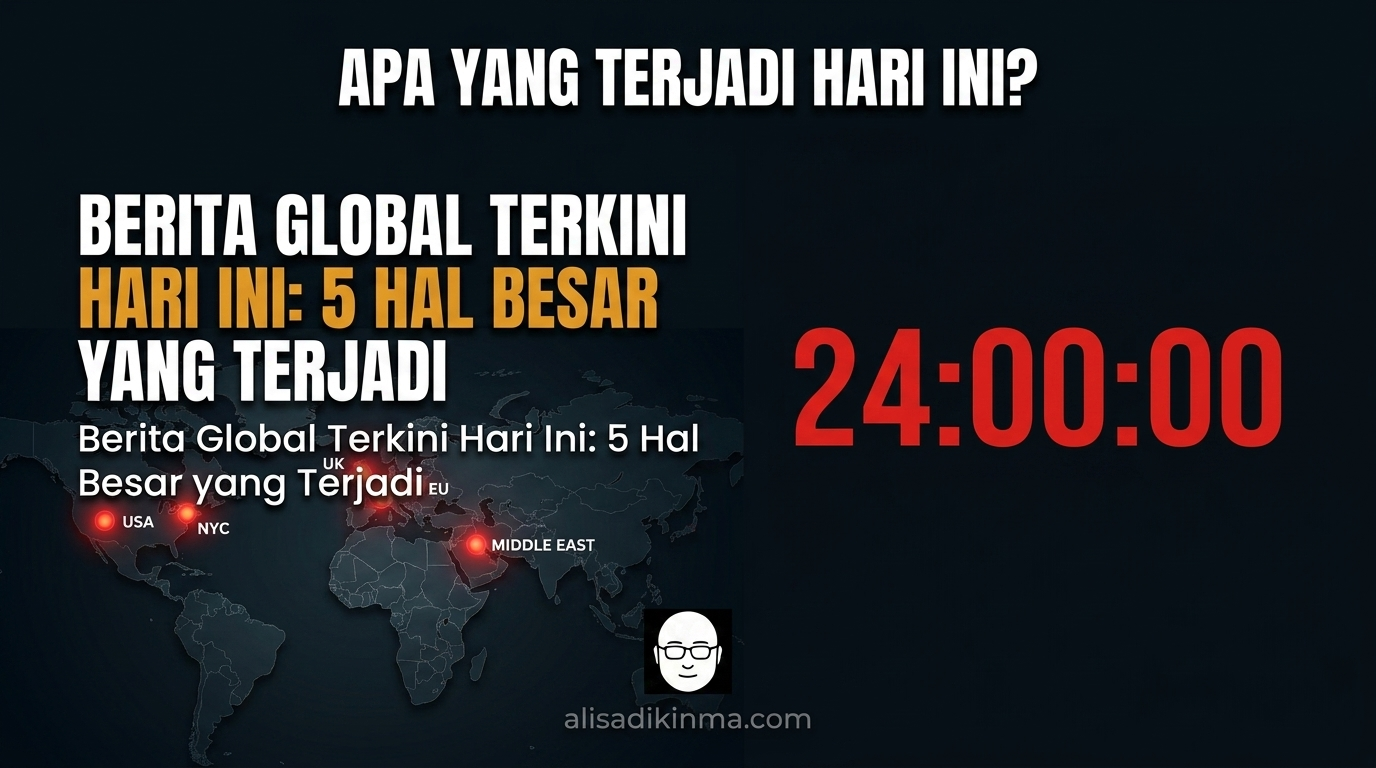
A cross-sector global news digest covering five major developments: UK PM Keir Starmer’s resignation and its ripple effects across Western Europe and Latin America; the White House Executive Order establishing AI as a core driver of national power; Meta’s 8,000-person layoff paired with Qualcomm’s $10B bid for Tenstorrent signaling a tech labor market reshuffle; New York City’s landmark AI bias policy protecting 1.1 million students; Europe’s Tech Sovereignty Package reducing dependence on non-European digital providers; and a preliminary US-Iran deal to reopen the Strait of Hormuz alongside NATO strategy shifts. The unifying thread: the global contest over AI sovereignty — who controls AI and on whose behalf.
A lot of today’s biggest global news broke before you even woke up.
In the last 24 hours, 5 sectors of the world were rocked at once. Here’s your global news digest for today — one place, one read, everything that matters.
The UK Prime Minister stepped down amid a public trust crisis. The US just signed its first national AI doctrine — a document that immediately changes how every AI startup in the world needs to think. And 1.1 million students in New York now have new protections against biased AI — a policy model that’s never been implemented at the city level anywhere in the world.
According to the Reuters Institute Digital News Report 2026, information overload is the #1 reason readers abandon the news. That’s exactly why this digest exists.
Here we go:
[POLITICS] UK Prime Minister Resigns — and the Global Political Map Shifts With It
Keir Starmer resigned as UK Prime Minister, triggering a political realignment within the UK’s governing coalition (NPR World News, 2026). This isn’t just a leadership change — it’s a signal that progressive governance models in Western Europe are being squeezed from multiple directions at once.
But it’s not just the UK that’s moving.
In Latin America, Colombia changed course. Abelardo de la Espriella won in an extremely tight election and immediately shifted the country to the right — affecting its approach to security, the economy, and peace agreements that have been in place for years (AI Startup Edge / NPR, 2026). This isn’t a normal rotation. This could unravel a reconciliation process that’s been building for nearly a decade.
And in East Asia:
China retaliated against US bans on Chinese tech companies by sanctioning 10 American defense companies (NPR / AI Startup Edge, 2026). The response was fast and deliberate.
These aren’t three separate stories. They’re one pattern: geopolitical pressure is shifting governments across nearly every continent at once. And this isn’t the only big shift in today’s global news...
[ARTIFICIAL INTELLIGENCE] The US Now Has a National AI Doctrine — and This One Is Serious
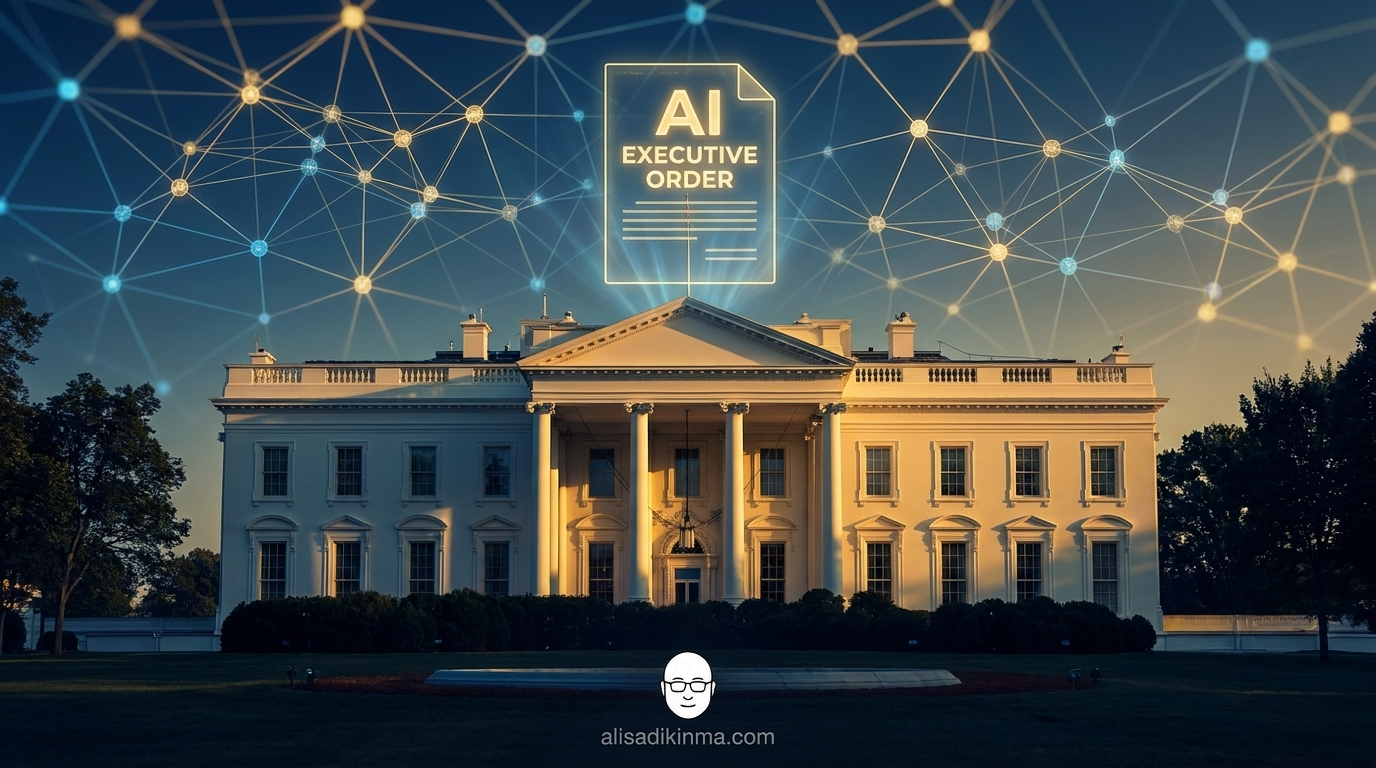
On June 2, 2026, the White House signed the Executive Order “Promoting Advanced AI Innovation and Security” — officially declaring AI a “primary driver of national power” and directing all federal agencies to modernize their IT and cybersecurity using AI (White House / Inside Privacy, 2026). Translation: every US government contract, every public system, is now moving toward AI.
But part of this executive order almost didn’t make it — and the reason touches on some deeply sensitive privacy issues.
According to the Council on Foreign Relations, 2026 could be the year that defines AI’s global direction. Not because of the technology, but because of who controls the rules.
And it’s not just governments making moves:
Google launched AI Mode in Search using Gemini 3.5 Flash — described as “the biggest change to Google Search in 25 years” (Crescendo AI, 2026). Every search you run from here on out is different from before.
If you still think AI is just a startup thing — think again. This is a matter of national interest now.
[AI INDUSTRY] Meta Cuts 8,000 Jobs, Qualcomm Eyes $10 Billion — Who’s Actually Winning?
Meta laid off roughly 8,000 employees — about 10% of its total workforce. At the same time, 7,000 other employees were moved into AI-focused teams (AI Startup Edge, 2026). This isn’t a routine cut. It’s a massive restructuring: people who can’t work with AI are being replaced by people who can.
Meanwhile:
Qualcomm entered preliminary talks to acquire Tenstorrent for $8–10 billion — a direct move to compete with Nvidia and AMD in AI chip infrastructure (AI Startup Edge, 2026).
Can Qualcomm dislodge Nvidia from its dominant position? The answer isn’t clear yet. But the bet has been placed, and it’s not a small one.
Here’s what you need to understand:
These two stories share the same message. The tech job market is reorganizing itself. People who know AI aren’t just safe — they’re in demand. People who don’t are getting pushed out. And this isn’t a prediction about the future. This is today’s global news — it already happened this week.
[EDUCATION] 1.1 Million NYC Students Are Now Protected from Biased AI — A Model for the World?
The New York City Department of Education now requires all AI tools to pass a bias and fairness review before being used across the school system serving 1.1 million students (AI Startup Edge, 2026). This is the most comprehensive AI policy in the education sector ever implemented at the city level anywhere in the world — and it could become a global blueprint.
The way it works is simple but powerful:
Before any AI tool can enter a New York classroom, it must pass an audit: does it produce biased results for certain groups? Do students from different backgrounds get a fair experience? If it doesn’t pass, it doesn’t get in.
This closes the loop from the article’s opening — those are the 1.1 million students we mentioned at the start.
But is it enough? And more importantly: who decides whether an AI is truly “fair”? There’s no global answer to that question yet. And that’s exactly why New York just became the world’s reference point.
[TECHNOLOGY] Europe Chooses Its Own Path: The ‘Tech Sovereignty Package’ and the End of Digital Dependency
While the US and China compete to dominate AI, Europe is choosing a third path. On June 3, 2026, the European Commission announced the “Tech Sovereignty Package” — including the Cloud and AI Development Act and Chips Act 2, designed to reduce Europe’s dependence on non-European digital providers (EY Geostrategic Analysis, 2026). And the public comment deadline for the EU AI Act guidelines on “high-risk” systems falls exactly today, June 23, 2026 (Risk Info AI, 2026).
This has immediate implications:
US-based cloud and AI companies face new regulatory pressure if they want to operate in Europe. Data residency requirements, compliance audits, and contract terms will all change in the next 12 months.

If you work at a company that partners with European cloud providers — this isn’t an issue you can ignore anymore.
[GLOBAL SECURITY] US-Iran Near a Deal, NATO Prepares — The World’s Security Map Is Being Redrawn
The US and Iran signed a preliminary agreement to end the conflict and reopen the Strait of Hormuz — one of the most strategically vital shipping lanes in the world — though key details remain unfinished (EY Geostrategic Analysis / Wellington Management, 2026). If it holds, this would be the biggest geopolitical shift in the Middle East in a decade.
On the other side:
NATO held a meeting in Ankara focused on US commitments and Russia containment strategy (Wellington Management, 2026). Two fronts at once — the Middle East and Eastern Europe — are being reset.
And behind all of this is a number that should make you pause:
91% of the world’s largest organizations — those with more than 100,000 employees — have already revised their cybersecurity strategies because of geopolitical volatility (World Economic Forum, 2026). Not because they wanted to. Because they had no other choice.
All of this has one common thread — and you may not have seen it yet...
The Common Thread: Why All These Stories Are Really About One Thing
The UK PM resigned. The US has a national AI doctrine. Meta restructured massively. New York protected 1.1 million students from biased AI. Europe is building digital sovereignty. The US and Iran are near a deal. NATO is mobilizing.
Five different sectors. One shared question:
Who controls AI — and on whose behalf?
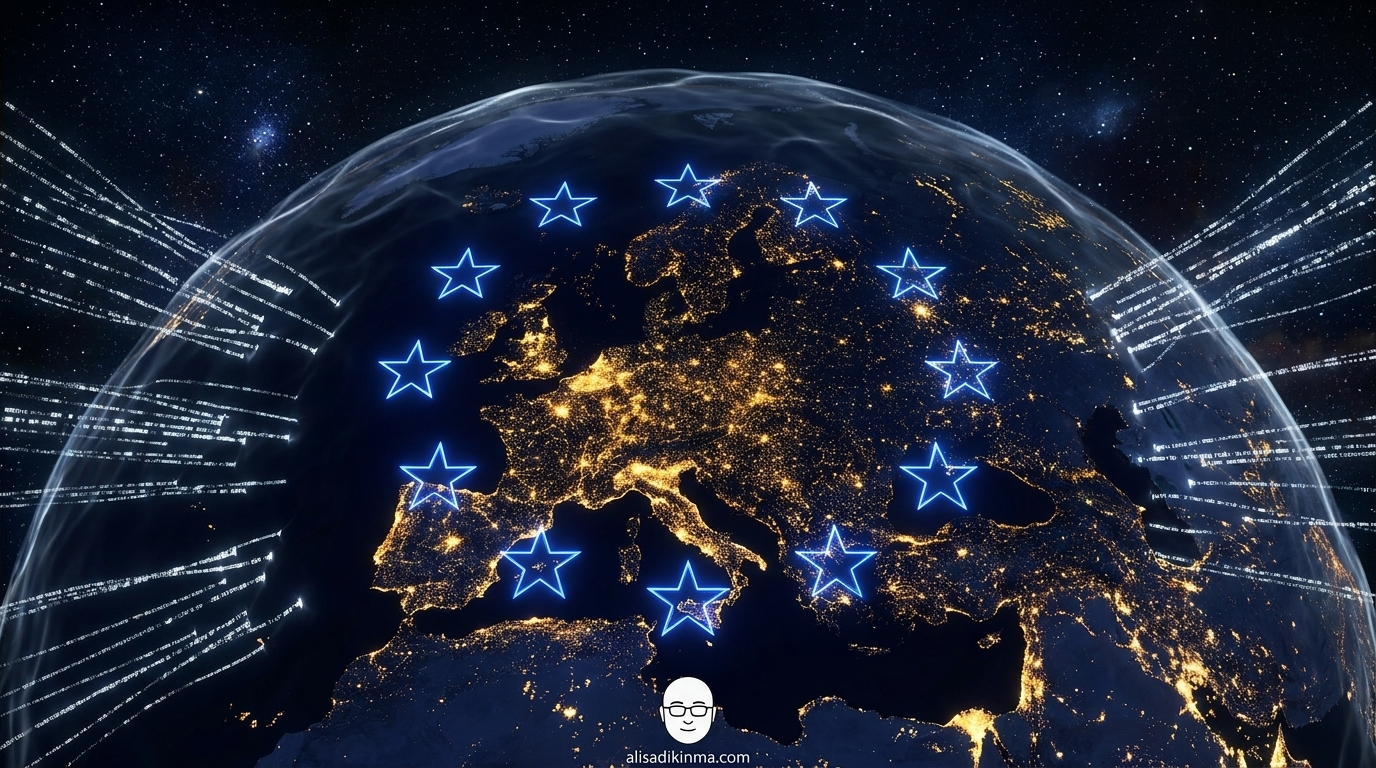
According to the Council on Foreign Relations, 2026 is the year that could define AI’s global direction. Not because the technology is changing drastically, but because political, economic, and military powers are all competing to decide who makes the rules.
That’s AI sovereignty: the ability of a government, institution, or individual to control how AI shapes their world. Every piece of today’s global news — from Starmer to the Strait of Hormuz — is one chapter of the same contest.
Now you have the full picture. What will you do differently?
FAQ: Today’s Global News — Questions You Might Have
Is this global news relevant to me?
Absolutely. US AI policy directly impacts tech startups and companies using American platforms. European regulations affect cloud contracts. And US-China tensions affect the tech supply chain we all depend on every day. According to the Reuters Institute Digital News Report 2026, readers who understand global context are better equipped to make smart career and business decisions.
Is all of this verified?
Yes. All data in this article comes from the White House, Reuters Institute, World Economic Forum, EY Geostrategic Analysis, Council on Foreign Relations, and NPR. Every claim is cited from its original source. No unsourced claims.
Where can I follow what happens next?
Follow this page. The next daily digest drops within 24 hours. Cross-sector developments — from politics to AI to global security — curated into one 5-minute read.
You’re in the know — now share it.
Save this article and send it to 1 person who needs to know what’s happening today.
Tomorrow brings another 24 hours. Follow now so the next global news digest is already waiting for you.