Anthropic SpaceX Deal: The Facts Missing From Every Headline
By Ali Sadikin Ma · · Updated
Category: Technology

Anthropic was supposed to be Elon Musk's biggest rival in the AI world.
They were the ones who called SpaceX first.
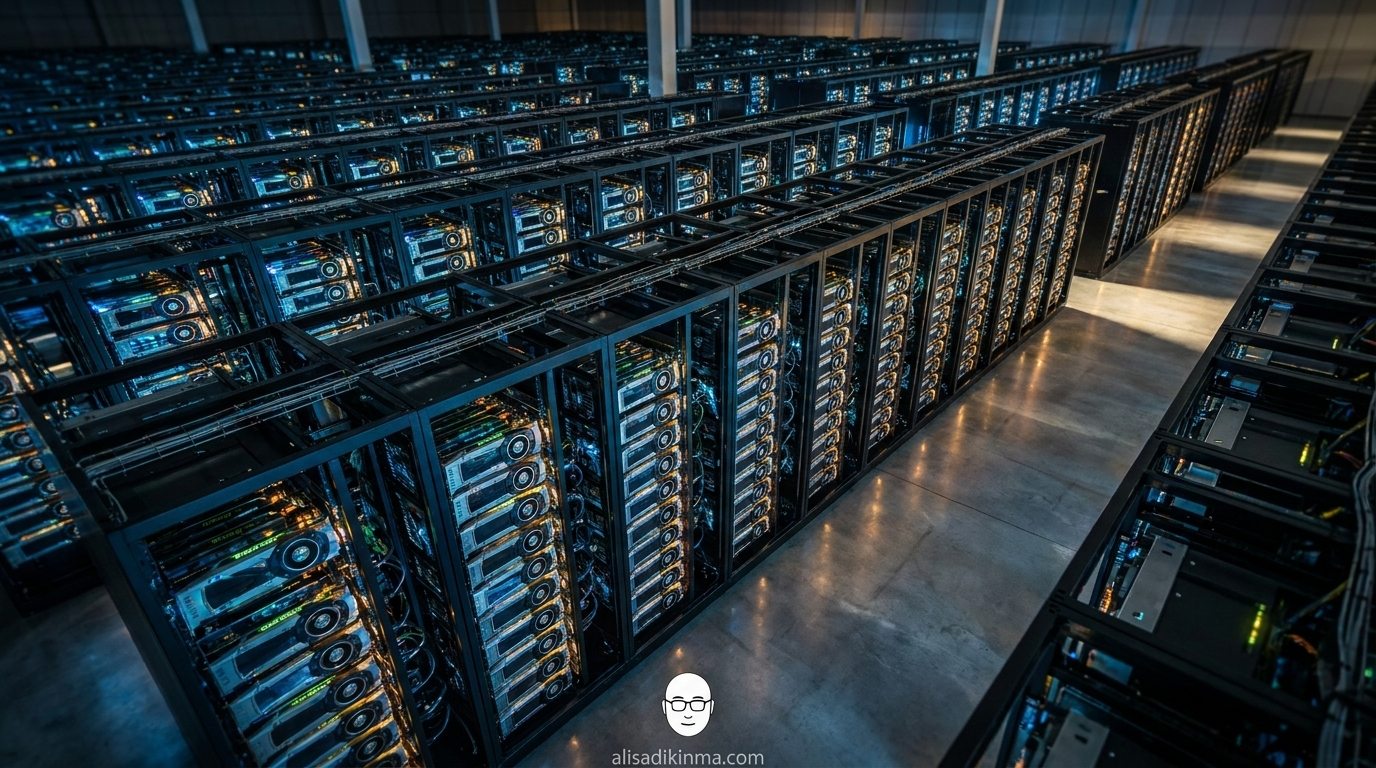
And this isn't speculation. It's official: Anthropic just locked in all the compute capacity at SpaceX's Colossus 1 in Memphis, Tennessee. Over 300 megawatts. 220,000 NVIDIA GPUs. A deal that, three months ago, felt almost impossible.
The Anthropic SpaceX deal shocked almost everyone in the industry. But there's one number that should've been in every headline — instead it got buried in CNBC's third paragraph.
What number?
Anthropic's revenue grew 80x in Q1 2026. Not 8x. Not 80 percent. Eighty times — way above their own internal projections of "only" 10x (CNBC, 2026). When demand grows that fast, you'll call whoever has GPUs.
But that's just the first of three questions that need answering:
Why did the world's most "anti-Elon" AI company end up needing SpaceX's infrastructure? What does it mean for you if you use Claude every day? And is this a sign that the AI arms race has truly spiraled out of control?
The answers might be more surprising than the deal itself.
The Story We've Always Believed About Anthropic and Musk
In 2026, Elon Musk said he was "impressed" after meeting with Anthropic's senior team — a surprising statement since he'd previously been one of the most vocal critics of Anthropic's approach to AI development (Bloomberg/CNBC, 2026). That shift opened the door for the SpaceX deal. But to understand just how big this change is, you need to know where the story started.
Anthropic was born from a split. In 2021, Dario Amodei and a group of researchers left OpenAI. Not because they lost a competition. But because they believed safe AI couldn't be built with a "move fast, figure it out later" approach.
On the other side, Elon Musk had his own approach: aggressive, fast, and never shy about criticizing anyone he thought was moving too slow — including Anthropic. While he was building xAI and Grok, Anthropic moved on a different track: safety research, alignment, peer-reviewed methodology.
For years, these two entities moved on paths that never crossed. Until suddenly they did.
Here's what makes the SpaceX deal so surprising:
It wasn't Musk who came to Anthropic. Anthropic came to SpaceX. And the reason isn't some shift in ideology — it's a crisis that couldn't be solved any other way.
The Compute Crisis That Makes It All Make Sense
Anthropic hit an acute compute shortage after their revenue grew 80x in Q1 2026, blowing past their own 10x internal projections by a mile. CEO Dario Amodei publicly apologized for Claude downtime and delays — a rare signal from a company of this caliber (CNBC/Proactive Investors, 2026). That's the critical context before you look at the numbers behind Colossus 1.
Imagine you've got a startup. Your revenue projection for the year is $1 million. Then in just the first quarter, you're already at $80 million.
Good? Yes. A problem? Also yes.
Because you don't have the capacity to serve all that demand yet.
Colossus 1 isn't your average data center. It's one of the largest AI clusters ever built: 220,000 NVIDIA GPUs, over 300 megawatts of capacity. For context: 1 megawatt is enough to power about 1,000 homes. Anthropic just locked in capacity equivalent to 300,000 homes — just to run and train AI models (AIN Ukraine/CNBC, 2026).
But here's the part that barely gets written about anywhere:
Colossus 1 is also used by xAI. Musk's Grok platform. That means Anthropic and xAI are now technically sharing the same infrastructure. Two AI models competing directly against each other, running on the same hardware, in the same building, in Memphis, Tennessee.
Is Anthropic aware of this? Almost certainly. Do they have another choice? To answer that, you need to see just how insane the scale of the arms race is across the entire industry.
300 Megawatts, 220,000 GPUs, and an Arms Race Nobody Planned For
Global big tech will spend nearly $700 billion on AI infrastructure in 2026 alone — and Fortune says nobody knows when this buildout ends (Fortune, 2026). The year before, private AI companies raised a record $225.8 billion in 2025, nearly double 2024, with mega-rounds above $100 million making up 79% of the total (CB Insights, 2025). These numbers aren't just background to the story — they are the story.
Anthropic isn't the only one panicking about compute. This is the condition of the entire industry.
Look at who's racing to lock in capacity:
Amazon has already dealt with Anthropic for up to 5 gigawatts of capacity, with the first gigawatt promised by end of 2026 (CNBC, 2026). OpenAI has a partnership network worth over $1.4 trillion. Microsoft, Google, Meta — all of them are queuing for chips and capacity before anyone else gets there first.
So why did SpaceX close faster than all the others?
Because Colossus 1 already exists. No building from scratch. No waiting two to three years for construction. The GPUs are already installed, the network connections are already running, the capacity is immediately available.
But there's one layer of this deal that almost all coverage missed:
This isn't just a ground-based deal. Anthropic has also expressed interest in working with SpaceX on orbital compute development — in the gigawatt range, in low Earth orbit (CNBC/VoiceOfEmirates, 2026).
Orbital AI compute. Not science fiction anymore.
Meanwhile, Anthropic now leads the global AI model performance rankings as of March 2026 — above xAI, Google, and OpenAI (Vention Teams State of AI 2026). With that position and 80x revenue growth, they're chasing a trillion-dollar valuation.
So here's the real picture:
This isn't ideology being abandoned. It's proof that the AI arms race is moving so fast that even ideological rivals are forced to become business partners. This deal is a symptom of industry conditions, not a values-based decision.
What the Anthropic SpaceX Deal Means for Your Claude Usage Right Now
This deal directly impacts your experience using Claude — and the changes are already in effect. According to CNBC (2026), the extra capacity from Colossus 1 lets Anthropic make three concrete changes that active users and developers will feel immediately.
1. Claude Code 5-hour rate limit doubled.
If you're a developer using Claude Code heavily, this means you can work longer in a single session without hitting a wall. For engineering teams that rely on Claude for code review, debugging, or large refactors, this is a noticeably different daily workflow. If you've been hitting limits mid-session — that experience should drop significantly.
2. Peak-hour restrictions lifted for some users.
Until now, Claude's responses could slow down at certain hours because server capacity was maxed out. With the extra GPUs from SpaceX, that bottleneck shrinks. For you using Claude during productive work hours — morning through afternoon — this directly means less frustration and more output.
3. API limits for Opus raised.
For developers building applications on Claude Opus — Anthropic's most advanced model — this opens up use cases that were previously capacity-limited. Wells Fargo says this deal could turn the "compute crunch" into significant revenue growth by unlocking enterprise customers who were previously forced to wait or switch to a competitor (TipRanks/Wells Fargo, 2026).
But if you think SpaceX is the end of the weirdness:
This is just round one.
The Weirdness Is Just Starting — 3 Things to Watch
Anthropic has expressed interest in orbital compute development with SpaceX, opening up the possibility of GPU clusters in low Earth orbit in the gigawatt range. Meanwhile, they're chasing a trillion-dollar valuation after leading the global AI model performance rankings as of March 2026 (Vention Teams, 2026). These three developments will determine where this story goes in the next 12 months.
1. Will orbital compute actually happen?
This isn't a hypothesis. Anthropic and SpaceX are actively discussing this right now. If it happens, it'll be the first AI infrastructure that truly exists outside Earth's atmosphere — with latency, security, and cost implications that nobody in the industry has ever had to calculate before.
2. Can Anthropic hit a trillion-dollar valuation?
With 80x revenue and access to one of the world's largest GPU clusters, Wells Fargo and other analysts are starting to seriously consider that target. But competition from xAI, OpenAI, and Google won't slow down. Whoever locks in the most compute first — they'll have the strongest position.
3. Will xAI follow the same pattern?
Colossus 1 is also used by xAI. If Anthropic can deal with SpaceX's infrastructure, the question is: will Musk separate xAI from the ecosystem he built himself? Or does this open a new era where all major AI models share the same infrastructure — regardless of the ideology they hold?

Remember the question at the start of this article: why did the most "anti-Elon" AI company end up calling SpaceX?
The answer isn't that ideology changed. In an arms race burning through nearly $700 billion a year, nobody has the luxury of being an idealist.
Next time Claude's response feels faster than usual — you know now: it might be running on a GPU in Memphis, Tennessee. In the same building as Musk's Grok. Whether that bothers you or not says more about where this AI race is headed than any analysis could.
FAQ: Anthropic, SpaceX, and the AI Compute Race
The most common questions after this deal's announcement — answered directly.
Are SpaceX and xAI the same company?
No. SpaceX is an aerospace and infrastructure company that owns the Colossus 1 facility in Memphis. xAI is Musk's AI company that makes Grok. Anthropic's deal is with SpaceX for access to physical infrastructure, not with xAI. But both share the same Colossus 1 facility because xAI also uses the GPU clusters there to train Grok models (CNBC, 2026).
Does this deal mean Anthropic is now aligned with Elon Musk's political views?
No. This is an infrastructure deal, not an ideological statement. Anthropic is renting compute capacity from a SpaceX-operated facility — the same way other companies rent servers from AWS or Google Cloud. This deal was driven by compute needs after Anthropic's revenue grew 80x in Q1 2026, blowing way past their own 10x internal projections.
Should I switch from Claude to another AI because of this deal?
Technically, this deal makes Claude better: higher rate limits, less downtime, and more Opus API capacity. If your concern is product quality, the SpaceX deal moves in the right direction. If your concern is who owns the infrastructure — almost every major AI model depends on the infrastructure of a handful of big players. That's industry reality, not an Anthropic exception.
Follow the AI compute arms race analysis here — the next deal will probably be even stranger than this one.
Not sure what to think about this deal yet? Save this article and share it with a friend who uses Claude. Ask them one question: do you actually care whose GPU is running your AI?