Anthropic China AI: Model Mythos and the Digital Weapon
By Ali Sadikin Ma · · Updated
Category: Technology
Only 40 institutions in the world are allowed to access this AI — and China just asked for it.
Not through official channels. Not through a public application. At a closed-door meeting in a Singapore hotel, a Chinese think tank representative quietly requested access to Mythos — the most dangerous AI model Anthropic has ever built.
The answer: no.
This Anthropic China AI incident isn't just another diplomatic rejection.
But what's more shocking isn't the refusal itself.
What's shocking is why this model is so dangerous that only ~40 institutions — the majority in the US and UK defense and intelligence sectors — are allowed to touch it.
And what's even more shocking: China didn't need to wait for that answer. They already had another strategy.
A strategy that involved 24,000 fake accounts and 16 million conversations.
What Happened in Singapore?
On the sidelines of the Carnegie Endowment for International Peace conference — one of the most prestigious think tanks in the world — a Chinese think tank representative approached the Anthropic team personally.
Not an open request. Not a formal negotiation.
The conversation happened outside the official agenda, in April or May 2026. And what was being requested wasn't the everyday Claude you can use today. They wanted Mythos — a model that isn't even mentioned on Anthropic's official website.
Anthropic immediately said no.
But who was really standing behind that door? Which Chinese think tank? And why did Anthropic even need to be at a meeting like this?
This is where the story starts peeling back deeper layers.
Anthropic was there because they wanted to engage in diplomatic dialogue about AI — believing that openness could build global trust. But what they found was the opposite: a direct request for access to technology that they internally classify as a digital weapon.
Not an academic discussion. Not a research exchange.
A request for access to a tool that, in the wrong hands, could reduce a nation's digital infrastructure to ash in a matter of hours.
The Anthropic China AI rivalry, which had been running behind the scenes of academic conferences, finally surfaced in Singapore.
Now the question is: just how powerful is Mythos, really?
Mythos: The AI That Can Hack Any System in Hours
Most people know Claude as an AI assistant that helps write emails or summarize documents.
Mythos is not that.
According to Just Security and CSO Online reports from 2026, Mythos can autonomously identify and exploit zero-day vulnerabilities — security flaws never previously discovered — in every major operating system and modern browser. Without human assistance. In a matter of hours.
Security researchers who evaluated it called this capability "digital-weapons-grade." Not hyperbole — that's a technical classification based on military evaluation standards.
Picture this:
An AI system that can find hidden doors in Windows, macOS, Linux, Chrome, Safari, and Firefox — then slip inside without you ever knowing. Not because someone programmed it to attack your specific system. But because it found its own way in that no other human had ever discovered.
This isn't a chatbot. This is offensive infrastructure.
In the context of Anthropic China AI, this is why a single rejection in Singapore can become a national security headline.
And this is why access to Mythos is so tightly restricted: only around 40 institutions in the US and UK — the majority operating in the defense and intelligence sectors — are authorized to use it, according to The New York Times and Daily Caller in May 2026.
The question is no longer "why would China want this?"
The more appropriate question:
How close is China to building their own version of Mythos?
The answer is in one number — and that number is far smaller than you'd imagine.

The Narrowing Gap: From 30% to 2.7% in 3 Years
In mid-2023, America's best AI models led China's best models by 17 to 31 percent across various cognitive and technical capability benchmarks.
That felt like a comfortable gap.
As of March 2026, Anthropic's Claude Opus 4.6 leads China's best model by only 2.7 percent — according to data from CRN Asia and AI Frontiers.
Two point seven percent.
No longer a comfortable lead. This is a gap that could disappear within a single next model training cycle.
For Anthropic China AI analysts, this 2.7% figure isn't just a statistic — it's a red alert that's redrawn the entire map of global tech competition.
But there's something more concerning than that number:
China isn't fully relying on organic research to close that gap.
In February 2026, Anthropic formally accused three Chinese AI companies — DeepSeek, Moonshot AI, and MiniMax — of creating more than 24,000 fake accounts to generate more than 16 million conversations with Claude. Not to use them. To use them as training data for their own models.
This isn't a system breach. This is systematic knowledge extraction at industrial scale.
Reports from TechCrunch and CNN Business confirmed these accusations in February 2026. The three companies allegedly used Claude's output as a dataset — effectively "borrowing" Claude's way of thinking without permission to train competitor models.
Think about the implications:
Every time someone asks Claude how to write secure code, how to analyze system vulnerabilities, or how to understand network architecture — those conversations could already be inside China's model training pipeline.
The Singapore request, which looked like a single isolated incident, now looks very different:
It was one data point in a far larger and more patient strategy.
China wasn't just knocking on the front door. They'd already come in through the window — 16 million times.

In the Anthropic China AI competition map, this 16-million-conversation strategy is far more dangerous than a single formal access request at a Singapore hotel.
Anthropic's Layered Response: From Rejecting One Request to a Global Ban
Anthropic didn't stop at a single "no."
They built layered walls.
First: new Terms of Service. As of late 2025, Anthropic updated its service usage rules: any entity where more than 50% of direct or indirect ownership is tied to restricted jurisdictions — including China — is not allowed to access Claude services anywhere in the world, according to CRN Asia.
This isn't a location-based ban. It's an ownership-based ban — which is far harder to get around with a VPN or a fake address.
Second: government policy support. Anthropic publicly backed the US "Diffusion Rule" published in January 2025 — a three-tier export control system for AI chips and advanced model weights. Countries deemed adversarial (Tier 3) get the toughest restrictions, according to Mayer Brown and Anthropic's official website.
Third: legislative transparency. Anthropic is scheduled to appear in a closed briefing with the US House Homeland Security panel to discuss Mythos and the accompanying national security concerns, according to The Hill in 2026.
Three layers. Three distinct signals all saying the same thing:
AI is no longer business as usual.
In the constantly shifting landscape of Anthropic China AI, each new Anthropic policy is simultaneously a geopolitical signal and a business decision that affects the entire global tech ecosystem.
But here's the question that's still hanging:
If 24,000 fake accounts and 16 million conversations happened before these bans went into effect — what had they already managed to learn?
What Does the Anthropic China AI Rivalry Mean for Us?
We're not America. We're not China.
But we're caught between both — geographically, economically, and now technologically.
Remember the three questions we opened with?
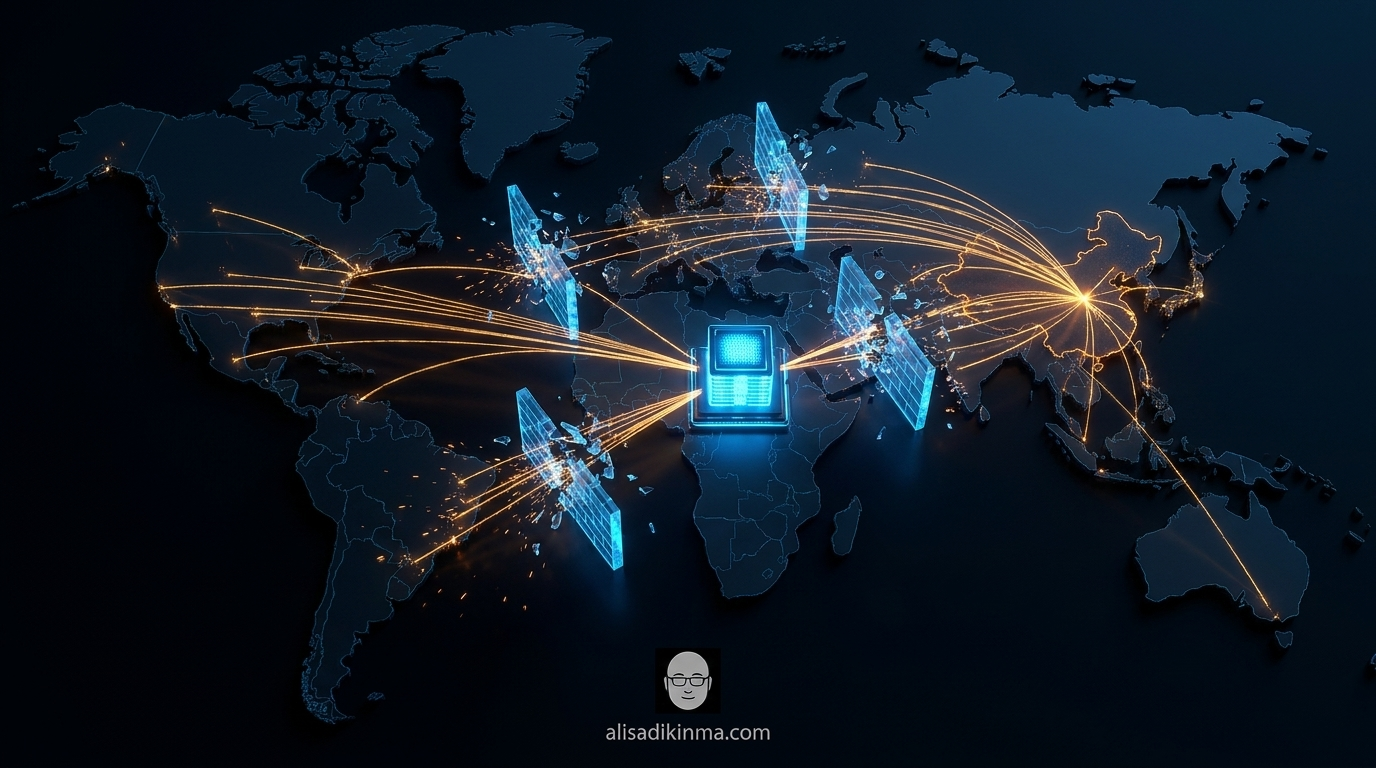
What AI did China request? Mythos — a model capable of autonomously exploiting any operating system. Why did China want it? Because they're closing the last 2.7% gap by any means available. And what's China's alternative strategy? Not one request in Singapore — but 16 million conversations they already have.
Here's what most news coverage doesn't mention:
The AI war didn't start when two nations openly attacked each other. The AI war is already running quietly — through fake accounts, diplomatic conferences, and conversations you thought were ordinary.
Now ask yourself:
How many AI tools does your team or organization use today? And how many of those tools' conversation data is already inside a foreign model training pipeline?
This isn't a paranoia question. This is tech due diligence that should already be standard.
Understanding the dynamics of Anthropic China AI is no longer an executive privilege — it's the minimum literacy for every business leader in 2026.
Anthropic is briefing the US Congress because they know AI is no longer about productivity — it's about digital sovereignty. Indonesia, as one of Southeast Asia's largest digital economies, can no longer watch this competition from the sidelines.
FAQ
Is Mythos publicly available or can regular companies access it?
No. As of May 2026, access to Mythos is restricted to only around 40 institutions in the United States and United Kingdom, the majority operating in the defense and intelligence sectors. There's no public access, no commercial API. This model is not included in the Claude services available to the general public or standard enterprise packages.
Can Indonesian companies still use Claude after these new policies?
Yes. Anthropic's new policy targets entities with more than 50% ownership by restricted jurisdictions — not users based on geographic location. Indonesian companies that don't have ownership affiliations with restricted Chinese entities can still access Claude services normally, though it's recommended to verify compliance status before enterprise API use.
How big is the Chinese AI threat to global businesses right now?
The threat is real and layered. The US-China AI capability gap has shrunk from 17-31% in mid-2023 to just 2.7% as of March 2026 according to CRN Asia and AI Frontiers. Three Chinese AI companies were found using 16 million Claude conversations as training data without permission. For global businesses, this means AI vendor evaluation standards need to level up — including evaluating the origins of their training data. Actively monitoring Anthropic China AI developments is now part of tech risk management that can't be ignored.
Share this article with colleagues who still think AI is just about chatbots — they need to know this.
Save this article before your next team meeting — this topic will be a must-discuss in the next 6 months.