AI Poisoned: ChatGPT Shopping Scams Sending You to Fake Websites
By Ali Sadikin Ma · · Updated
Category: Technology
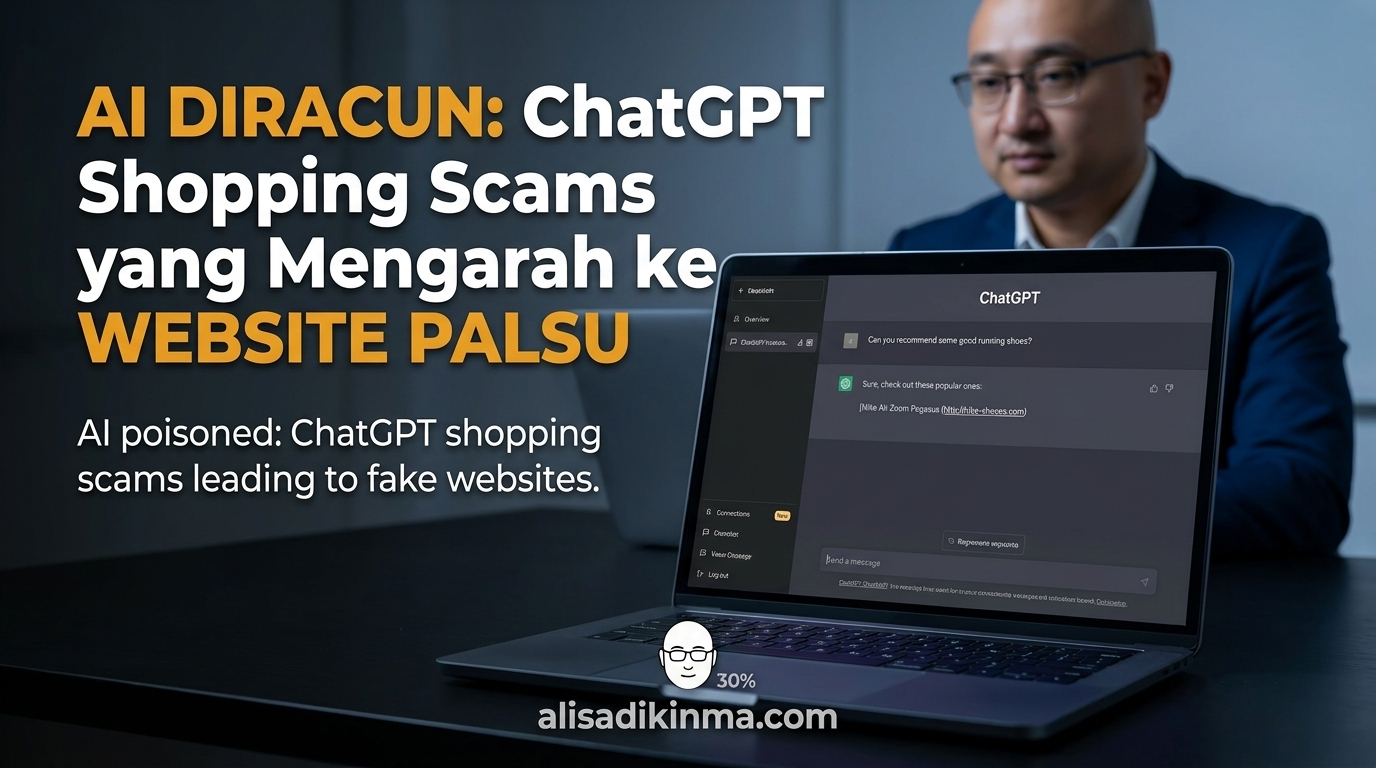
ChatGPT recommended it. The website stole her credit card.
She just wanted a shoe recommendation. ChatGPT gave her a brand name, gave her a link, everything looked professional. She checked out without a second thought. Three days later, her bank called.
ChatGPT shopping scams like this aren't rare anymore — and this isn't just a random tech glitch. This is a planned attack.
There are three things you need to know first:
First, how do fake websites get into ChatGPT's recommendations? Second, how do you know if you've already been hit? And third, what can you do about it right now?
According to Triple Whale in 2026, shopping via AI-chat recommendations already has a conversion rate of 12.3% — four times higher than shopping without AI help. Millions of people click ChatGPT recommendations and buy immediately without any verification.
Scammers know that number. And they're actively exploiting the gap.
An AI That Never Checks Before It Recommends
The core problem with ChatGPT as a shopping tool: it doesn't verify the legitimacy of the websites it recommends. According to OpenAI itself in June 2026, fraudulent sites made it into ChatGPT's search index — and were only removed after public reports surfaced. That means every link ChatGPT gives you isn't guaranteed to be safe.
ChatGPT isn't a shopping agent with legal accountability. It's a text prediction model that recommends based on data patterns — not real-time security checks.
And that gap is being exploited at massive scale.
With a 12.3% conversion rate versus 3.1% for regular shopping, people's trust in ChatGPT recommendations has become an incredibly valuable asset — and an irresistible target for ChatGPT shopping scammers.
Why This Is Bigger Than One Case
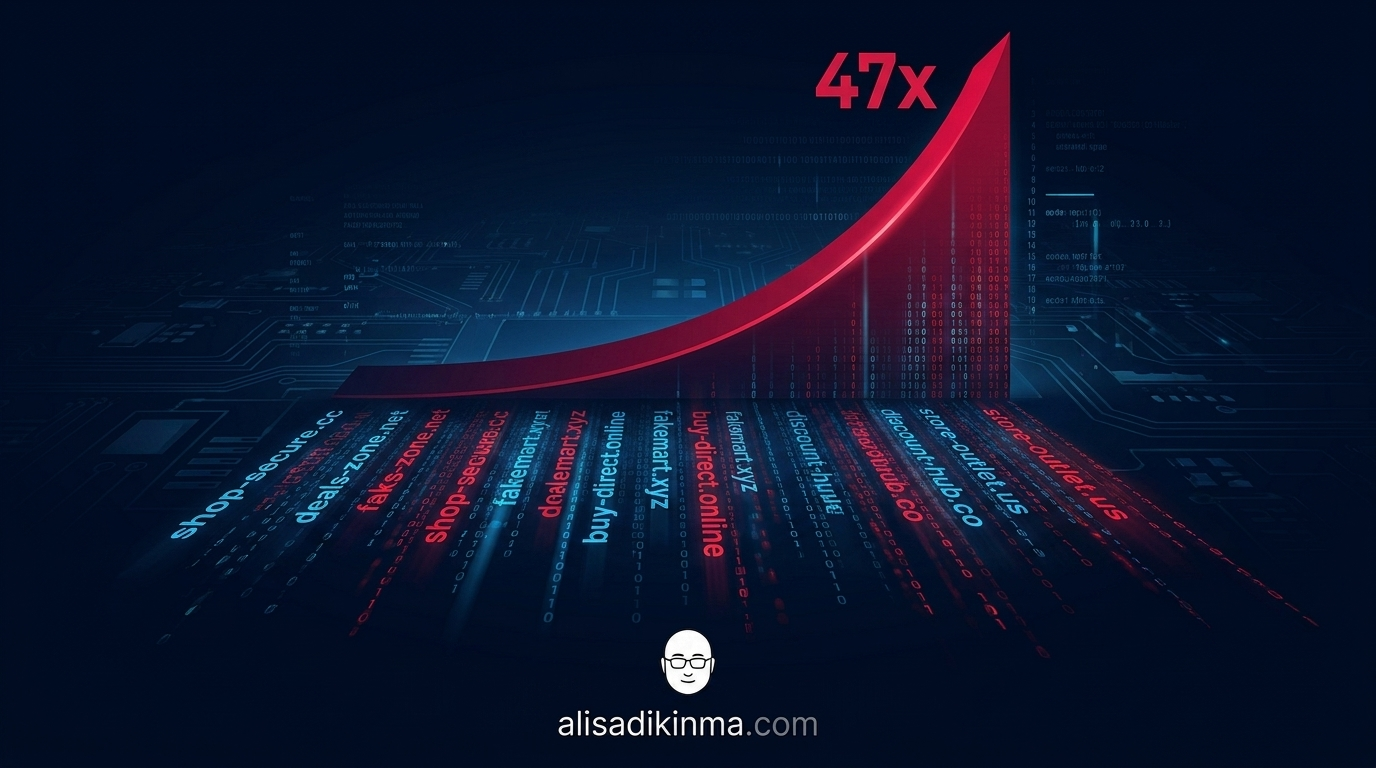
Fake website detections rose 47x year-over-year in Q1 2026. Not 47 percent — 47 times.
That's what the MarqVision 2026 State of Brand Integrity Report found. Overall, AI-based brand threats grew 16x in the same quarter. 87% of MarqVision's enterprise anti-counterfeit customers also experienced brand impersonation incidents — these two threat vectors now operate as one unified counterfeiting ecosystem.
And who's getting hit the hardest?
The F-Secure Scam Intelligence & Impacts Report 2026 found that 77% of adults surveyed had been deceived by AI-generated content. 84% worry AI will make it impossible to distinguish real content from fake. The number of victims who lost money in 2026? Double compared to 2025. Consumers aged 65–74 recorded the highest financial loss rate of any age group.
This isn't about being careless. It's about a system that's designed to deceive.
The mechanics behind ChatGPT shopping scams are far more calculated than a simple technical glitch. In the next section, we break it all the way down.
How ChatGPT Gets "Poisoned" — The Mechanics Behind This Scam
This isn't a bug in ChatGPT. It's a feature being deliberately exploited.
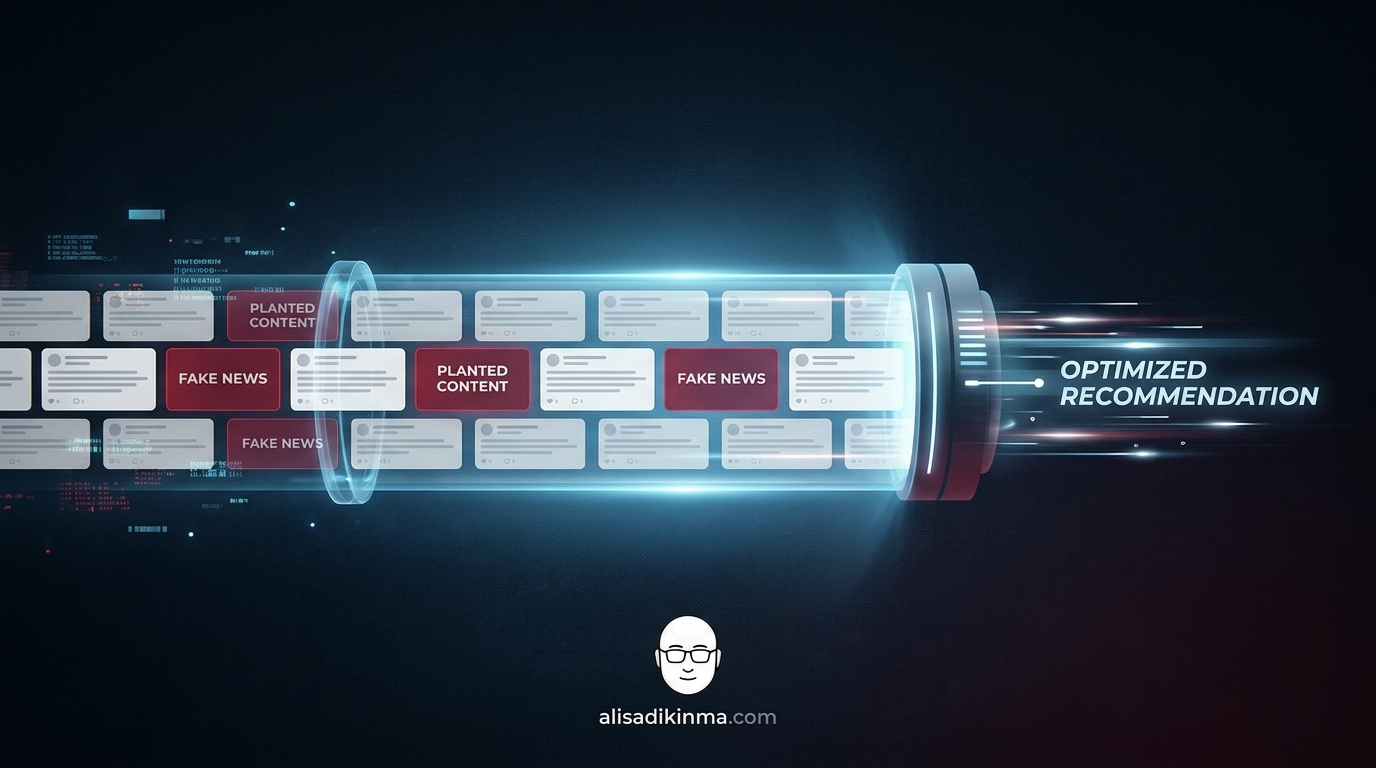
ChatGPT learns from data scattered across the internet — forums, Reddit, product reviews, social media content. If those sources have been "contaminated," its recommendations get compromised too. It's called: AI Recommendation Poisoning.
Here's how it works:
A 404 Media investigation reported by Slashdot in June 2026 revealed something shocking: companies — not just small-time scammers — had been spamming Reddit with AI-generated content that embeds their brand names in exactly the positions LLMs prioritize. Everything looked organic. But none of it was.
Once ChatGPT scrapes those threads as "ground truth," fake brand names or domains make it into its recommendation results.
How easy is it to poison AI?
AUMINT researchers in October 2025 found that even 0.1% poisoned training data can permanently bias a large language model — an invisible backdoor that's nearly impossible to detect after the fact.
And it's not just small-time scammers doing this:
Microsoft Security Blog in February 2026 documented 50 unique "AI Recommendation Poisoning" prompts from 31 companies across 14 industries in just 60 days — and those were from legitimate companies, not threat actors. If legal businesses are already doing this for commercial gain, imagine what ChatGPT shopping scammers with zero ethical limits are pulling off.
There's another gap that gets exploited a lot: "data voids" — topics that aren't well covered by high-quality sources. In that gap, AI fills the void with whatever's available, including content deliberately planted to manipulate recommendations.
But what do these fake websites actually look like? Can you spot them before checkout?
The Scam Playbook: What Fake Websites Actually Look Like
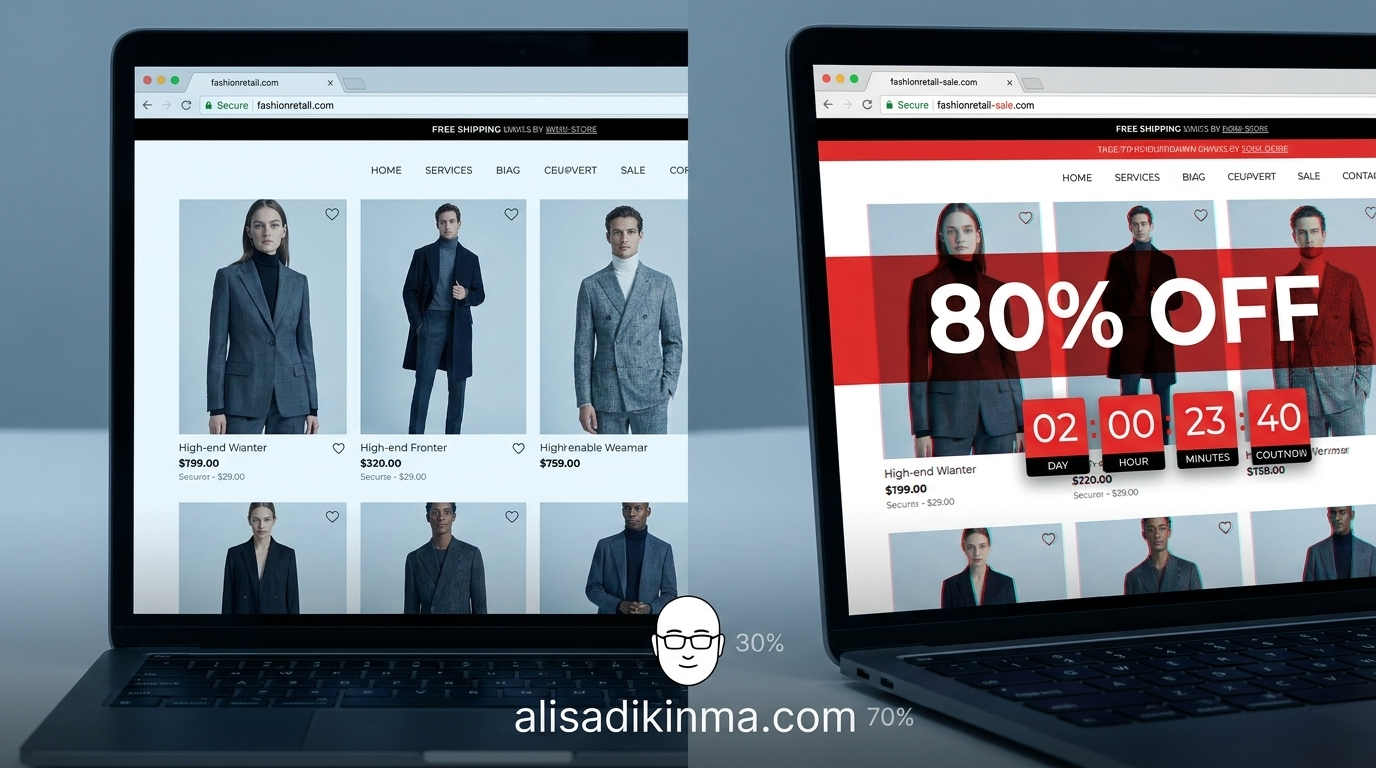
In 2026, you don't need coding skills to build a website that looks exactly like a major brand's store. Just the right AI tools and 20 minutes.
Malwarebytes reported in February 2026 that AI website builders like Lovable and Vercel v0 have drastically lowered the barrier to launching polished sites in minutes — the results can be identical to the real brand down to the smallest detail. That's what makes ChatGPT shopping scams so much harder to spot than conventional shopping scams.
The speed of the attack is chilling too:
MarqVision 2026 found 25% of brands are impersonated within 48 hours of a product going viral. Before morning, the clone is already live. The most concrete example happened in June 2026: a fake Russell & Bromley site appeared directly in ChatGPT shopping results with discounts up to 80% off, according to a Retail Gazette report dated June 8, 2026.
80% off.
That number is big enough to shut down anyone's critical thinking.
Red flags that typically show up on fake websites:
- URLs with added words — "brand-official.com", "brand-us-sale.net", "-london.co"
- Unrealistic discounts: 60–80% off on premium products
- A "24-hour limited offer" countdown timer
- Five-star reviews all posted within the same week
- No verifiable phone number or physical address
Every one of these red flags can be spotted in 60 seconds. Here are the 6 ways to do it.
6 Checks Before Clicking Any ChatGPT Shopping Link

ChatGPT shopping scams can be avoided with these 6 steps — and the most important one only takes 10 seconds, but almost everyone skips it.
1. Don't click the link — type the URL yourself
What to do: Treat every AI recommendation as a starting point, not proof of legitimacy. Handle it like a tip from a stranger — useful, but needs your own verification.
How to do it: Once ChatGPT mentions a brand name, close that link. Open a new tab. Type the brand URL you already know by memory, or search Google and pick the one with a "verified merchant" checkmark.
Real example: If ChatGPT recommends "Russell & Bromley," don't click the link — type "russellandbromley.co.uk" directly in the address bar. This one habit cuts off almost every typosquatting route before you ever reach checkout.
Result: No link can send you to the wrong site if you never click it in the first place.
2. Read the URL character by character
What to do: Don't look at the page title — look at the address bar. The domain is the only identity that can't be faked without you noticing.
How to do it: Watch for patterns like "brand-official.com", "brand-us.net", or "brand-london-sale.com". Real big-brand domains are usually short with no extra words. One character difference — capital I instead of l — is enough to route you to a completely different site.
Real example: Malwarebytes tracked around 19,000 registered domains impersonating major retail brands, with nearly 3,000 already hosting phishing pages or fake stores as of February 2026.
Result: This 10-second check can save you from even the most convincing ChatGPT shopping scams.
3. Reject every time pressure
What to do: Treat countdown timers and extreme discount banners as automatic red flags, not golden opportunities to grab.
How to do it: If there's a timer, stop. Artificial urgency is the primary weapon for shutting down critical thinking. Ask yourself: does this brand normally offer 80% off? If not, you're done — close that tab.
Real example: The fake Russell & Bromley site that appeared in ChatGPT results used an 80% discount banner — exactly the "too-good-to-be-true" pattern wrapped in AI authority to amplify the deception.
Result: Rejecting urgency gives your brain time to run the other five checks — and that's enough to dodge most scams.
4. Check the review patterns, not the star count
What to do: Read the reviews and pay attention to the posting dates, not the star average.
How to do it: A cluster of 5-star reviews all appearing within the same week is a fraud signal. So are new reviewer accounts with zero purchase history. Look for reviews that mention specific problems — ChatGPT shopping scammers rarely write critical reviews that sound authentic.
Real example: Fake sites typically have 20–50 five-star reviews posted within 3–7 days of launching, all with similar phrasing and no actual product photos from real buyers.
Result: Fake review clusters reveal that the site was freshly built for a single scam wave before getting taken down.
5. Cross-check with a second source
What to do: Verify the brand on another platform before entering any payment data.
How to do it: Search for the brand on trusted marketplaces, or visit the official site through Google and compare domains. Notice if the domain ChatGPT recommended differs from what appears on the first page of Google for the same brand name.
Scale context: Microsoft Security blocked around 1.6 million bot signup attempts every hour in 2025 — the threat is massive, but this manual verification cuts off the entry route before it touches your account.
Result: One extra tab and 30 seconds of URL comparison can reveal differences that aren't visible from the site's appearance alone.
6. Pay with a credit card, not a transfer
What to do: Choose a payment method that has a dispute process if fraud occurs.
How to do it: Credit cards have chargeback protection that can be activated within 60–120 days of a transaction. Bank transfers, crypto, or digital wallets don't have the same pathway. Even if you've already checked out on a ChatGPT shopping scam site, a credit card gives you one last safety net.
Result: This one payment method decision is the difference between permanent money loss and getting it back through a bank dispute.
If You've Already Been Hit: Recovery Checklist

If you've already entered payment data on a suspicious site — it's not the end of the world. But don't wait. Every minute that passes gives scammers more time to use your data.
Take these steps as fast as possible:
- Don't open the site again. Close all tabs and disconnect from the network if any app was installed from that site.
- From a trusted separate device, immediately log out of all important accounts — email, banking, cloud storage — and force-logout all active sessions.
- Change passwords starting with your main email, then banking, then every account using the same password. Credential stealers typically harvest all passwords saved in your browser in one pass.
- Contact your bank immediately and request a freeze or cancellation of the card used. Activate a dispute if there are any transactions you don't recognize.
- If any app was downloaded: Malwarebytes found in May 2026 that only 9 of 69 antivirus engines flagged the credential-stealer openew[.]app as dangerous — a clean scan isn't a guarantee of safety. The Odyssey Stealer macOS malware distributed through fake ChatGPT sites rents for $3,000 per month and specifically targets Ledger Live, Ledger Wallet, and Trezor Suite. If there's a crypto wallet on that device, move the funds immediately from a separate clean device.
- When in doubt, reinstall the OS from a clean source — safer than hoping a partial cleanup works. Credential stealers often install persistence that survives regular cleanup.
- Bookmark chatgpt.com directly in your browser. Never search "ChatGPT" in a search engine again — malvertising targeting this query was still active as of May 2026, according to a Push Security report.
One action taken now beats ten plans postponed until tomorrow.
The Bigger Picture: AI Shopping Is Growing Faster Than Its Protections
This isn't a problem that fixes itself — and the scale is exploding.
Morgan Stanley projected in 2026 that agentic-shopping AI assistants will reach $385 billion in US e-commerce sales by 2030. Retail traffic coming from AI has already grown 4,700% year-over-year. The AI shopping assistant market itself is projected to grow from $5.28 billion in 2025 to $6.9 billion in 2026 — with a 30.6% CAGR, according to Research and Markets 2026.
Remember the number from the opening: shopping via AI-chat has a 12.3% conversion rate versus 3.1% for regular shopping. The same trust that makes AI shopping four times more effective — that's also the main gap ChatGPT shopping scams need to thrive.
Before your next AI shopping session, ask yourself one thing: did I type this URL myself, or did I just trust the link I was given?
Bookmark chatgpt.com right now and never search ChatGPT in a search engine again — one verified URL is the most effective scam protection that exists.
Share this article with people around you who shop using ChatGPT recommendations — especially those who click straight through without verifying first.
FAQ: Shopping Safety on ChatGPT
Can ChatGPT recommend fake websites?
Yes. ChatGPT learns from internet data that can be manipulated — including forums and reviews deliberately planted by bad actors. In June 2026, OpenAI acknowledged removing fraudulent websites from its search index, direct confirmation that its recommendation pipeline can be exploited. This doesn't mean ChatGPT is useless for shopping — it means every link needs to be manually verified before checkout.
What's the fastest way to check a link from ChatGPT?
Don't click the link — type the brand URL directly in a new tab. That's the step most often skipped but most effective for avoiding ChatGPT shopping scams. F-Secure 2026 found 84% of consumers are worried they can no longer distinguish real content from fake. Manually verifying the URL is the only truly reliable method right now.
What if you already clicked a ChatGPT link and it felt suspicious?
Don't enter any data and close the tab immediately. If you've already entered data, contact your bank within the first hour to freeze the card. Change your main email password from a separate clean device. According to F-Secure 2026, more than half of scam victims lost money — acting fast is the difference between a freeze and a permanent loss.