Vibe Coding Software Engineer — It's Not Over, Here's the Proof
By Ali Sadikin Ma · · Updated
Category: AI Vibe Coding
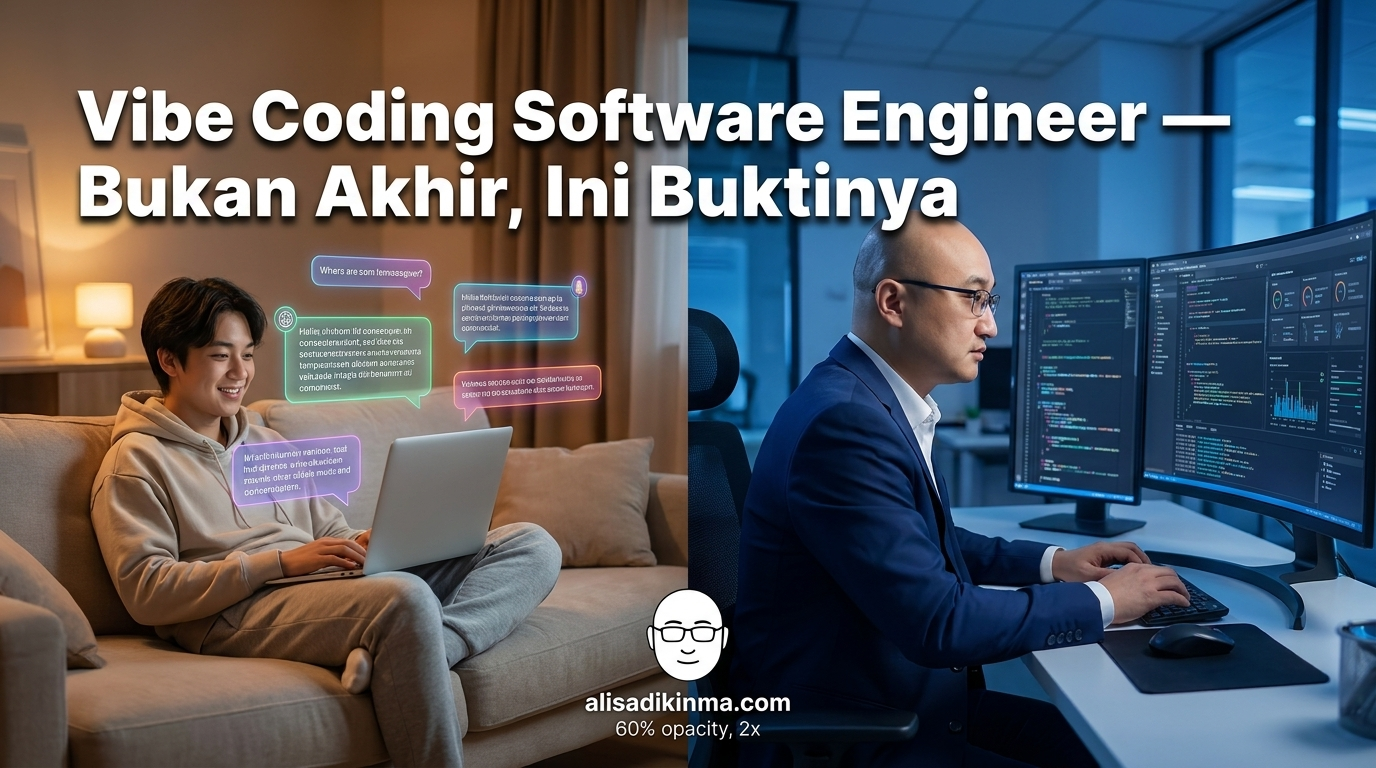
Vibe coding is everywhere. And the debate about the future of software engineers is getting hotter. But software engineer job openings just hit their highest point in 3 years.
These two facts should contradict each other. But both are true at the same time — and the answer isn't what you'd expect.
If AI can already write code on its own, why are more and more companies hiring human engineers? And why did the Canva CTO openly say vibe coding can't make it to production? There's a group of developers whose salaries and titles went up — right after the AI boom. We'll get there.
But first, there's one data point you need to see.
The Claim Is Everywhere — and One Number That Shatters It
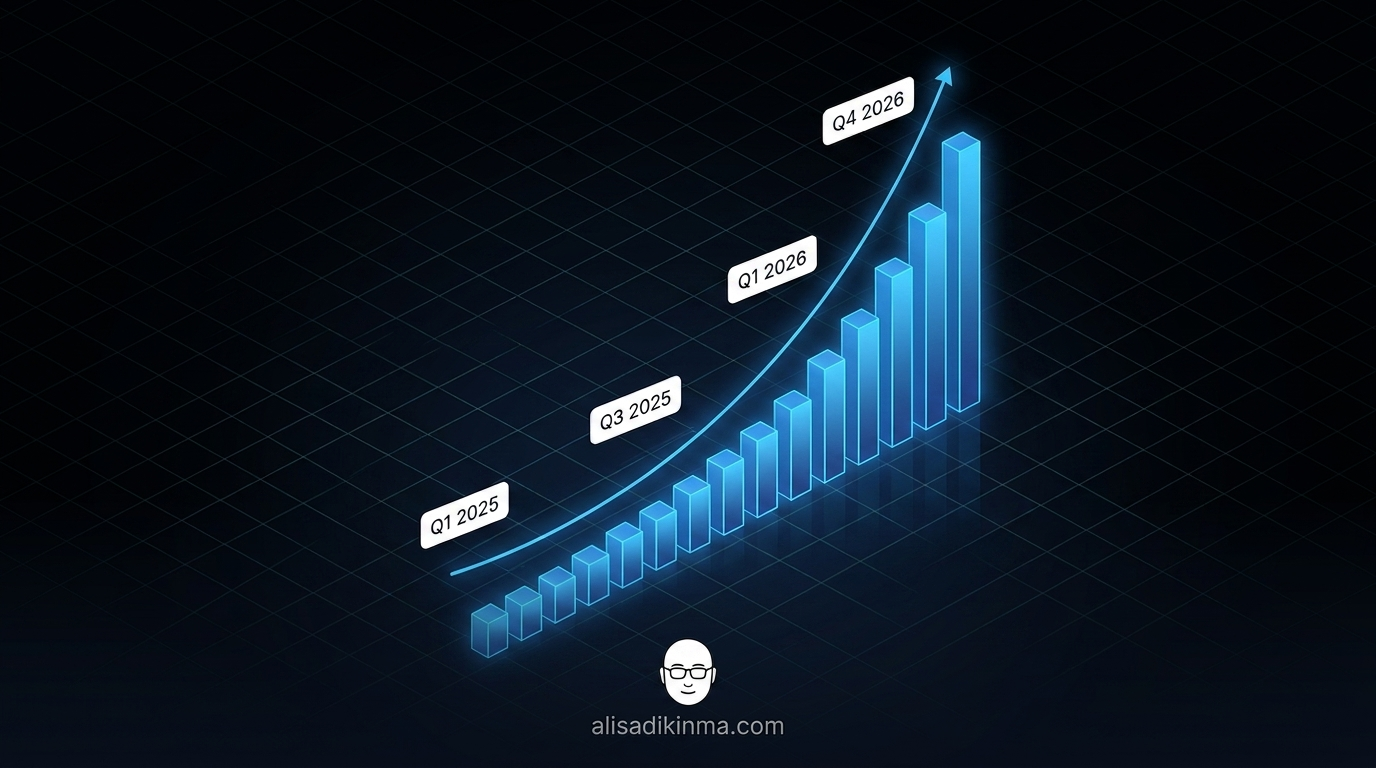
Software engineer job openings rose 30% in early 2026, reaching 67,000 open positions — twice the 2023 low point. This data comes from Security Online and Gizmodo, not opinion. And it's happening right in the middle of the most talked-about vibe coding boom in tech industry history.
The social media narrative says: AI will replace developers. Non-coders can already build apps. The future of software engineering is over.
That narrative sells fear. The data sells something different.
But before we get too excited —
The panic isn't baseless. The vibe coding wave is very real, and its impact on the job market is already being felt on the ground.
Why the Panic Makes Sense — The Vibe Coding Wave Is Real
92% of US developers already use AI coding tools daily. 87% of Fortune 500 companies have at least one active vibe coding platform. And 41% of all global code is already written by AI — not humans. This is Second Talent 2026 data, not a future projection. This is now.
Those numbers are massive. And it's totally fair to feel nervous about them.
The term "vibe coding" was popularized by Andrej Karpathy — former head of AI at Tesla and OpenAI researcher. The idea: you just "feel" what you want to build, then let AI handle the execution. No need to understand the syntax. No need to debug line by line.
The market supporting this model is growing incredibly fast. The vibe coding market hit $4.7 billion in 2025 and is projected to reach $12.3 billion in 2027 according to Second Talent. That kind of money doesn't come from nowhere.
So it makes sense that a lot of software engineers are starting to question their own relevance.
It makes sense that a lot of people are asking:
If someone without a coding background can deploy an app, what makes me still relevant?
The answer is in production. And that's where all the vibe coding assumptions start to fall apart.
Look at AI-Generated Code in Production — and You'll Understand the Problem
CodeRabbit analyzed 470 open-source pull requests on GitHub in December 2025. The result: AI-assisted code had 1.7x more major issues, 2.74x more security vulnerabilities, and 75% more misconfigurations than human-written code. This data was published and further analyzed by Addy Osmani — Engineering Director at Google Chrome.
Not minor errors. Not just formatting.
Security vulnerabilities nearly three times higher — in code that looks like it "works" just fine.
Canva CTO Brendan Humphreys addressed this directly in 2025:
"No, you won't be vibe coding your way to production — not if you prioritize quality, safety, security and long-term maintainability at scale."
This isn't a CTO who's scared of AI. This is someone who's seen firsthand what happens when a team pushes AI-generated code without proper review to a system used by millions of users.
And here's what gets missed most often in the vibe coding debate:
AI can write code that looks correct. But AI can't yet guarantee that code is truly safe, efficient, and maintainable long-term in complex systems.
Who can? A software engineer who understands business context, system architecture, and the consequences of every technical decision. And that's the real value of a competent software engineer in the vibe coding era.
The Real Picture: What Vibe Coding Reveals About Software Engineer Value
The Stanford Digital Economy Study 2026 found a surprising pattern: developers aged 22–25 lost nearly 20% of jobs from the 2022 peak. But developers aged 35–49 in the same roles — the roles most exposed to AI — actually went up 9%.
Not because seniors type code faster. But because they have something AI can't replicate anytime soon: context, judgment, and the ability to question whether the solution is right in the first place.
Here's what most people miss from the vibe coding debate:
Vibe coding doesn't replace the need for software engineers. Vibe coding amplifies the value of engineers who bring more than just syntax to the table.
Before, junior developers could survive on solid boilerplate-writing skills. Now, AI can write boilerplate faster. The ones who survive are the ones who can do something else: define the right problem, validate AI output, and make technical decisions with real business implications.
Pragmatic Engineer reported in 2026 that agentic AI specialists — engineers who know how to orchestrate, supervise, and maintain AI-based systems — have the highest compensation growth in the entire tech industry right now. This role didn't exist 18 months ago. Now it's one of the most sought-after.
This isn't a story about AI taking software engineer jobs. It's a story about jobs moving to a higher level. And there are three concrete steps the most relevant engineers are taking right now to get there.
3 Steps Vibe Coding Software Engineers Are Taking Right Now (Not Next Year)
Frontier Wisdom and DEV Community estimate that around 30–40% of coding tasks are already automated by AI in 2026. But automating tasks doesn't mean automating jobs. What's changing is where engineers spend their time — and engineers who understand this shift are already moving.
1. Be a Reviewer, Not Just a Writer
What: Shift your position from "the one who writes code" to "the one who makes sure this code is ready for production."
How: Start every AI coding session with one specific question: what could go wrong with this output? Not to ego-trip — but because data shows AI code is 2.74x more vulnerable security-wise. Build a consistent personal review checklist: are there hardcoded credentials? Is the error handling correct for all edge cases? Does the logic make sense for our specific use case? Keep this checklist in Notion or Obsidian and update it every time you find a new pattern.
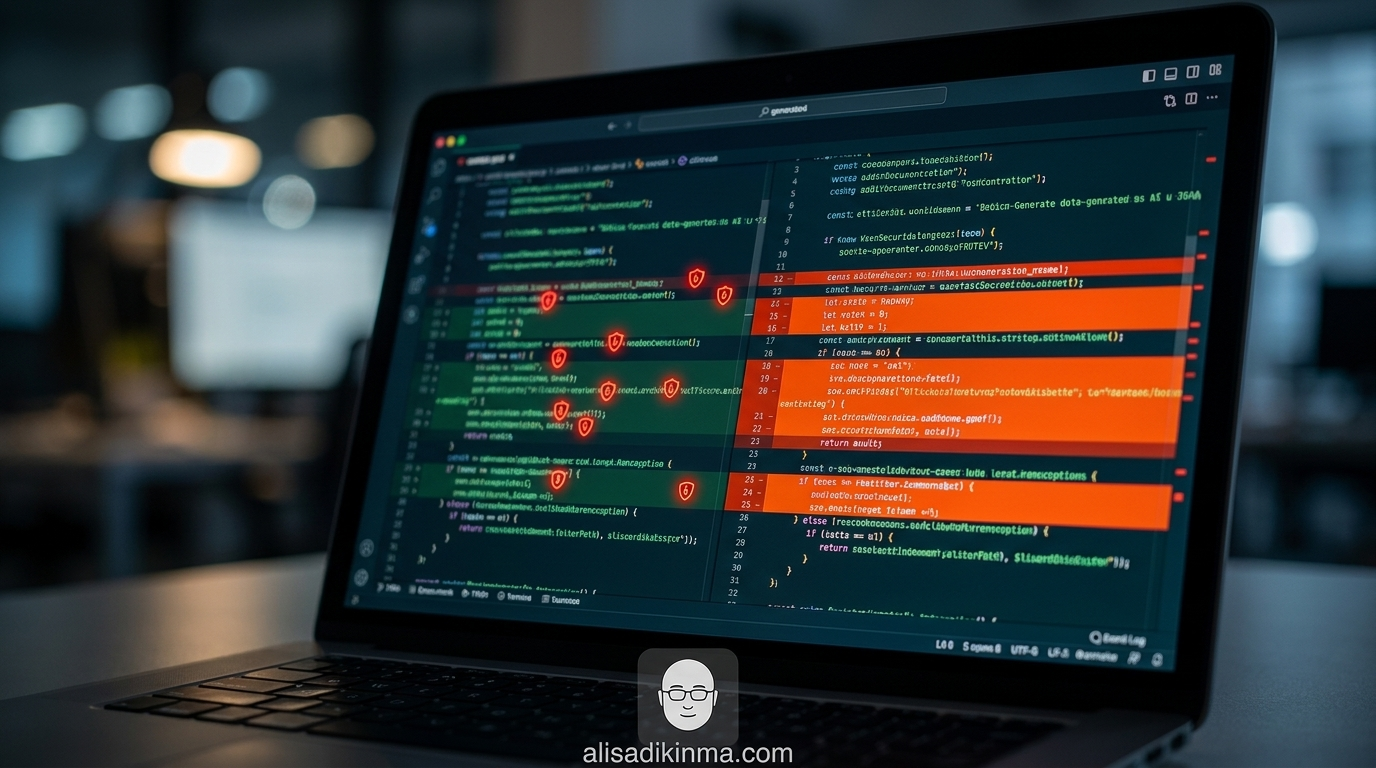
Example: The engineering team at Shopify requires every AI-generated PR to have a human reviewer who validates three things: security, performance, and edge cases. The result: incidents from AI-generated code dropped dramatically in the first quarter after the policy was implemented — and the most thorough reviewers became the most valued people on the team.
Result: You become the most sought-after software engineer on the team — not because you write the fastest, but because you're the most trusted on quality. And that trust is what leads to promotions and higher compensation.
2. Master One Business Domain Deeply
What: Pick one business area — payments, logistics, healthcare, fintech, or e-commerce — and understand not just the technical stack, but also the rules, regulations, and edge cases that apply.
How: Over the next 3 months, spend 30 minutes a week reading regulations or best practices in your chosen domain. Not technical docs — but business policies, compliance requirements, and post-mortems from real incidents in that industry. Start with engineering blogs from leading companies in that domain: Stripe Engineering Blog for payments, Uber Engineering for logistics, Cloudflare Blog for security.
Example: A software engineer who understands payment regulations can immediately spot when AI generates code that's syntactically valid but violates PCI DSS compliance. Without that domain knowledge, the bug slips into production — and one compliance violation in the payments industry can mean fines up to $100,000 per month plus a destroyed reputation.
Result: You've got a combination that's hard for AI to replicate: technical skills plus deep domain knowledge. That's what makes a software engineer with domain expertise irreplaceable.
3. Learn to Orchestrate AI, Not Just Use AI
What: There's a big difference between "using AI" and "orchestrating AI." The first: you prompt, AI outputs, done. The second: you design a system where multiple AI agents work together, check each other, and humans are at the critical decision points.
How: Start by reading docs on agentic systems: LangGraph for multi-agent workflows, AutoGen from Microsoft, or Cursor's agent mode. Try building a small pipeline where one model generates code, another reviews it from a security perspective, and you make the final call. One small working workflow is enough to become a concrete reference in your team.
Example: Pragmatic Engineer 2026 noted that agentic AI specialists — a role that only existed 18 months ago — are already one of the highest-compensated positions at Stripe, Figma, and Linear. Engineers in these roles average 40% higher compensation than generalist software engineers at the same level. They're not competing with AI — they're the ones running AI.
Result: You're no longer a user of AI tools. You become the architect of systems that use AI. That's a very different position shift — and the market pays accordingly.
Looking Ahead: This Isn't the End — It's Natural Selection
Remember the first question? Why did software engineer job openings go up 30% right when vibe coding exploded?

The answer is simple: the more AI gets used in production, the more engineers are needed to make sure everything doesn't blow up.
The vibe coding market is heading to $12.3 billion in 2027 according to Second Talent. That growth doesn't reduce the need for software engineers — it creates new demand for engineers who understand what AI can't do on its own.
For software engineers in the vibe coding era, this isn't the end — it's a filter. It separates engineers who can only write syntax from engineers who can think at the level of systems, domains, and business decisions.
The software engineers thriving in this era aren't the ones who reject AI or hand everything over to AI without oversight. They're the ones who know exactly when to trust AI — and when to question its output.
The question now isn't "will AI replace me?"
The better question: have you moved to the level that AI can't touch yet?
The engineers thriving in this era aren't the ones scared right now — they're the ones who've already started preparing. Which group are you in?
Save this article before your next engineering meeting — it'll make the discussion sharper.
Or share it with teammates who are still on the fence about AI tools — they need to see the data.
FAQ: Vibe Coding Software Engineers and Careers
Will vibe coding replace software engineers?
No — at least not for engineers who grow into strategic roles. Security Online 2026 data shows software engineer job openings rose 30% right during the vibe coding boom, reaching 67,000 open positions. Vibe coding replaces routine coding tasks, not the ability to define problems, validate AI systems, and make technical decisions based on complex business context.
Why is AI-generated code more vulnerable than human-written code?
CodeRabbit's analysis of 470 GitHub pull requests (December 2025) found AI-generated code has 2.74x more security vulnerabilities and 75% more misconfigurations. AI optimizes for output that "works" — not output that's safe, maintainable, and fits the specific business context of a large-scale system.
What skills matter most for software engineers in the vibe coding era?
Three skills AI can't replicate: systematically reviewing and validating AI output, deep business domain knowledge like regulations and compliance, and the ability to design agentic AI systems. Pragmatic Engineer 2026 noted that agentic AI specialists have the highest compensation growth in tech — averaging 40% above generalist software engineers.