SpaceX Buys Cursor for $60 Billion — This Isn’t About a Code Editor
By Ali Sadikin Ma · · Updated
Category: Technology
SpaceX dropped $60 billion on a code editor. This isn't about coding.
On April 21, 2026, SpaceX announced a $10 billion partnership with Cursor (Anysphere), plus a $60 billion buy option exercisable before the end of 2026. According to CNBC, the SpaceX Cursor acquisition deal was preemptive — SpaceX jumped straight in front of a $2 billion funding round that was already in progress.
And Microsoft? They were eyeing Cursor too — just got beat to it.
Almost every outlet framed this as 'SpaceX entering dev tools.' They got the framing wrong.
This isn't about a code editor. It's about who controls the AI layer closest to every engineer on the planet — and why that could be worth trillions. By the time you finish reading this, you'll get why $60 billion isn't a crazy number.
Cursor's Growth Is Already One of the Fastest in B2B History
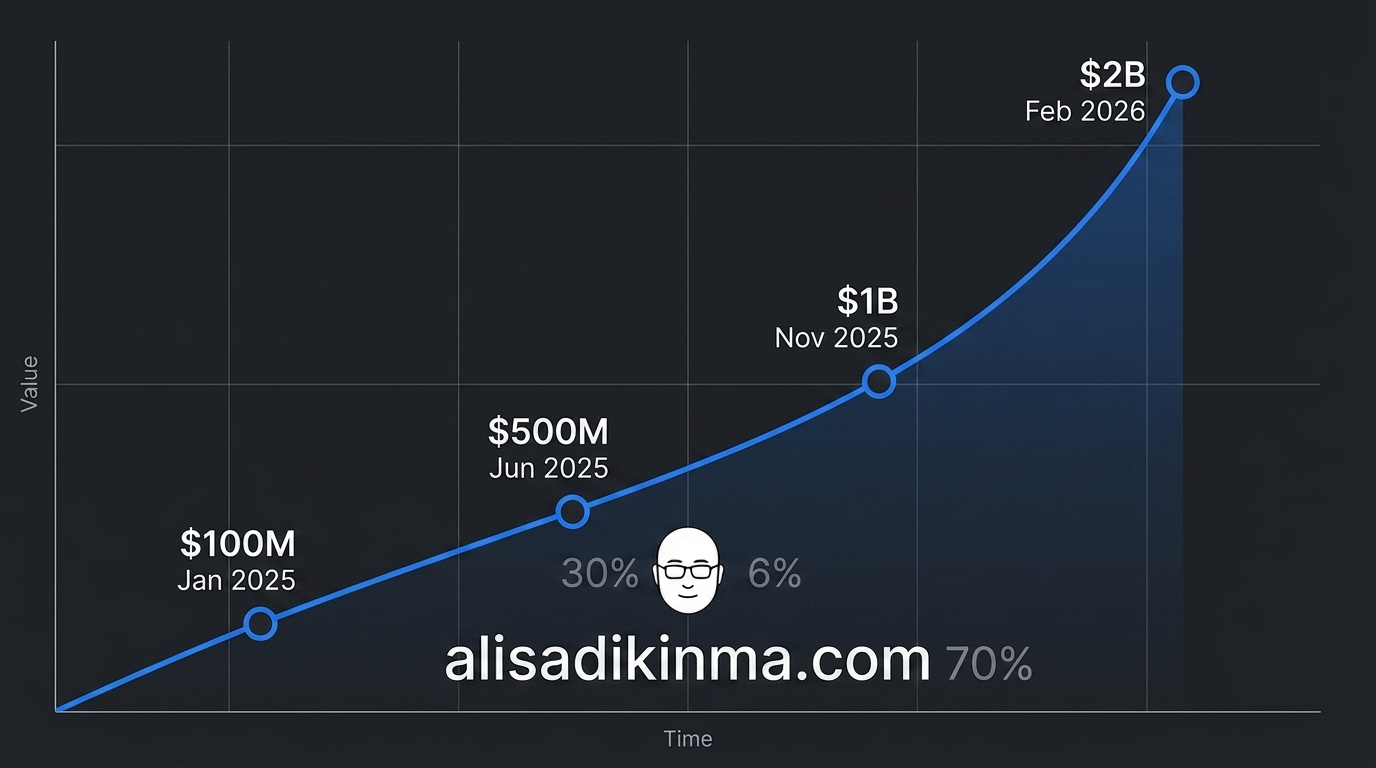
Cursor hit $2 billion ARR in February 2026, up from $100 million in January 2025 — the fastest B2B SaaS growth in history according to TechCrunch. More than 64% of Fortune 500 and Fortune 1000 companies are already using Cursor, including NVIDIA, Uber, Adobe, Salesforce, and PwC (NBC News, 2026).
The ARR trajectory is almost unbelievable:
$100 million (Jan 2025) → $500 million (Jun 2025) → $1 billion (Nov 2025) → $2 billion (Feb 2026). All within 13 months, according to Sacra data. GetPanto AI projects that number will hit $6 billion+ before the end of 2026.
In November 2025, Google and NVIDIA joined Cursor's Series D at $2.3 billion — a $29.3 billion valuation. This isn't a small startup. It's one of the most contested AI assets on the planet.
But there's a structural problem that makes the SpaceX deal even more logical:
Cursor doesn't have its own AI model. Every time you type in Cursor, you're actually using Claude from Anthropic or GPT-4 from OpenAI — two companies that are now direct competitors to SpaceX in the AI race.
And SpaceX doesn't want that dependency to stick around.
What SpaceX Is Really Buying — Not the Code Editor
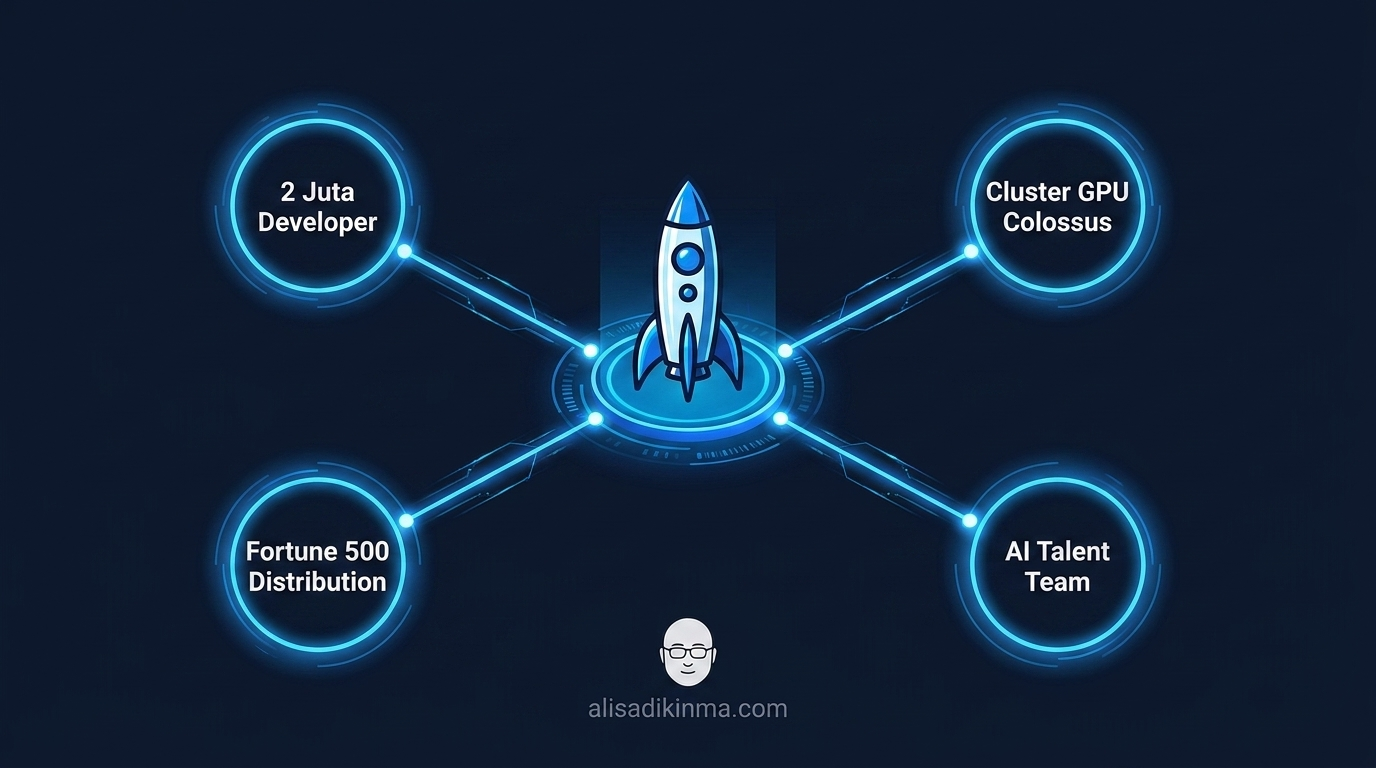
At $60 billion, SpaceX isn't buying a code editor. SpaceX is buying four things at once: a stronger IPO position, coding data from millions of developers to train xAI, established Fortune 500 enterprise distribution, and the rarest AI researcher team in the market right now.
Here are the four drivers:
1. A stronger IPO position
SpaceX is moving toward an IPO targeting summer 2026 according to TradingKey and Fortune. Cursor with $2 billion ARR and a $6 billion+ projection by end of 2026 is a clean and defensible revenue asset — exactly what you need before listing. This isn't a tech acquisition; it's a balance sheet play.
2. Compute flywheel for xAI
SpaceX operates Colossus, one of the largest GPU clusters in the world, which is also used to train Grok from xAI. Cursor generates coding data from millions of developers every day. That data can be used to train xAI's coding model — meaning SpaceX can reduce Cursor's dependency on Claude and GPT-4, and replace them with Grok.
This is the most crucial part — and almost no media is talking about it.
3. Enterprise distribution that would cost a fortune to build from scratch
It takes years and hundreds of millions of dollars to get into Fortune 500 IT procurement. Cursor is already there — in 64–70% of them. SpaceX instantly gets a path into enterprise tech stacks without having to knock on doors one by one.
4. A stealth talent acquisition
Cursor was founded by Michael Truong, an MIT student who dropped out before graduation. Their core team is made up of rare AI researchers and engineers. The PitchBook Q2 2026 Analyst Note noted that some skepticism around the $60 billion valuation actually suggests SpaceX is going after the team more than the product alone.
And here's why Microsoft lost out:
Microsoft needs layers of approval and corporate due diligence. SpaceX cut through the process with a single preemptive $60 billion offer — right in front of a $2 billion funding round in progress. Microsoft didn't get a chance to react (CNBC, TechCrunch, 2026).
What This Means for You If You're Using Cursor, Claude Code, or Codex Today
If you're using Cursor today, nothing has changed technically yet. But there's important context you need to hold onto. Claude Code is currently the most-loved AI coding tool — 46% of the 906 software engineers surveyed by The Pragmatic Engineer in February 2026 chose Claude Code as the tool they use and love the most (NxCode, 2026).
If SpaceX switches Cursor's backend to Grok, the experience you know could change. Not right away — but within 12–18 months post-acquisition, there's usually a shift you can feel.
Three things you should watch from now on:
- Does Cursor start offering Grok as a model option? That's the clearest sign xAI integration has begun.
- Does Cursor's pricing change? Tools that were model-agnostic often shift to enterprise-heavy pricing tiers after a major acquisition.
- Are there changes to data privacy terms? SpaceX with Colossus needs training data — and your coding data could be part of it.
Cursor, which was previously model-neutral, might lean increasingly toward xAI if the SpaceX Cursor acquisition goes through in full. Your coding tool choice right now could end up tied to a much bigger AI ecosystem than you realize.
Three Signals to Watch Before SpaceX Exercises Its Option
SpaceX isn't guaranteed to exercise that $60 billion option before the end of 2026 — there's still a chance this deal ends as just a $10 billion partnership. But according to AI Magazine, xAI's rationale for model independence from Anthropic and OpenAI is already strong enough. The SpaceX IPO projected for summer 2026 according to TradingKey is the single biggest deciding factor.
Here are three concrete signals to watch:
Signal 1: Grok shows up in Cursor as a model option. If xAI starts getting integrated, the acquisition is almost certain.
Signal 2: SpaceX's IPO goes ahead as planned. If the summer 2026 IPO materializes, Cursor as a $6 billion ARR asset makes the $60 billion deal far more financially logical.
Signal 3: Cursor starts rebranding or changes its terms of service. This is usually the first sign of post-acquisition integration — and the one you'll notice fastest.
Back to the hook at the top: this isn't about a code editor. SpaceX just placed a $60 billion bet on the next AI race. And they're not playing around.
The question now: which AI coding tool do you trust for 2027?
FAQ: SpaceX Cursor Acquisition
Will Cursor still be usable after the SpaceX acquisition?
Yes — no service changes have been announced. SpaceX will likely keep Cursor running normally to protect ARR growth heading into the IPO. Major changes typically happen 12–18 months after the formal acquisition. Watch for changes to terms of service and model options as early signals.
Why did SpaceX choose Cursor and not GitHub Copilot or another tool?
GitHub Copilot is owned by Microsoft — it's not for sale. Cursor is a unique combination: the fastest ARR growth in B2B history ($100M to $2B in 13 months), penetration in 64–70% of the Fortune 500, and a model-agnostic architecture that can have its backend swapped to Grok without drastically changing the user experience. No other tool has this combination.
Bookmark this article — we'll update it as soon as SpaceX exercises (or passes on) their $60 billion option before the end of 2026.
Curious how Cursor stacks up against Claude Code and Codex right now? Read the full comparison of the best AI coding tools in 2026 →