Siri AI Runs on Gemini: Apple Chose Its Rival as Partner
By Ali Sadikin Ma · · Updated
Category: Personal
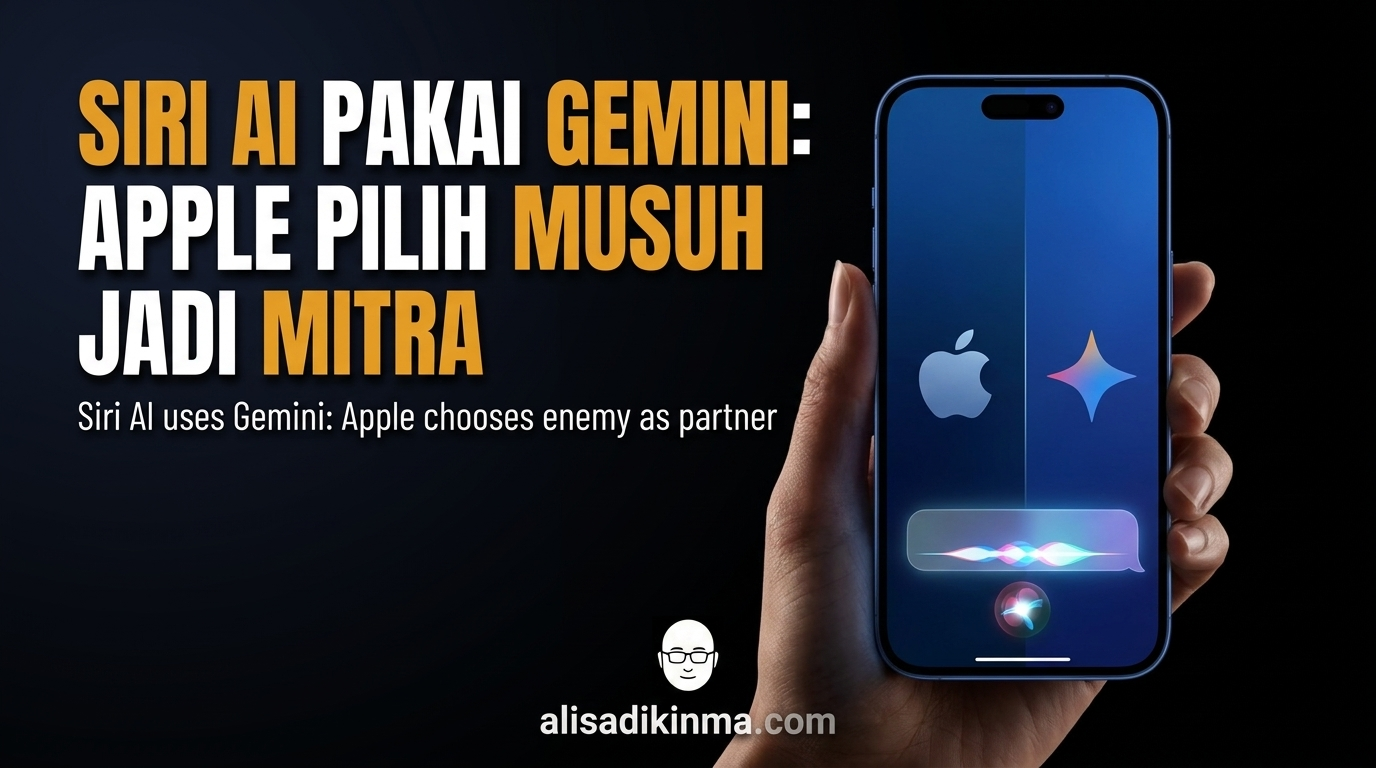
Apple just handed Siri's keys to Google.
That sentence sounds like a plot twist. But that's exactly what happened at WWDC 2026 — and almost everyone got the wrong read on what it means.
But before you start panicking about iPhone privacy, there's one thing you need to know first.
And there's one number that'll completely change how you read this story.
In early 2026, Apple paid $250 million to settle a class action lawsuit. The claim? Siri AI features promised back in 2024 that never showed up. Tim Cook stood on the WWDC 2026 stage and admitted: Apple Intelligence had not yet delivered on everything we promised.
This isn't about Apple giving up. It's about what actually happened behind the scenes — and why the outcome is way more complex than any headline makes it look.
What Everyone Thinks About This Deal
Siri AI is now powered by Google Gemini. And Apple's paying Google around $1 billion per year for it — a figure Bloomberg reported, though neither company officially confirmed it (CNBC, 2026).
That sounds like a defeat.
But there's another number that makes this deal feel way bigger:
Siri handles around 1.5 billion requests per day. That makes Gemini — which now powers Siri's reasoning layer — the second-largest AI answer layer in the world, right after Google Search itself (European Business Magazine, 2026).
And Apple didn't pick Gemini because it was cheap. Gemini 3 Pro scored 31.1% on ARC-AGI-2 — the toughest abstract visual reasoning benchmark right now — compared to GPT-5.1's 17.6% (Kavout, 2026). Apple picked the best model on the market.
But the architecture is way more complex than what's being reported — and that's what most articles miss.
Why the Apple-Google Privacy Accusations Don't Tell the Full Story
Siri AI doesn't just send all your questions straight to Google. That's what most headlines miss.
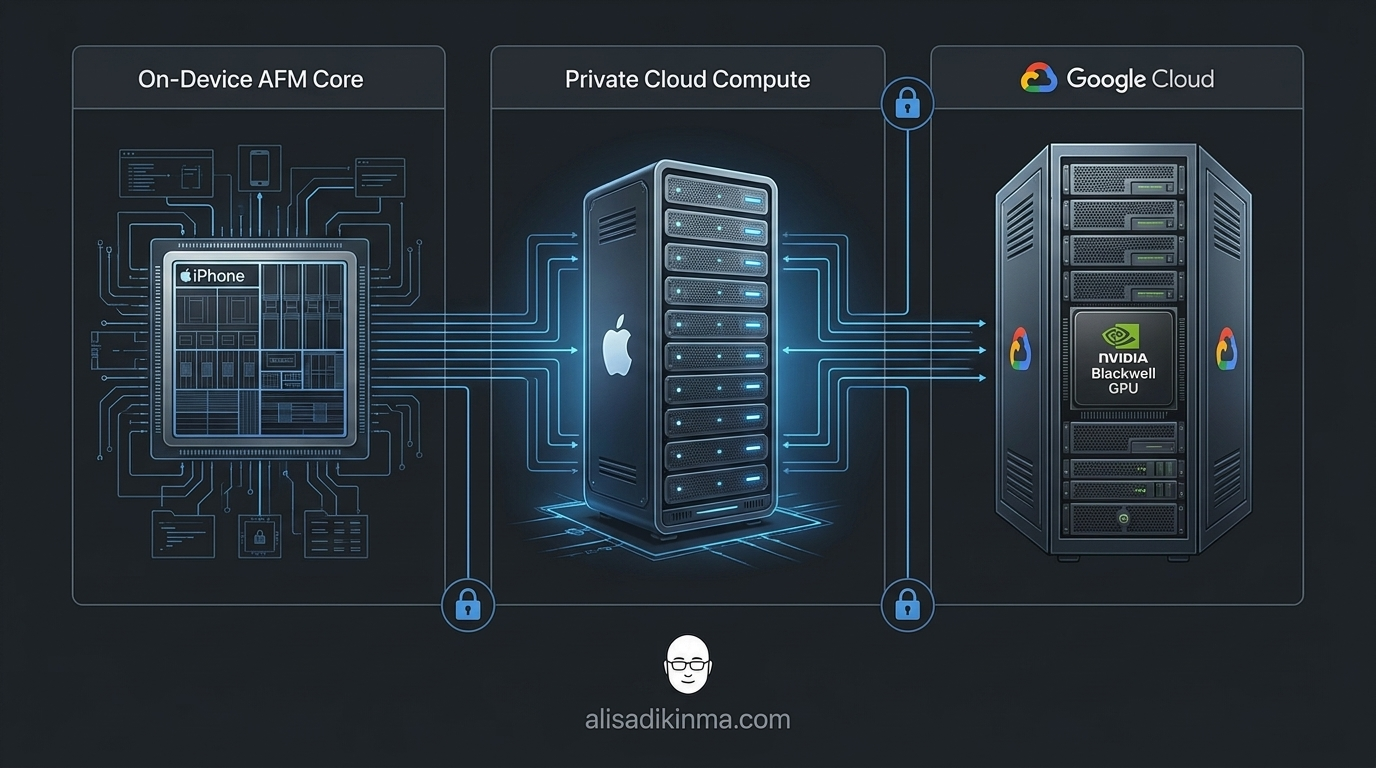
The system uses a three-layer routing architecture (The Next Web, 2026):
Layer 1 — On-Device: Simple questions are handled right on your iPhone chip using the Apple Foundation Model (AFM) Core. Your data goes nowhere.
Layer 2 — Private Cloud Compute: More complex questions go up to Apple's own cloud servers. Still inside Apple's ecosystem, not Google's.
Layer 3 — Google Cloud: Only the heaviest queries get sent to Google Cloud — and they run on NVIDIA Blackwell B200 GPUs with confidential computing encryption. Even Google itself can't see the content of your request.
Craig Federighi, Apple's Senior VP of Software Engineering, said it directly at WWDC 2026: Your requests are completely private to you. They are never stored.
But here's the reality you need to face:
Morgan Stanley estimates more than 850 million active iPhones can't run Apple Intelligence features at all. And more than 1.3 billion devices can't run the most advanced upcoming Siri AI capabilities (domain-b.com, 2026).
And there's an EU problem that's even more complicated — we'll get back to that in a bit.
What Apple Is Actually Building in iOS 27
Five models. One smart routing system. And a chip that changes the whole calculation.
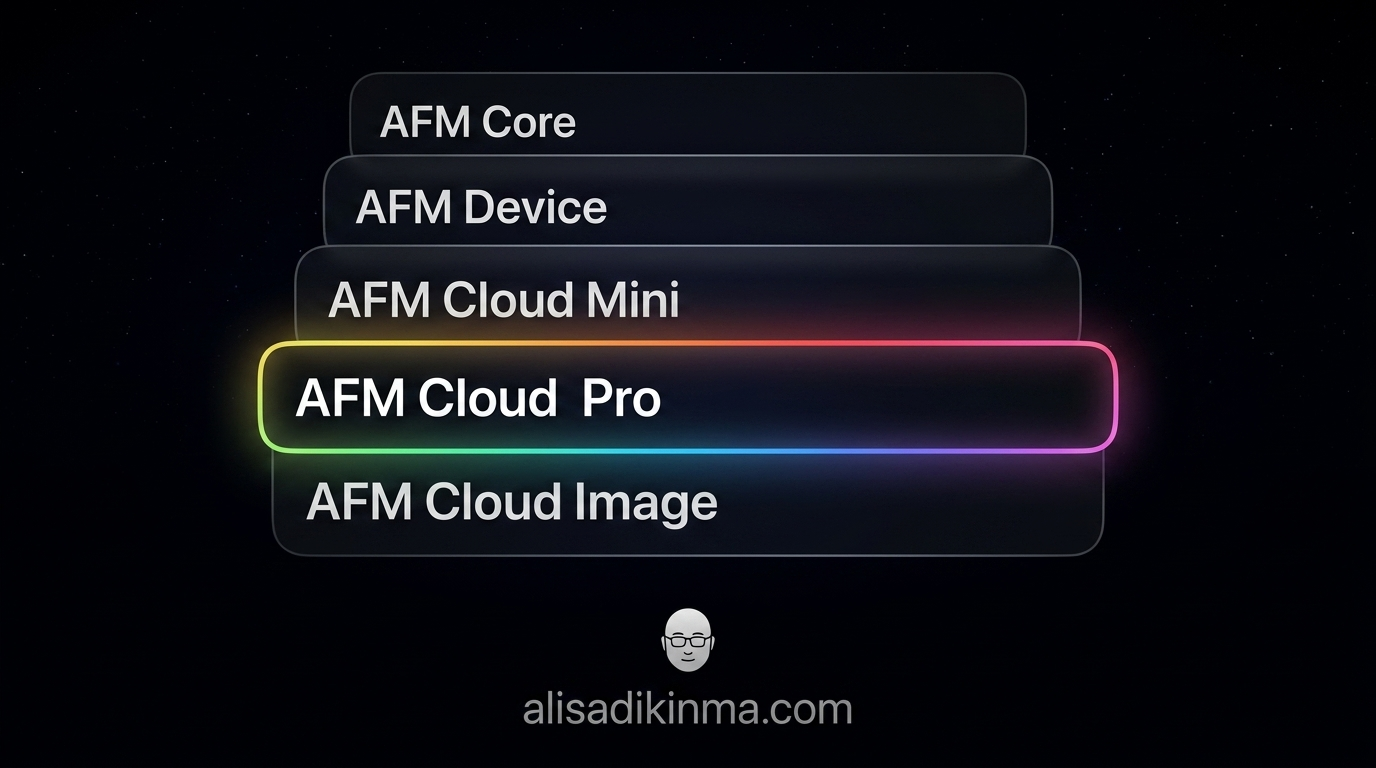
Apple didn't just bolt Gemini onto the old Siri. They built five brand-new Apple Foundation Model (AFM) from scratch (The Next Web, 2026):
- AFM Core — on-device model for basic tasks, your data never leaves the iPhone
- AFM Core Advanced — a more powerful on-device model for local reasoning
- AFM Cloud — Apple's cloud for mid-level tasks on Private Cloud Compute
- AFM Cloud Pro — runs at a quality level comparable to frontier Gemini models
- AFM Cloud Image — dedicated to image processing and recognition
Gemini isn't a replacement for Apple's stack. Gemini is the top layer of this system — for queries that need the deepest reasoning.
And it's not the standard version. Apple uses a custom Gemini model with around 1.2 trillion parameters — eight times larger than Apple's previous cloud model at just 150 billion parameters (Kavout/The Next Web, 2026). The architecture is mixture-of-experts, optimized for summarization, planning, and natural language understanding.
The A19 chip in iPhone 17 Pro also has 40% faster AI throughput compared to the A18 Pro (Kavout, 2026). That means more queries handled on-device, fewer that need to go to the cloud.
Thomas Kurian, CEO of Google Cloud, said at Google Cloud Next 2026: Earlier this year, we announced a monumental partnership with one of the most iconic brands that will bring the power of our technology to users everywhere around the world.
For Google, this isn't just about revenue. Alphabet hit a $4 trillion market cap in January 2026 after this deal was announced — partly because it gives Google reach into 2 billion iOS devices (Kavout, 2026).
What Siri AI Actually Changes for Your iPhone Right Now
Before you get excited, check your iPhone's compatibility reality first. Here are three things you can do right now:
1. Check Your iPhone's RAM — Know Your Access Limits
Full Siri AI needs around 12GB of RAM (Morgan Stanley, 2026). Right now, only the iPhone 17 Pro has 12GB. iPhone 16 Pro has just 8GB. Older models have 6GB or less.
How to check right now: Settings → General → About → Memory. If it's under 12GB, you're getting a limited Siri AI — not the full experience demonstrated at WWDC. If you have an iPhone 16 or older and need full AI features, upgrading to iPhone 17 Pro is the only path right now.
2. Enable AI Extensions — Siri Isn't Your Only Option
iOS 27 introduces Extensions in Siri — you can route queries directly to Claude or Gemini from inside Siri, without leaving the app (SiliconAngle, 2026). This isn't a small feature.
How to do it: Settings → Apple Intelligence & Siri → Extensions → choose the AI you want to activate. Siri isn't a single assistant anymore — Siri becomes the entry point to every AI you want to use, all in one interface.
3. Wait for Independent Benchmarks Before Any Big Decisions
Apple classified all Siri AI performance numbers at WWDC 2026 as a beta-phase snapshot and promised to release a verified technical report in summer 2026 (Let's Data Science, 2026). No numbers have been independently audited yet.
A 2026 CNET survey found 12% of smartphone users were motivated to upgrade because of AI features — from Apple's base of 2 billion-plus devices, that's around 240 million potential upgrades (Kavout, 2026).
Three Things to Watch After WWDC 2026
1. The EU and DMA — 34.9 Million iPhones That Won't Get Siri AI
The EU represents around 15% of iPhone sales — about 34.9 million units worth $26 billion in 2025 (AppleInsider, 2026). None of them will get Siri AI at iOS 27 launch.
Apple submitted a Trusted System Agent framework that was supposed to give controlled access to third parties under the Digital Markets Act (DMA). The European Commission rejected it. Apple even briefed EU regulators earlier than ever before — explicitly to avoid the DMA delays that blocked Apple Intelligence previously. Still wasn't enough (AppleInsider, 2026).
Negotiations are still ongoing. This isn't a closed case.
2. Independent Benchmarks — Summer 2026
Apple promised to release a technical report with verified numbers this summer. This'll be a crucial moment — either Siri AI performance claims hold up, or they don't. Hold off on any major upgrade decisions until that report drops.
3. The Unanswered Monetization Model
A 2025 CNET survey found 85% of smartphone users don't want to pay a premium for a smarter Siri (ainvest.com, 2025). But the personal AI assistant market is projected to hit $1.01 trillion with a 26.6% CAGR by 2031 (ainvest.com, 2025). Apple needs to find a monetization model in the face of very real consumer resistance.
Back to where we started: Apple already paid $250 million for promises it didn't keep. Siri AI isn't about promises anymore — it's about verifiable execution.
FAQ: What You Actually Want to Know About Siri AI
Does my data get sent to Google every time I use Siri AI?
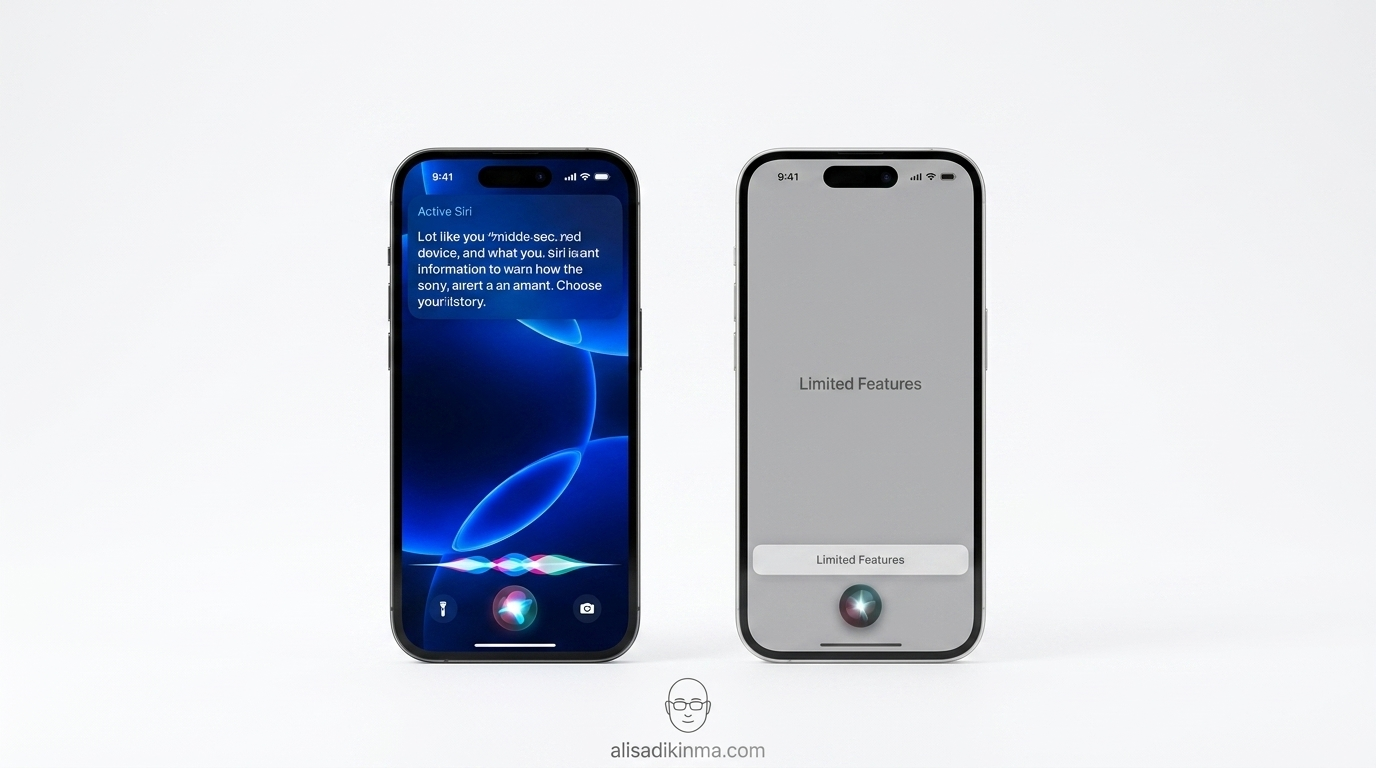
No. Siri AI uses a three-layer routing system: simple questions stay on-device, more complex ones go up to Apple Private Cloud Compute, and only the heaviest queries get sent to Google Cloud with confidential computing encryption — Google can't access the content. Craig Federighi confirmed at WWDC 2026 that user requests are completely private and never stored.
Which iPhones can run the full version of Siri AI?
Right now, only the iPhone 17 Pro meets the 12GB RAM requirement for full Siri AI. iPhone 16 Pro (8GB) and older models get limited access. More than 850 million active iPhones can't run Apple Intelligence at all, according to Morgan Stanley's 2026 estimates.
Why isn't Siri AI available in Europe?
The European Commission rejected Apple's Trusted System Agent framework, which was designed to give controlled third-party access under the Digital Markets Act. The EU represents around 15% of iPhone sales — about 34.9 million units in 2025. Negotiations between Apple and EU regulators are still ongoing with no confirmed timeline.
Apple Didn't Give Away the Keys — They Built a New Door
Siri AI isn't a sign that Apple gave up.
This is the biggest structural bet Apple has ever made in the AI era — and the outcome is way more complex than the simple narrative going around.
But one question stays open: depending on your main smartphone competitor is a story that'll keep evolving every upgrade cycle.
Of the four types of readers going through this article — Privacy Loyalist, Architectural Skeptic, Competitive Worrier, or Late Upgrader — which one best describes how you're reading the WWDC 2026 announcement? Your answer determines what you should do next.
Subscribe for the most complete iOS 27 and Siri AI coverage when the public beta starts this summer →
Or if you want a direct comparison: Siri AI vs Google Assistant vs ChatGPT in 2026 — the complete AI assistant comparison →