Self-Hosting Chinese AI Models: The Prediction That Proved Right
By Ali Sadikin Ma · · Updated
Category: Technology
A former Meta PM's prediction that US and European enterprises would self-host Chinese AI models (DeepSeek, Qwen) has proven accurate: the models went from 1% to 15% global market share in 12 months, with documented ROI from Airbnb, Coinbase, and Lindy. The article clarifies the GDPR-compliant path (open-weight self-hosting vs. banned hosted APIs), provides break-even calculations segmented by user type (solo dev, startup, enterprise CTO), and outlines a 3-step implementation framework including the often-overlooked engineering staffing cost of $270K–$1.5M/year.
There's a controversial prediction about self-hosting Chinese AI models that's already been proven right — and almost nobody's talking about it.
DeepSeek and Qwen grew from 1% to 15% of global AI market share in 12 months. The fastest adoption record in AI history, according to CODERCOPS Journal 2026.
At the same time, three global brands have quietly made a major decision. Who they are — and what came of it — most people still don't know.
And the most surprising part of all: there's a way to do it without violating a single GDPR regulation.
This is about a prediction from a former Meta PM about self-hosting Chinese AI models that many said was too bold. But the numbers are starting to speak for themselves.
The Accusation That Was Never Proven — and the 15% of Global Market That Already Quietly Moved
DeepSeek and Alibaba Qwen together captured 15% of global AI market share as of January 2026, up from just 1% a year earlier. In the same period, OpenAI dropped from around 55% to 40% — a structural shift that unfolded quietly without many headlines, according to CODERCOPS Journal 2026.
Xiaoyin Qu isn't a new name in tech. She's a former Meta product manager, founder of HeyBoss and Tycoon.us — and since June 2026, she's been consistently making a prediction that's made a lot of people uncomfortable.
Her prediction: American and European companies will self-host Chinese AI models.
Look at the numbers:
Open-source models processed 65% of all tokens routed through OpenRouter in June 2026 — up from 34% in January 2026, according to Citi research reported by TechStartups. And most of those models are made in China.
Qu isn't the only one who's already made a move. And there are three brands whose names might surprise you.
Why the 'Chinese AI = Dangerous' Narrative Feels Plausible — and Isn't Entirely Wrong
European regulators moved fast, and for valid reasons. Italy's Garante banned DeepSeek's hosted API within 72 hours of examining its data practices, citing GDPR violations. Thirteen EU jurisdictions opened formal investigations into DeepSeek in 2026. These concerns aren't unfounded — these are real regulations with real consequences, according to AI Policy Desk 2026.
Before we go too far:
There are solid reasons why many CTOs haven't moved yet — and it's not just paranoia.
Representative John Moolenaar, Chair of the House Select Committee on the Chinese Communist Party, sent a formal letter to Airbnb and Cursor in April 2026. The contents were serious: "The AI models used by these companies were trained by China's censorship regime and potentially contain hidden vulnerabilities that threaten American data and businesses."
Kai Waehner, enterprise AI architect, added in Enterprise Agentic AI Landscape 2026: "For any enterprise handling sensitive data in the US, Europe, or allied markets, DeepSeek isn't a viable primary AI vendor — the geopolitical and regulatory risks are structural, and can't be resolved through contracts."
But there's one word that gets left out of almost every debate: hosted.
In the next section: three global brands that have already made this decision — and why the results are more surprising than you'd expect.
The Undeniable Data: 3 Global Brands That Already Switched — and What Happened
Airbnb, Coinbase, and Lindy didn't wait for political consensus. They ran their own business calculations. Airbnb cut customer service resolution time from nearly three hours to six seconds using Alibaba Qwen's open-source model, while Coinbase slashed nearly half its AI costs — all documented (Forbes, Digital Today, Rest of World — 2026).
Not some tiny startup. This is Airbnb. This is Coinbase.
Airbnb and Alibaba Qwen
Airbnb adopted Alibaba Qwen's open-source model for its customer service operations. The result: resolution time dropped from nearly three hours to six seconds (Forbes, May 2026).
When the US Congress questioned the decision, Airbnb CEO Brian Chesky responded directly: "We don't send data to any Chinese company. Open-source models don't have access to data. That's not how it works."
Sundar Pichai, CEO of Google, also weighed in via Forbes: "If it's open source with the right license, the origin doesn't matter that much. I'm more concerned about whether the US is competing enough at the frontier."
Coinbase and GLM 5.2
CEO Brian Armstrong reported that Coinbase cut nearly half its AI budget by making GLM 5.2 from Z.ai and Kimi 2.7 from Moonshot AI the default for internal tasks — while token usage actually increased (Digital Today 2026).
Pay less. Use more.
Lindy and DeepSeek V4
Flo Crivello, founder and CEO of Lindy, moved the majority of the company's tasks to DeepSeek V4 after previously using Anthropic. His explanation to Rest of World was brief and direct: "You don't need God to write your email."
And this is just the beginning of even bigger numbers.
On OpenRouter, tokens from Chinese open-source models surged to 65% of total volume in June 2026. DeepSeek on the Vercel platform jumped from under 1% to 17% in a single month — May 2026 (Rest of World 2026).
Xiaoyin Qu's Real Prediction: Not Just Using Chinese AI — But Controlling Your Own Infrastructure
Qu didn't predict companies would adopt Chinese AI simply because it's cheap. Her prediction is sharper: the companies that win are the ones that control their own AI infrastructure — and Chinese open-source models make that affordable at enterprise scale for the first time. Enterprise adoption of self-hosting Chinese AI models grew from 11.3% to 17.9% in just the first part of 2026, according to Mindstudio 2026.
This isn't about model nationalism. It's about who controls the architecture.
Qu was direct in a Digital Today interview, July 2026: "If you believe handing all data and AI control to Anthropic and OpenAI means safety and compliance, that is naive."
And here's the regulatory distinction that matters most — and is most often misunderstood:
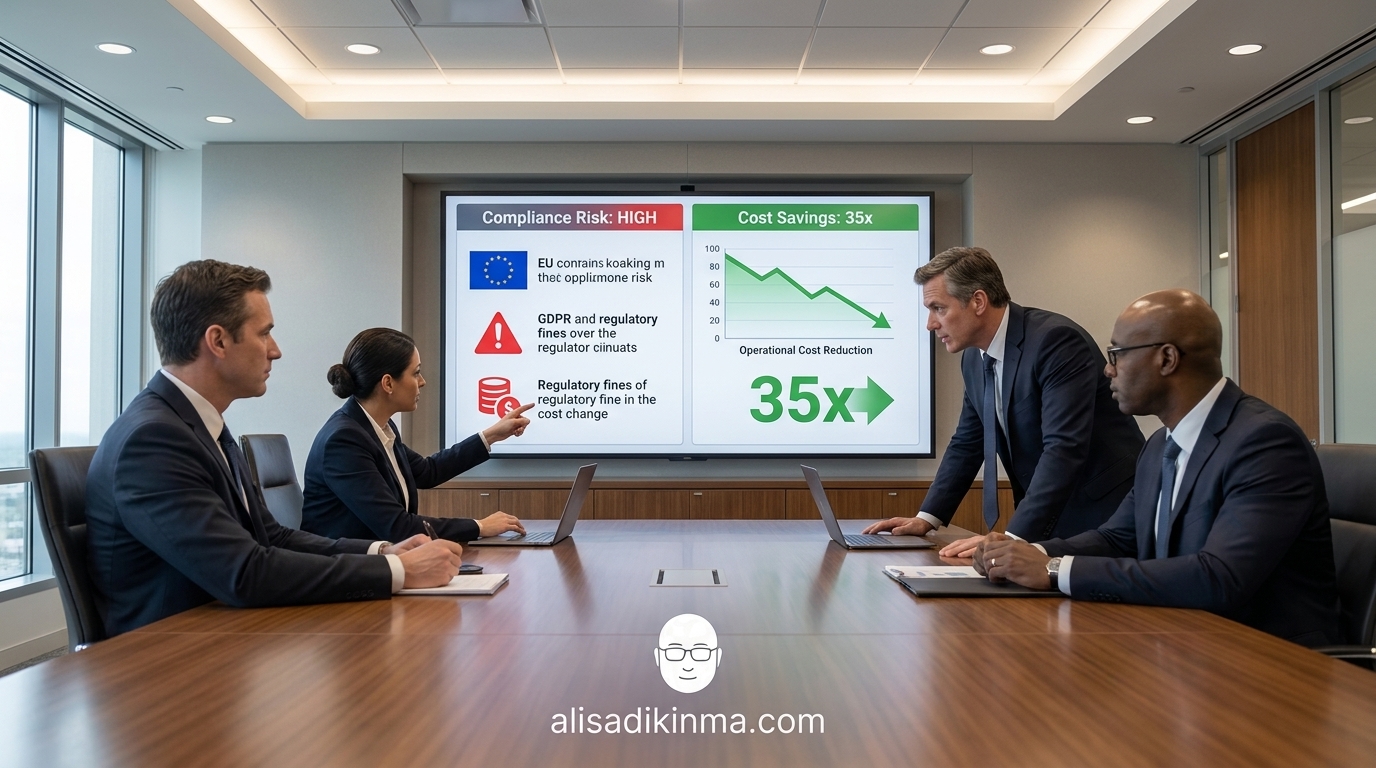
Self-hosting Chinese AI models on EU-based infrastructure is fully GDPR-compliant. Data never moves to China. The key distinction is hosted API versus self-hosted open-weight model (AI Policy Desk 2026). Italy banned DeepSeek's hosted API — not its open-weight model.
The economics are also moving in the same direction.
GPU compute has dropped 40-60% since 2024, making self-hosted inference economics increasingly attractive for high-volume workloads (AI Pricing Master 2026). DeepSeek-V3 was trained at a total cost of $5.6 million — roughly 1/50th the cost of training an equivalent frontier model at a US lab (CODERCOPS Journal 2026).
Yu Chen Jin, AI system and product development overseer at Databricks, summed it up in Digital Today: "GLM-5.2 is the open-source Claude moment. The demand we're seeing at Databricks is astonishing, and the world will witness large-scale adoption of open-source LLMs."
Qu's prediction isn't about which model is best. It's about who builds infrastructure with the least vendor lock-in — and how long you're willing to pay 35x more because you haven't done the math yet.
3 Types of Users, 1 Simple Calculation: When the Numbers Tell You It's Time to Switch
The decision to self-host Chinese AI models isn't one-size-fits-all. A solo developer processing 2-5 million tokens per month has a very different calculation than an enterprise processing 100 million. UBS noted that 60% of companies actively monitoring their AI budgets had already moved to cheaper alternatives by mid-2026 (BusinessToday) — but the right strategy depends on your volume and regulatory exposure.
Here's how to read it based on who you are and your monthly token volume.
Type 1: Solo Developer / Freelancer (under 5 million tokens/month)
What: You don't need to self-host Chinese AI models yet. Just switch to DeepSeek or Qwen's direct API.
How: Open OpenRouter or the DeepSeek V3.2 API directly. Compare outputs across 10 routine tasks — coding, summarization, email drafting. If the quality is comparable, move 80% of your tasks to the cheaper model. Setup time: under an hour.
Real example: DeepSeek coding tasks run about $0.50/hour versus Claude at about $10/hour — 20x cheaper for a typical developer workflow (Rest of World 2026). Stu Clott, a developer in San Diego who compared both head-to-head, concluded: "The output quality, to be honest, I can't tell the difference."
Outcome: Ruben Garcia Jr. in Dallas already uses Minimax, Kimi, and Xiaomi MiMo for 90% of his tasks. His savings are enough to cover one more premium SaaS subscription every month. His take: "If the Chinese models come out and they are frontier and cheaper, I'm going that direction."
Type 2: Startup Builder (5-10 million tokens/month)
What: Calculate the self-hosting break-even for Chinese AI models versus premium APIs now, before your next sprint planning.
How: Pull last month's API bill. Multiply your token volume by $0.28 (DeepSeek V3.2) versus $10 (GPT-5.2) for an apples-to-apples comparison — that's a 35x gap (AI Policy Desk 2026). Bring that number to your co-founder or investors, not an opinion about trends.
Real example: GPU compute has dropped 40-60% since 2024 — infrastructure overhead is no longer the same barrier (AI Pricing Master 2026). At 5-10 million tokens, self-hosting Chinese AI models starts to make economic sense.
Outcome: A Bain June 2026 survey found only 37% of companies met their AI savings targets despite most targeting 11-20% cost reductions. The culprit was sloppy math — not the choice of model.
Type 3: Enterprise CTO (over 10 million tokens/month, sensitive data)
What: Run the full calculation — including one cost that's almost always forgotten. Spoiler: it's not GPU costs.
How: Start with a region assessment. Self-hosting Chinese AI models on EU-region infrastructure separates the regulatory problem from the technology problem. Data never goes to China — compliance is covered. Then calculate volume: at 100 million tokens per month or more, savings can reach $5 million to $50 million per year (AI Pricing Master 2026).
Real example: 65% of Fortune 500 companies now use two or more AI model providers simultaneously (Harvard Business Review 2025, via Medium). Multi-model strategy is already the default — not an experiment.
Outcome: Menthol Research projects AI coding costs will surpass average developer salaries by 2028 (Gartner via TechStartups 2026). Companies that have already diversified their providers will have a significant cost structure advantage.
In the next section: 3 concrete steps to get started without breaking compliance — including one hidden cost almost everyone forgets to include in their calculations.
3 Steps to Start Self-Hosting Chinese AI Models Without Breaking Compliance
Self-hosting Chinese AI models can be done in three sequential steps. Step one determines legality. Step two determines economics. Step three — the one most often skipped — determines whether your team is actually ready to absorb costs that don't show up on your infrastructure invoice. GPU compute has dropped 40-60% since 2024, but there are other costs that rarely make it into the spreadsheet (AI Pricing Master 2026).
Step 1: Choose the right model and hosting region
What: Use open-weight models — not a hosted API. Self-hosting Chinese AI models on EU or US infrastructure is fully GDPR-compliant because data never leaves your servers (AI Policy Desk 2026).
How: Deploy on AWS Frankfurt, Google Cloud Europe, or Azure Netherlands using vLLM or Ray Serve as your inference framework. Italy banned the deepseek.com hosted API — not the open-weight model. This is exactly what Brian Chesky meant when he told Congress: "An open-source model does not have access to data. It doesn't work that way."
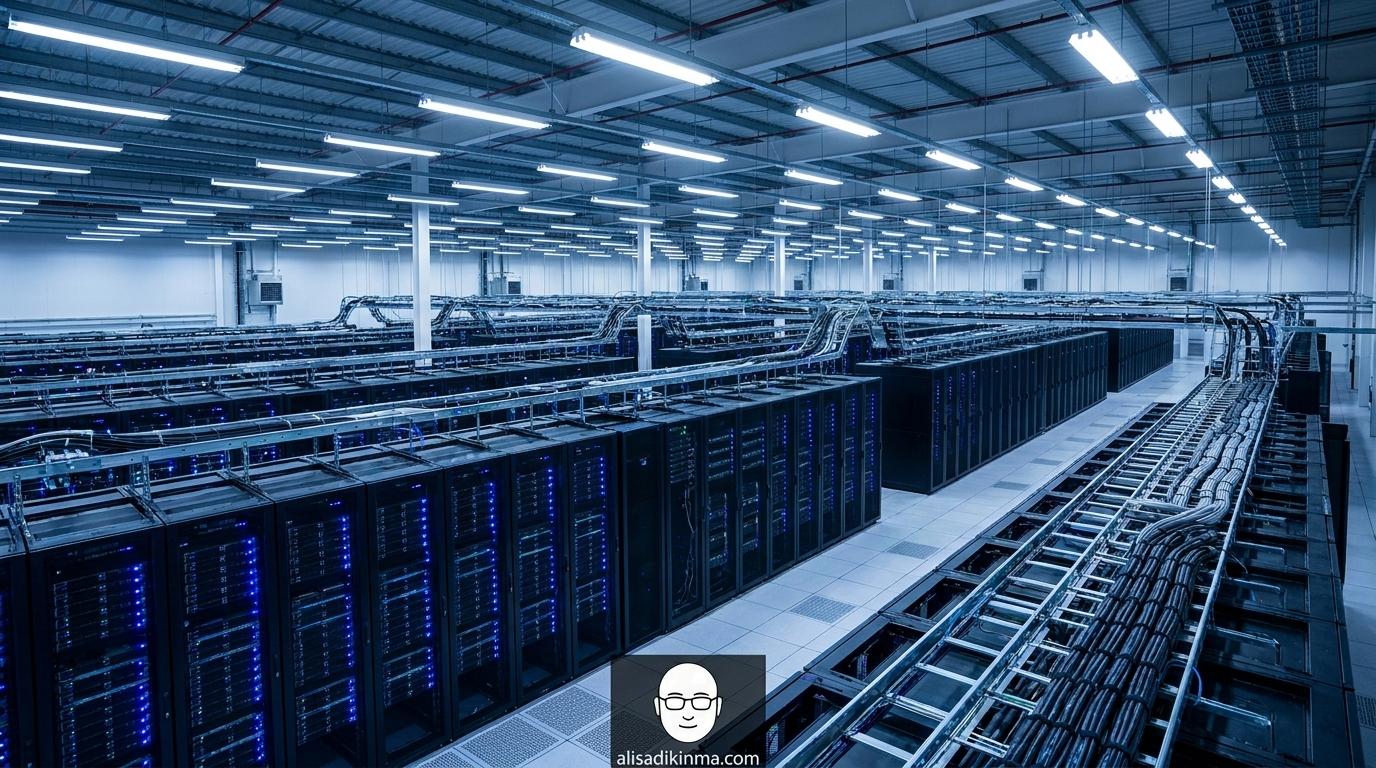
Outcome: Data sovereignty is guaranteed. No data transfers to China. GDPR compliance is met because there's no cross-border data flow to a jurisdiction without an adequacy decision.
Step 2: Calculate the real break-even point
What: Compare this month's premium API costs against an estimated self-hosting cost for Chinese AI models — with specific numbers, not rough estimates.
How: Multiply your monthly token volume by $10 (GPT-5.2) versus $0.28 (DeepSeek V3.2) for a direct API comparison. For self-hosting, calculate GPU compute in your chosen region. Break-even typically appears somewhere around 5-10 million tokens per month.
Outcome: These are the numbers to bring to your budget meeting — not media trends, not analyst opinions, but a concrete calculation that can be debated and decided on the spot.
Step 3: Account for the cost everyone forgets
This is what almost never makes it into the spreadsheet: your engineering team.
A minimum viable production team for self-hosting Chinese AI models (1.5-2 FTE) costs $270,000-$550,000 per year. An enterprise-grade team (4-6 FTE) costs $720,000-$1.5 million per year — and that often exceeds the infrastructure cost itself (AI Pricing Master 2026).
Gartner projects AI coding costs will surpass average developer salaries by 2028 (TechStartups 2026). This pressure isn't going away — it's only going to intensify.
Qu's prediction isn't about which model is best. She predicted who controls the infrastructure — that's who wins.
How many tokens are you processing per month? That's where your calculation starts.
FAQ: The Most Common Questions
Is self-hosting Chinese AI models legal in Indonesia and Europe?
Yes, with conditions. Self-hosting Chinese AI models like DeepSeek V4 or Qwen on local servers or EU-region cloud infrastructure is fully legal and GDPR-compliant because data never moves to China. What's banned is using the DeepSeek hosted API — not the open-weight model itself. Italy banned the hosted service, not the model code (AI Policy Desk 2026).
How many tokens per month is the break-even point for self-hosting?
Break-even starts around 5-10 million tokens per month compared to premium frontier model APIs. At 100 million tokens or more per month, savings can reach $5 million to $50 million per year. Below 5 million tokens, the DeepSeek or Qwen direct API is already cheap enough without needing your own infrastructure overhead (AI Pricing Master 2026).
Is the quality of Chinese open-source models really on par with GPT and Claude?
For most business tasks — yes. Stu Clott, a San Diego developer who directly compared DeepSeek with Claude and ChatGPT in real workflows, concluded: "The output quality, to be honest, I can't tell the difference." Yu Chen Jin from Databricks called it "the open-source Claude moment." For high-level reasoning or extra security, US frontier models are still relevant for specific use cases.
Calculate your AI API token usage this month and compare it against DeepSeek V4 pricing — drop your numbers in the comments and we'll work through the math together.
Save this article before your next AI budget meeting — the numbers in the user type calculation section above will change how your team discusses inference budgets.