OpenAI Phone ChatGPT 2027: Not Just Another AI Gadget
By Ali Sadikin Ma · · Updated
Category: Technology
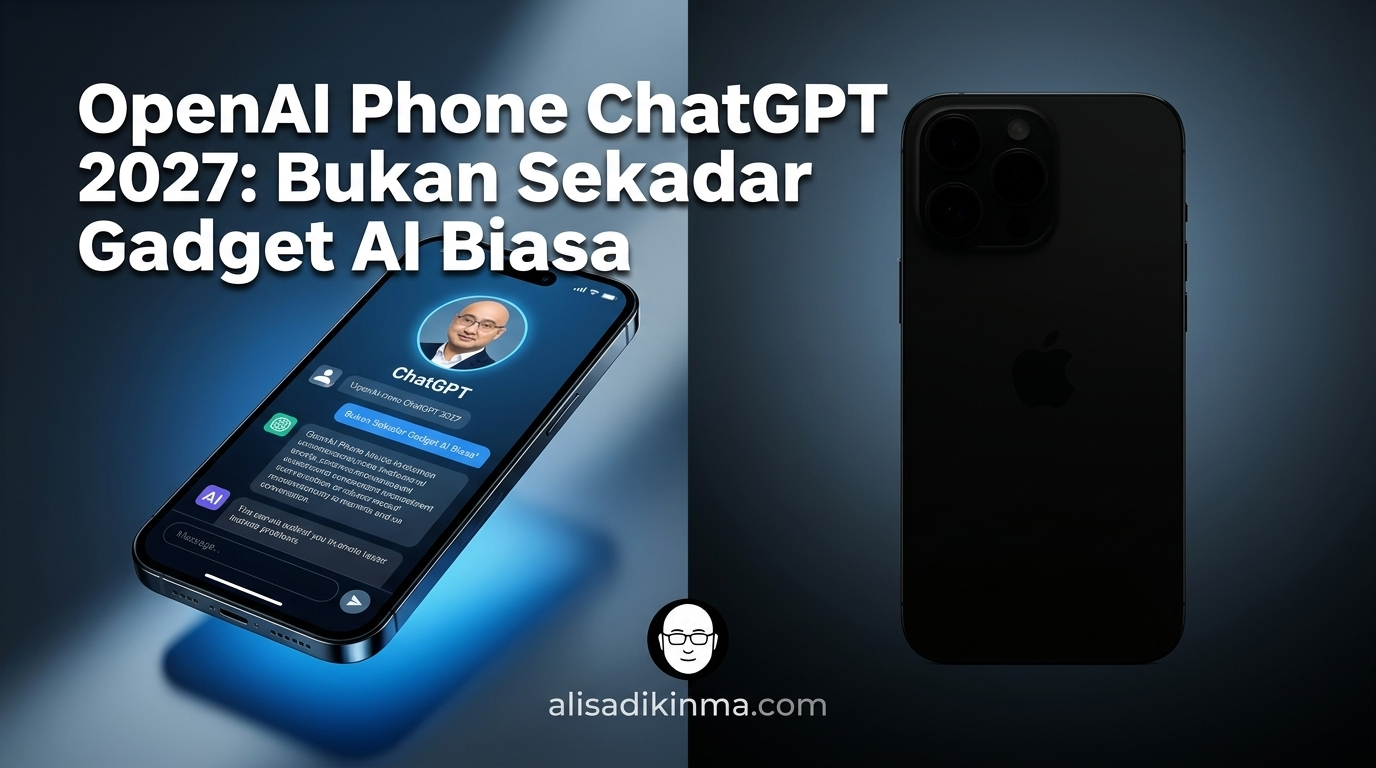
Here's what nobody's talking about with the OpenAI phone ChatGPT — and it's not the specs.
The chip's already leaked. The designer's confirmed. The production timeline's locked in. But everyone's missing the one thing that actually matters most.
And before I get to that, there's a more pressing question first:
Why did the two AI phones that came before — with just as much hype — end up as museum junk?
OpenAI Phone ChatGPT 2027 — This Isn't Just a Rumor
Analyst Ming-Chi Kuo reported to MacRumors in 2026 that OpenAI is accelerating mass production of the AI agent phone to H1 2027 — nearly a year ahead of the original 2028 projection. The initial shipment target is 30 million units. This isn't a prototype or pilot program — it's an industrial production schedule that requires supply chain certainty well in advance. OpenAI itself has already surpassed $25 billion in annual revenue as of February 2026, according to Business of Apps.
On the hardware side, Tom's Guide cites Kuo's report naming a customized MediaTek Dimensity 9600 chip on TSMC's 2nm process with an optimized HDR image signal processor — going head-to-head with the best flagships of 2026.
But there are three questions nobody's answered yet:
One — why did the timeline move up by almost a year? Two — will this phone fall into the same trap as Humane AI Pin and Rabbit R1? Three — what makes this phone more threatening to Apple than to Google?
All the answers come down to one number that almost nobody ever mentions in any article.
The World Already Tried This Twice — Both Times It Ended Badly
Humane AI Pin and Rabbit R1 both entered the market as AI-first devices — and both failed to prove why their standalone hardware needed to exist. According to Gizmodo, neither product could justify itself as a separate device when the smartphone already in users' pockets was far more capable. Meanwhile, ChatGPT already had 800 million weekly active users as of December 2025, per SociallyIn — a user base that Humane and Rabbit simply didn't have when they launched.
Humane AI Pin: $699 plus $24 per month for the subscription. Rabbit R1: $199 one-time. Both entered the market as revolutions in AI consumer hardware.
Both died.
Not because the technology was bad. But because both entered the market without the one most crucial thing:
A user ecosystem that already existed before the hardware ever launched.
OpenAI has that ecosystem. And the scale is in a completely different league from anyone who's tried before.
But OpenAI Has One Card Nobody's Ever Held Before
As of December 2025, ChatGPT had 800 million weekly active users according to SociallyIn data from OpenAI's reports. ChatGPT mobile app revenue jumped from $174 million in 2024 to $1.35 billion in 2025, per Business of Apps. That means OpenAI isn't entering the smartphone market as a newcomer — it's entering as a company with a user ecosystem far larger than the entire Humane and Rabbit markets combined, with demand that's already proven.
Here's the real edge of the OpenAI phone ChatGPT:
Three structural advantages that nobody's had before:
1. A data moat you can't build from scratch
Every conversation on ChatGPT is a preference signal that gets more personal over time. A phone built on top of this ecosystem doesn't just run AI — it becomes an AI agent that knows you better as time goes on.
Humane didn't have this at launch. Rabbit didn't have this. Apple only started building it with Apple Intelligence in 2025. OpenAI already has 800 million users actively building this data moat every single week. That gap can't be compensated for with a faster chip.

2. Full-stack control from chip to user experience
OpenAI acquired LoveFrom — Jony Ive's design firm, the former head of design at Apple — in May 2025, according to AndroidSage. Full control: custom hardware (MediaTek Dimensity 9600), exclusive software (ChatGPT and the AI agent OS), design (LoveFrom), and direct-to-consumer distribution.
This is exactly the model that made Apple unbeatable in premium hardware. No other AI company has this right now.
3. A revenue baseline that proves demand already exists
$1.35 billion in ChatGPT mobile revenue in 2025 isn't just a financial number. It's proof that millions of people are willing to pay for ChatGPT access. An OpenAI phone ChatGPT that integrates this access natively — no friction opening the app, no re-logging in — already has real market validation. Not a pitch deck. Not an analyst projection. This number is what makes the OpenAI phone ChatGPT fundamentally different from every AI gadget that came before it.
What Does This Mean for You as a User?
Deloitte's 2025 report projected gen AI smartphones could surpass 30% market share by end of 2025 — and the trend keeps climbing. The industry is already moving toward AI-native devices. What changes with the OpenAI phone ChatGPT isn't the category — it's who controls your everyday AI agent.
It's not about whether you need this phone.
The question is:
Who do you trust to manage your most personal AI agent — Google (Android + Gemini), Apple (iOS + Apple Intelligence), or OpenAI (ChatGPT)?
That's a decision much bigger than picking specs. And you've got until 2027 to think about it.
What You Need to Watch Before 2027

The OpenAI phone ChatGPT with a 30 million unit target in 2027, and OpenAI's annual revenue surpassing $25 billion as of February 2026 according to Business of Apps — this isn't a rumor. It's a real production schedule. But these three signals will determine whether this phone actually changes the market:
Final consumer price. Above $800, the mass market is limited. Below $600, this could become the AI agent entry point for a much wider segment.
Ecosystem openness. Will this phone only work best with ChatGPT, or will it also support other AI models? The answer determines whether this is a niche product for die-hard OpenAI users — or an open platform that can replace mainstream smartphones.
Distribution partnerships. Without carrier deals or large-scale retail partnerships, 30 million units stays just a number on paper.
Now you've got the context you need. When OpenAI announces the official release date, you'll already know what's really at stake.
Frequently Asked Questions
When will the OpenAI phone ChatGPT be available?
Based on analyst Ming-Chi Kuo's report at MacRumors (2026), OpenAI is targeting mass production in H1 2027 — moved up from the original 2028 projection. The initial 30 million unit target signals this is a real industrial production schedule. An official consumer release date hasn't been publicly announced as of May 2026.
What makes the OpenAI phone different from Humane AI Pin and Rabbit R1?
The biggest difference is the ecosystem that already existed before the hardware launched. Humane and Rabbit entered the market without an established user base. The OpenAI phone ChatGPT starts with 800 million weekly active ChatGPT users as of December 2025 and $1.35 billion in mobile revenue that same year — proven demand, not assumptions.
Share this article with your tech-savvy friend before they buy a new flagship phone in 2027 — they need to read this first.
Bookmark this article now — when OpenAI announces the official release date, you'll need this context to understand what's actually going on.