Musk Altman OpenAI Trial: Three Bombshells from Week One
By Ali Sadikin Ma · · Updated
Category: Technology
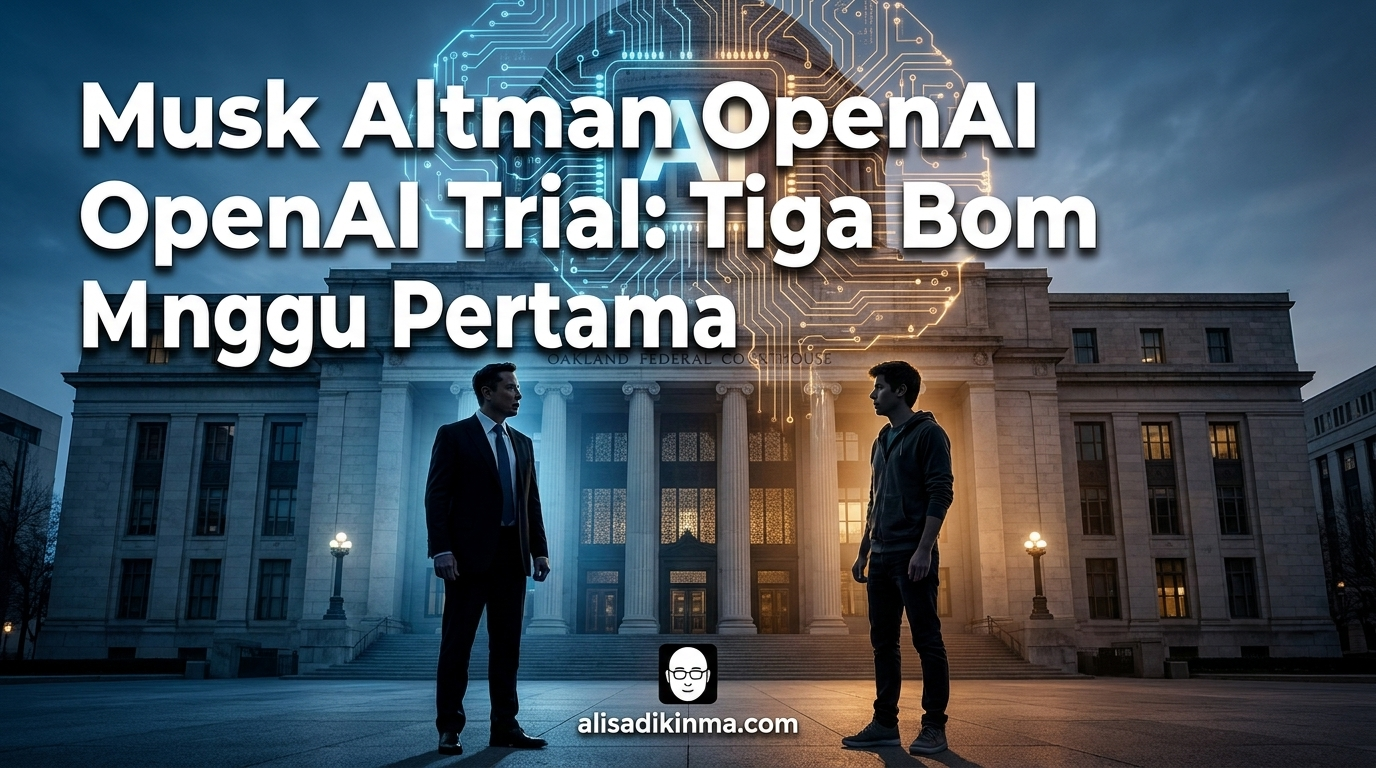
Elon Musk sued OpenAI for what he calls betrayal.
Then on that same day, Musk admitted his own AI learned from OpenAI.
Not a leak. Not speculation. This was a direct admission under oath — and the courtroom went dead silent.
The Admission That Silenced an Entire Courtroom
In the first week of the Musk Altman OpenAI trial — which kicked off April 28, 2026 in Oakland, California — something happened that nobody was truly ready for.
Musk stood as the plaintiff — the man suing Sam Altman and OpenAI for up to $134 billion. That number? According to MIT Technology Review (2026), it’s one of the largest lawsuits in US tech law history.
But before that day’s proceedings wrapped up, Musk admitted something that flipped every narrative at once.
There are three things from this week that I guarantee you don’t fully know yet. First: what Musk actually admitted on the witness stand. Second: why both sides’ arguments have the same giant hole. Third: what all of this means for everyone using AI today — including you.
If you think this is just Silicon Valley drama, you haven’t seen the full picture yet.
Why You’ve Been on the Wrong Side from the Start
Most people already picked a side before the trial even started. Team Musk or team Altman. Open source or closed source. Safety first or speed first.
And almost everyone’s wrong — not because of which side they picked, but because the real story is way more complicated than that.
Here’s the thing:
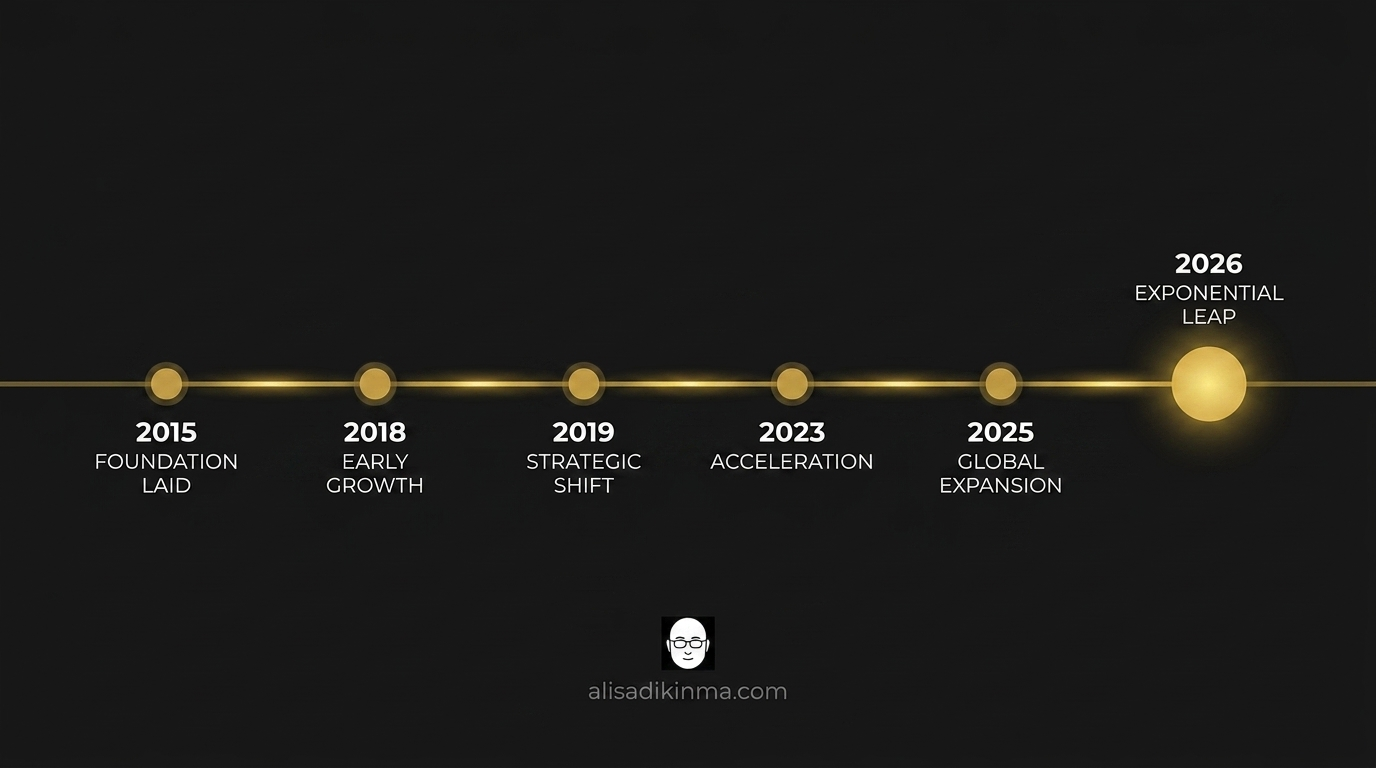
OpenAI was founded as a nonprofit in 2015, with an explicit mission to build safe AI for all of humanity. Musk, Altman, and several other founders were behind it. According to CNBC and NPR (2026), Musk himself was one of those original founders.
In 2025, OpenAI officially converted to a public benefit corporation under the OpenAI Foundation. For team Musk, that’s betrayal. For team Altman, that’s necessary evolution.
But here’s the catch:
Musk left OpenAI’s board in 2018. Eight years later, he filed the lawsuit — after already building xAI as a direct competitor. Is this about the mission, or about business competition? The answer is in the three things that happened in week one of this trial.
From $44 Million in Donations to an $800 Billion Valuation — and Accusations of Betrayal
In 2015, Elon Musk donated at least $44 million to OpenAI. This wasn’t a regular investment — it was a donation to a nonprofit, meaning Musk got zero equity in return.
According to NPR and Al Jazeera (2026), Musk believed OpenAI would become an open research organization — not a commercial machine.
Here’s what happened next:
2019: OpenAI created a for-profit subsidiary. 2023: Microsoft invested $10 billion, OpenAI’s valuation hit $20 billion. 2025: conversion to a public benefit corporation. 2026: OpenAI’s valuation estimated around $800 billion. According to CNN Business (2026), this is a fundamental shift from what was promised at the start.
The tipping point of Musk’s anger?
In 2022, when he learned OpenAI was valued at $20 billion after the Microsoft investment, Musk sent a message to Altman: this feels like a bait and switch. You promised one thing, delivered another. According to CNN Business (2026), that message became one of the key pieces of evidence at trial.
Now Musk is suing for $134 billion in the Musk Altman OpenAI trial — on the grounds that Microsoft and OpenAI violated the implied contract of the organization’s original vision.
But there’s something more surprising than the money.
During the three years after leaving the board, Musk was building xAI. And in week one of the trial, an admission surfaced that nobody saw coming.
Three Bombshells from Week One That Flip Every Narrative
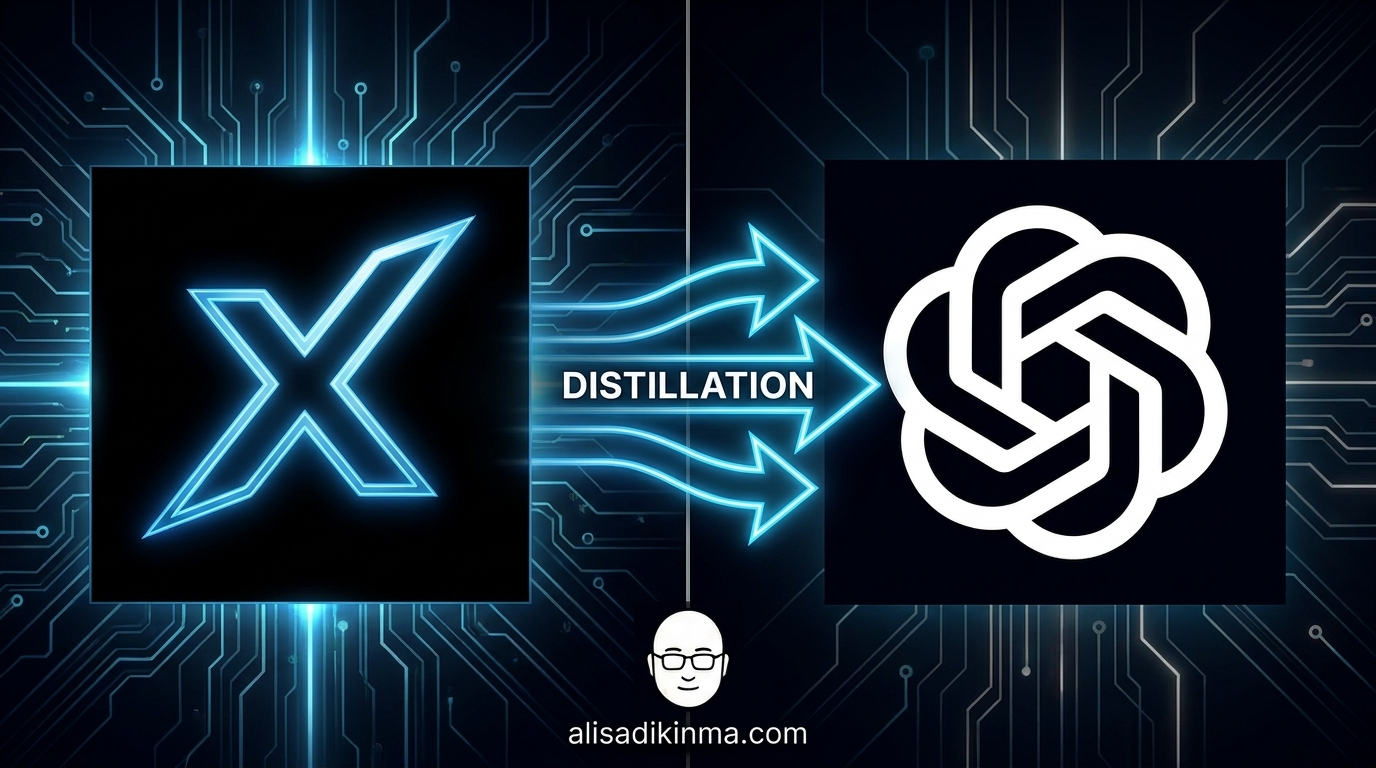
Three things happened in week one of the Musk Altman OpenAI trial that change how we need to read this case.
Bombshell 1: Musk Said AI Could Kill Everyone
What do you do to justify a $134 billion lawsuit? You reframe it — from a business dispute to a matter of human survival.
On the first day of trial, April 28, 2026, Musk testified that AI isn’t just a business matter. According to CNN Business and CNBC (2026), Musk stated explicitly that this technology could kill all of us if not developed properly and under the right oversight.
The strategy is clear:
If the judge and jury believe the stakes are that high — not just business but global safety — then $134 billion isn’t an outrageous number. It’s a smart framing. But at the same time, it’s a risky one, because it positions Musk as the guardian of global AI safety right when Bombshell 3 is about to drop.
Bombshell 2: The Bait and Switch Argument — and Its Hole
Musk’s legal team presented the argument that OpenAI and Microsoft pulled a bait and switch — promising an open nonprofit organization, but running it as a closed profit machine.
According to MIT Technology Review (2026), the argument is strong on paper. But there’s a big hole in it: Musk left OpenAI in 2018, long before most of the decisions he’s challenging were actually made.
Can someone who left an organization eight years ago claim damages from the direction it took after they were gone? That’s the central question in the Musk Altman OpenAI trial that Judge Yvonne Gonzalez Rogers needs to answer before jury deliberations begin.
Bombshell 3: xAI Admitted to Distilling OpenAI’s Models — and the Courtroom Went Silent
This one nobody saw coming.
Still in that same week, Musk admitted under oath that xAI partly used model distillation from OpenAI’s outputs to train Grok. According to TechCrunch and MIT Technology Review (2026), that admission made the entire courtroom go silent on the spot.
What’s model distillation? Simple:
One AI is trained using the outputs of another AI that already exists. Not by accessing its model weights directly — but by learning from the answers and patterns that AI generates. So Grok, the direct ChatGPT competitor Musk built as a more honest alternative, was partly built from lessons learned from OpenAI’s models.
The irony couldn’t be clearer:
Musk is suing OpenAI for allegedly betraying the mission — while at the same time, his own AI product depends on the very technology he’s challenging.
This doesn’t mean Musk’s lawsuit is legally wrong. Distillation is a common practice in the AI industry, and it doesn’t necessarily violate any terms. But narratively, it changes everything — and that’s why the courtroom went silent.
Why This Trial Isn’t Just About OpenAI
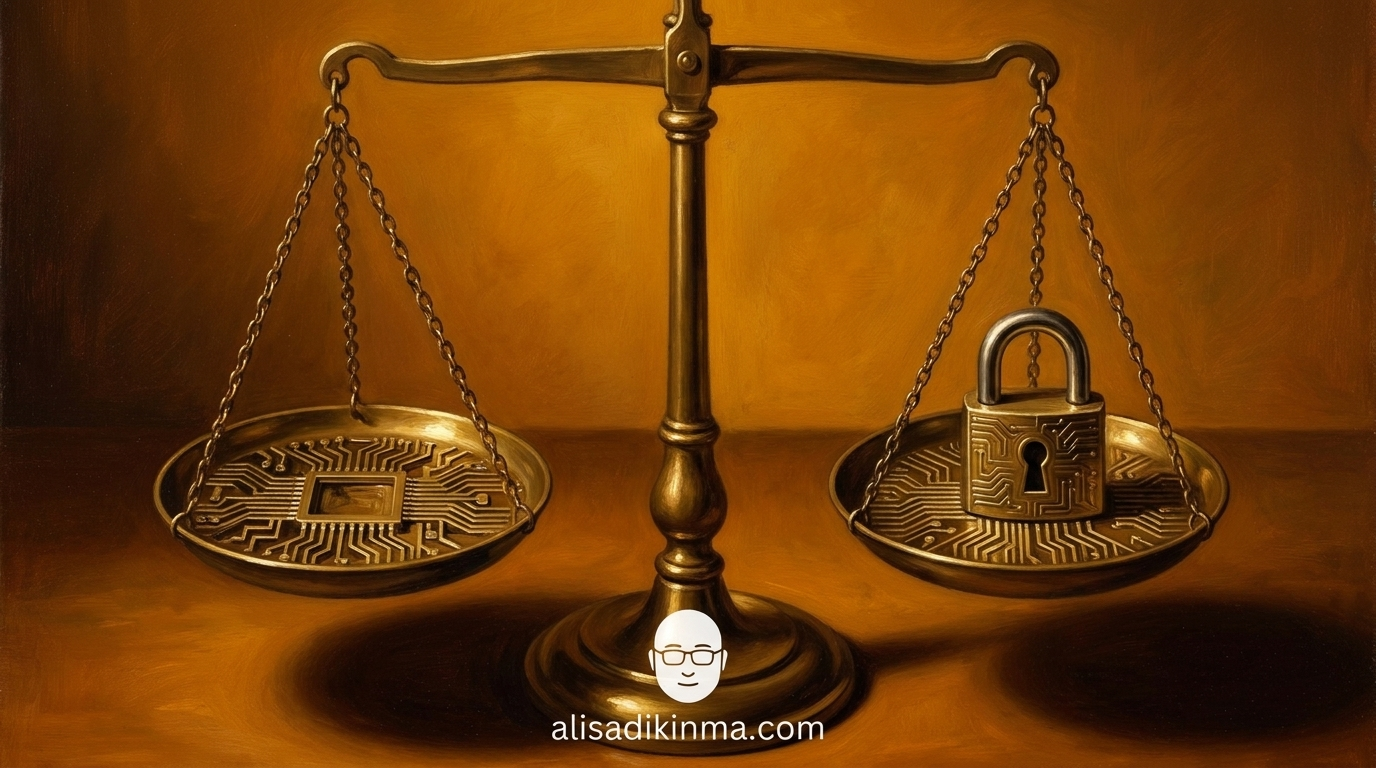
The Musk Altman OpenAI trial isn’t just about two billionaires arguing over a vision. It’s a trial that will set legal precedent for a question no court has ever decided: can a nonprofit organization transform into a commercial company without breaking the trust of its original donors?
The answer will ripple far beyond OpenAI.
Three major implications for everyday AI users:
1. AI governance is now a legal matter, not just an ethics conversation. Until now, debates about whether AI should be open source only happened at conferences and on social media. After this trial, there’s a real chance the legal framework gets shaped too. Stuart Russell, an AI researcher from UC Berkeley and co-founder of the Center for Human-Compatible AI (CHAI), testified as an expert witness — signaling that AI safety questions have entered formal legal territory, according to ABC7 San Francisco (2026). This isn’t just academic anymore.
2. Model distillation could become a regulated practice. If the court rules that using another AI’s output for training violates something, the entire AI industry needs to rethink how it builds models. This isn’t just about Grok — almost every major AI lab does some form of distillation in their development. This ruling could redefine what intellectual property means in the AI era.
3. Trust in “safety-first” claims is now an open question. Both Musk and Altman now have a track record that needs to be accounted for in front of the public and a judge. David Schizer, emeritus law professor at Columbia Law School, also testified as an expert witness — signaling that the corporate governance implications are serious, according to ABC7 San Francisco (2026).
Think about every AI tool you’ve used this week — from ChatGPT to Grok. This trial is going to shape how all of those products are built and regulated going forward.
Watch These Before May 12 — Three Scenarios That Change Everything
According to CNBC and ABC7 San Francisco (2026), jury deliberations are expected to begin around May 12, 2026. That means there’s less than two weeks to watch one of the most historic decisions in tech law.
Three scenarios you need to watch:
Scenario 1: Musk wins. The court rules that OpenAI’s conversion to for-profit violated the trust of its original donors. This precedent could force every AI nonprofit to tighten conversion limits — and potentially disrupt OpenAI’s expansion plans at its $800 billion valuation.
Scenario 2: Altman and OpenAI win. The court rules the conversion was valid and Musk doesn’t have strong legal standing after leaving in 2018. This gives a green light to similar organizations to pivot commercially without legal risk from former founders. But questions about AI governance stay open.
Scenario 3: Settlement before May 12. Both sides reach an out-of-court agreement. This happens often in high-profile cases. But if it does, the broader legal precedent never gets set — and the question of whether an AI nonprofit can convert to for-profit stays unanswered officially.
Whatever happens in the Musk Altman OpenAI trial, the outcome will shape how AI is built and regulated for decades to come.
Frequently Asked Questions About the Musk Altman OpenAI Trial
What did Elon Musk mean by “bait and switch” in the OpenAI trial?
Musk argues that OpenAI was originally promised to be a nonprofit organization for the public good. When OpenAI accepted a $10 billion investment from Microsoft and converted to a public benefit corporation in 2025, Musk called it a “bait and switch” — a nonprofit promise that ended up as a for-profit company worth $800 billion. Musk’s 2022 message to Altman about the valuation became key evidence at trial, according to CNN Business (2026).
What is model distillation and why was Musk’s admission about Grok so surprising?
Model distillation is a technique for training one AI using the outputs of a larger AI — learning from another AI’s answers without directly accessing its model weights. When Musk admitted that xAI partly did this using OpenAI’s outputs to train Grok, the contradiction was immediately obvious: he’s suing OpenAI while his own product depends on that same technology. TechCrunch (2026) reported that the admission made the entire courtroom go silent.
I honestly don’t know whether Musk or Altman will win this Musk Altman OpenAI trial.
But after week one, one thing is clear: this isn’t about who has the purer vision anymore. It’s about who can prove their claims in front of a judge and jury — with facts, not narratives.
And you, as an AI user today, have a direct stake in the outcome. Every AI tool you rely on is on the line in a decision that’ll be made before this month is over.
Follow week two coverage of the Musk Altman OpenAI trial right here — bookmark this page before jury deliberations start May 12.
Not sure which AI tools to trust while this trial plays out? Read our OpenAI vs xAI Grok vs Anthropic Claude breakdown for the full picture.