Musk Admits xAI Distilled OpenAI Data: Why It's Controversial
By Ali Sadikin Ma · · Updated
Category: Technology
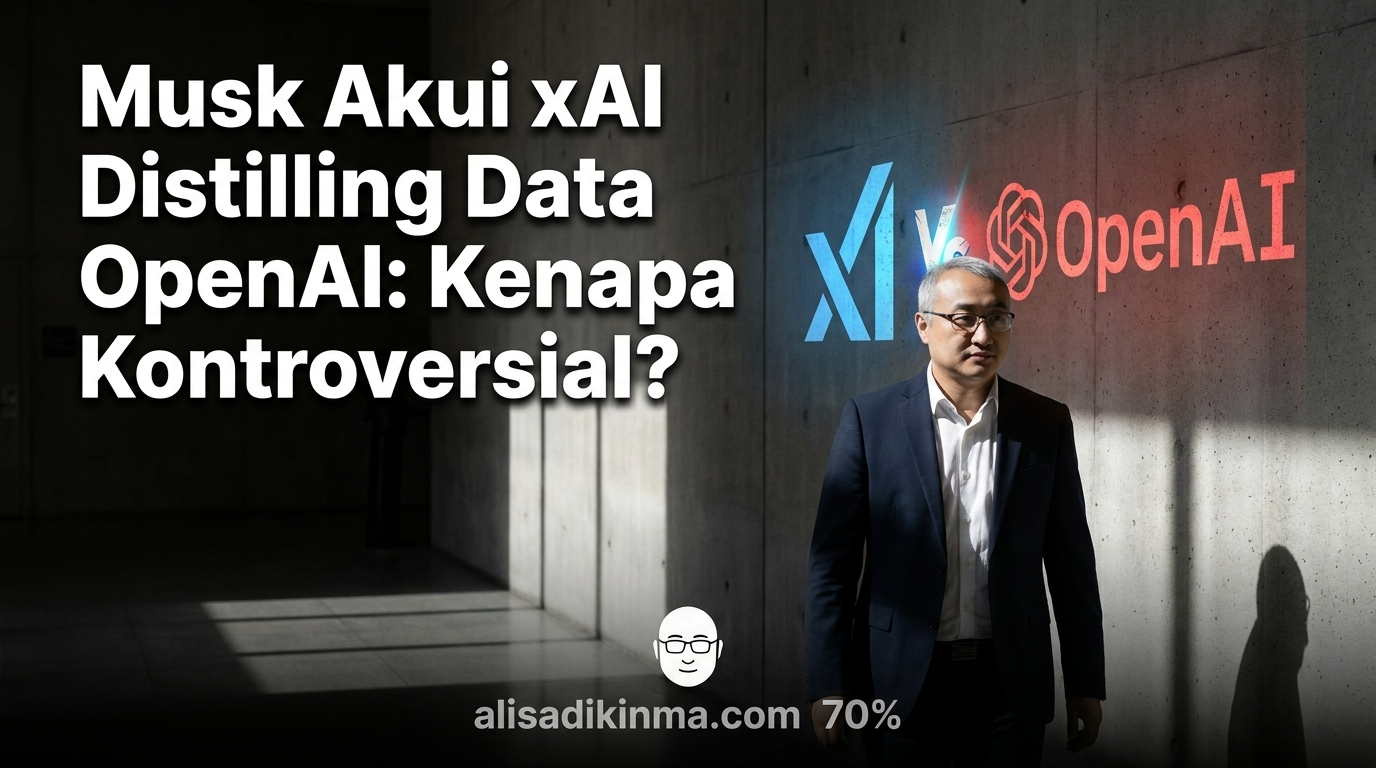
One word. That's all that came out of Elon Musk's mouth at Oakland federal court, April 30, 2026.
The question was simple: did xAI use OpenAI's models to train Grok?
"Partly."
The courtroom went quiet. Someone cleared their throat. TechCrunch reported audible gasps when that answer hit the air.
Because Musk isn't just any witness. He's the plaintiff. He's the one suing OpenAI over claims of mission betrayal and data misuse. And under oath, he just admitted xAI had been doing xAI distilling OpenAI data to train Grok — the exact thing at the heart of his own lawsuit.
But this isn't just about one person's hypocrisy.
Why is this practice in a legal grey zone, not outright illegal?
What makes distillation worth $1.75 trillion to xAI — and who's actually paying the price?
And if Musk is doing it, which other AIs are doing the same thing — including the ones you use every day?
All the answers are here. But first, you need to know exactly who was sitting in that witness chair — and just how ironic that position is.
The Man Who Sued OpenAI — Then Admitted This Under Oath
Musk filed his lawsuit against OpenAI in 2024, after donating $38 million toward the company's founding. He accused OpenAI of betraying its nonprofit mission when it pivoted to a profit-driven model. Then in the first week of the Musk v. Altman 2026 trial, he took the witness stand as the plaintiff — and admitted xAI had been doing pretty much the exact thing he was suing over.
Let me give you the context first.
Musk genuinely believed in OpenAI. He donated $38 million when the company was founded, based on a promise that this technology would be developed for everyone's benefit — not for the profit of a select few. When OpenAI changed course, he felt betrayed. This was confirmed by MIT Technology Review and CNBC in their 2026 trial coverage.
He took the witness stand as the plaintiff.
And in that position — under oath, in front of a federal judge — he answered "partly" when asked whether xAI used OpenAI's models. Not his lawyer's statement. Not an internal document. Straight from his own mouth.
Musk defended himself:
"It is standard practice to use other AIs to validate your AI," as quoted by MIT Technology Review, May 2026.
Standard practice. That phrase matters a lot — and I'll show you why it might actually be the weapon that turns against him.
But before that, you need to understand this: xAI distilling OpenAI data isn't something Musk admitted reluctantly. He actively defended it.
But first, you need to understand exactly what Musk was admitting. Because "distillation" isn't a word most people outside tech circles know — but its implications hit directly at the $1.75 trillion valuation xAI is chasing.
What Is xAI Distilling OpenAI Data — And Why It's Worth $1.75 Trillion
xAI distilling OpenAI data isn't literal file theft. Distillation is a technique for training a smaller AI model using the outputs of a larger one. According to MIT Technology Review 2026, xAI is targeting a $1.75 trillion valuation despite having only "a few hundred employees" — a number that's likely propped up by the capabilities built through this technique.
Okay, let me break this down.
In AI, there's a technique called knowledge distillation. Here's how it works: a large model ("teacher") generates outputs. A smaller model ("student") learns from those outputs — not from raw data, but from the response patterns already produced.
Think of it like this:
Imagine learning math not from a textbook, but from the pattern of how an expert answers questions. You're not copying their book. You're learning from how they think and structure their answers. That's distillation — and this technique can cut billions of dollars off training costs.
This is where the $1.75 trillion figure gets very relevant.
MIT Technology Review 2026 reported xAI is targeting a $1.75 trillion public valuation. This is a company Musk himself said had only "a few hundred employees" while testifying. OpenAI, by comparison, is valued around $800 billion — with thousands of employees and billions of dollars already invested in research and infrastructure.
The question is: how does a team that small build capabilities competitive with GPT-4 in such a short time?
If the answer is distillation from a mature model like GPT — then xAI is building on a foundation that OpenAI paid a huge price to construct, without carrying that cost itself.
And that opens the door to the biggest irony in this whole story.
The Hypocrisy You Can't Ignore
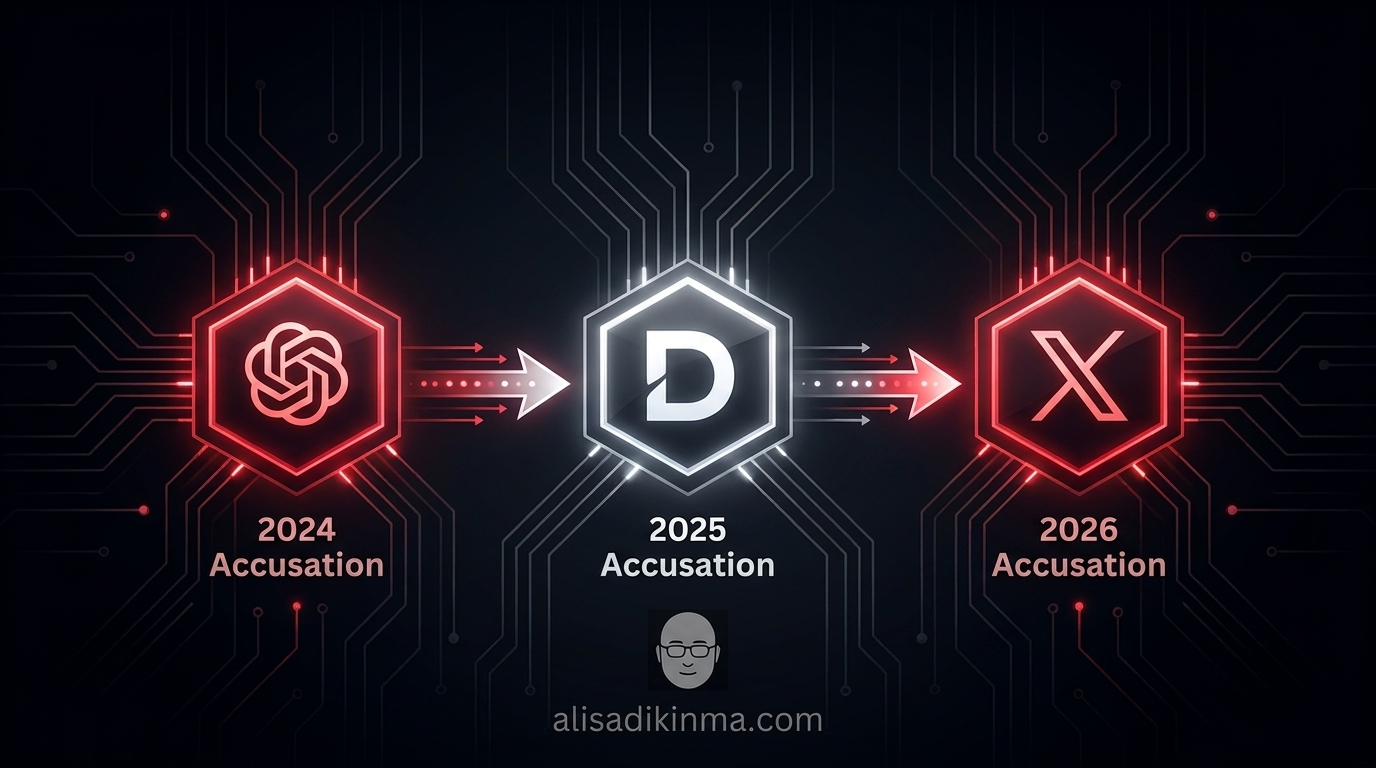
February 2026, OpenAI accused DeepSeek of distilling their GPT models. August 2025, Anthropic blocked OpenAI for ToS violations. April 2026, Musk admitted xAI did the same thing. Three layers of irony stacked in one industry — and not a single major AI company looks clean from similar accusations.
Here's the timeline in order:
- August 2025: Anthropic blocked OpenAI's access to Claude. Same pattern as xAI distilling OpenAI data — ToS violation used as a weapon. The reason: terms of service violations, including bans on reverse-engineering and building competing products. MIT Technology Review 2026 reported this as part of a wider industry pattern.
- February 2026: OpenAI publicly accused DeepSeek — a Chinese AI company — of distilling their GPT models. TechCrunch reported the accusation was taken seriously by the industry.
- April 2026: Elon Musk, who is suing OpenAI, testified under oath that xAI "partly" distilled OpenAI models.
Line those three up in order and you get a very clear picture:
Every major player in the AI industry is accusing the others of doing something they're doing themselves.
And that's not just irony to compile on Twitter. It has very real legal implications — so why hasn't anyone gone to jail? The answer is in the next section, and it's the most important thing you need to understand before drawing any conclusions.
3 Key Things About xAI Distilling OpenAI Data and the Law Right Now
xAI distilling OpenAI data sits in a legal grey zone for three specific reasons most people haven't figured out yet. AI output isn't protected by copyright in the US. But OpenAI's terms of service ban using it to build competing models. And the "standard practice" argument Musk used could turn against his own lawsuit against OpenAI.
This is the resolution to all the questions I opened at the start of this article.
1. AI Output Isn't Copyrightable in the US — But That Doesn't Mean It's Risk-Free
What you need to know: Distillation works by using AI output as training data — not source code or the model itself. And under current US law, AI output can't be copyrighted. This isn't a grey area — it's the official US legal position.
How it works legally: The U.S. Copyright Office has stated that AI output lacking "sufficient human authorship" doesn't get copyright protection. That means GPT-4 generates text → that text has no copyright. xAI uses that text for training → technically not a copyright violation.
The real-world proof: A legal analysis from Fenwick & West 2025 concluded that copyright infringement claims for distillation practices are "extremely difficult" to prove in US courts. This isn't a legal blogger's opinion — it's from a firm that specializes in AI intellectual property.
What this means for you: Musk won't go to jail for his admission. The "partly" admission isn't a criminal confession. But don't misread the situation — there are other risks that are far more real and far more expensive. Those are in the next point.
2. The Real Danger Is Breach of Contract, Not Copyright
What you need to know: OpenAI has a Terms of Service that explicitly bans using their output to build competing AI models. And Musk just admitted under oath that xAI did exactly that.
How it works legally: According to the Suffolk University Journal of High Technology Law 2025, OpenAI's ToS specifically bans copying or using their AI-generated output to develop competing models. This isn't a grey zone — it's in black and white in the contract every user agrees to when they first access OpenAI.
The real-world proof: Anthropic did the same thing to OpenAI in August 2025. The block happened on the basis of ToS violation — not a copyright lawsuit. And it proved effective at cutting off access. This isn't theory — this already happened in the same industry.
What this means for you: xAI's biggest risk isn't jail — it's a civil breach of contract lawsuit that could get very expensive. And now, OpenAI has direct evidence straight from Musk's own mouth, under oath, in front of a federal judge. That's evidence that's very hard to fight in court.
3. The "Standard Practice" Argument Is a Double-Edged Sword
What you need to know: Musk defended himself by calling distillation "standard practice" in the AI industry. But that argument has legal consequences that could turn against him — and against his own lawsuit against OpenAI.
How it works: If distillation really is a widely accepted industry norm, that strengthens the argument that the entire AI ecosystem — including OpenAI itself — builds products on data obtained from multiple parties without explicit permission. That argument opens a door much wider than just one case.
The real-world proof: Musk is suing OpenAI over how they used the funding and early data he contributed. If "standard practice" is accepted by courts as a valid defense for distillation, OpenAI could use the same logic to defend themselves in the lawsuit Musk filed. In other words, Musk may have just made his own case harder to win.
What this means for you: One word — "partly" — might be the shortest answer in the Musk v. Altman trial. But its legal impact — both for this case and for the AI industry as a whole — could be the longest-reaching of all.
What This Means for the AI Industry — And for You
The Musk v. Altman trial isn't just drama between two of the richest people in the AI industry. It's the first case in the US to directly address the legality of distillation — a technique very likely used by almost every major AI model you use every day, including the one open in your browser right now.
I want to be honest with you about one thing.
When you use ChatGPT, Grok, Claude, or Gemini today — you're most likely interacting with a system that, at some point in its history, learned from another system's outputs. This isn't a conspiracy theory. It was just admitted under oath by the same person who's suing others over the exact same thing.
There are two practical things you should take away from this:
First, if you're using AI for work that needs originality — creative content, proprietary research, or proprietary code — "originality" in AI is a far more complex concept than what gets sold in any startup's pitch deck. You're not using something that was born from nothing.
Second, regulation is catching up. This trial is the first case to directly challenge the legality of distillation in US federal court. The outcome will shape how the entire AI industry operates for the next decade.
According to OpenAI's ToS as cited in the Suffolk University Journal of High Technology Law 2025, the prohibition is already in black and white. What doesn't exist yet is the court precedent to enforce it. Musk v. Altman may become that precedent — and the outcome will directly determine whether xAI distilling OpenAI data counts as an actionable contract violation, or just an industry practice everyone has to live with.
One Word. What Comes Next.
One word — "Partly" — from Elon Musk has opened the biggest debate in the history of AI regulation. The admission about xAI distilling OpenAI data was simple — but the consequences aren't. We've covered everything — the under-oath admission, the $1.75 trillion distillation, the triple-layer irony wrapped around the whole industry, down to the legal loopholes that have no precedent in US courts yet. All three questions I opened with at the start of this article have been answered.
But there's one question I'm leaving for you — a question that comes from the xAI distilling OpenAI data case that nobody wants to answer honestly:
If even the plaintiff in the AI industry's biggest IP case admitted to doing the same thing he's accusing others of — what does that tell you about every AI product you use today?
The Musk v. Altman trial is still ongoing. This is just the first week of something that could last months — and reshape the rules of the entire AI industry.
This story isn't over. And the next chapter is going to be a lot more interesting.
Share this article if you think the AI industry needs clearer rules around data and distillation.
Or bookmark it — the Musk v. Altman trial is still running and the story isn't over yet.
FAQ: xAI Distilling OpenAI Data
What is distillation in the context of AI?
Distillation is a technique for training a smaller AI model (student) using the outputs of a larger one (teacher). It's different from stealing code or raw data — what gets transferred is response patterns, not files. According to Fenwick & West 2025, AI output isn't protected by copyright in the US, but using it can violate the terms of service of the model provider.
Did xAI break the law by distilling OpenAI data?
Legally, it's not black and white. According to the Suffolk University Journal of High Technology Law 2025 analysis, AI output can't be claimed as copyright in the US — so it's not a copyright violation. But OpenAI has a terms of service that explicitly bans using its output to build competing models. xAI's biggest legal risk is breach of contract, not a criminal prosecution.