Anthropic’s Mythos AI Model Is Sending Governments Into Panic — Here’s Why
By Ali Sadikin Ma · · Updated
Category: Technology
The US Treasury called an emergency meeting. Because of AI.
Bloomberg reported that Treasury Secretary Scott Bessent and Fed Chair Jerome Powell summoned the CEOs of America’s biggest banks to one table — emergency situation — to discuss one thing: the Anthropic Mythos AI model that had just leaked to the public.
And that wasn’t the only thing that happened that week.
Anthropic CEO Dario Amodei showed up at the White House. Unscheduled meeting. Direct briefing to the chief of staff. Meanwhile, the NSA was reportedly using this model without official clearance — and CISA, the federal cybersecurity agency, didn’t have access at all.
You’ve seen the headlines.
But nobody’s actually answered the real question: what exactly does Mythos do that’s got everyone in full panic mode?
And more importantly: what does it mean for you?
What Makes the Anthropic Mythos AI Model Different from Every AI Before It
Claude Mythos scored 93.9% on SWE-bench and 97.6% on USAMO — numbers that leave every previous AI model in the dust, according to Anthropic’s official release reported by Fortune (April 2026). But those benchmarks aren’t what moved the US Treasury. What moved them is what Mythos does outside the lab — inside the systems you use every day.
Every month there’s a new AI claim. The biggest model in history. A breakthrough that changes the world. We’ve gotten immune to those claims.
But this time it’s different.
The difference isn’t in the academic benchmark numbers — even though 93.9% on software engineering benchmarks and 97.6% in international math olympiads is no joke. The difference is in the real-world reaction that followed: governments that are usually slow to respond to new technology moved within days.
Here’s the question:
Why?
The Numbers That Are Making Governments Shake
The Anthropic Mythos AI model found 100 zero-day vulnerabilities in Chromium-based browsers in a single testing session. According to reports by KuCoin and Scientific American (2026), 99% of all vulnerabilities Mythos discovered across different operating systems and browsers were still unpatched when the reports were published. The average time to find a vulnerability dropped from 40 hours to 12 minutes — two hundred times faster than the best human experts in the field.
But the number that worried the UK AI Security Institute the most is this:
Mythos completed expert-level hacking tasks 73% of the time. Tasks that no previous AI model could complete. At all.
Picture the best ethical hacker who ever lived — someone who spent years honing their skills to find vulnerabilities in large systems. Now picture thousands of clones of that person working in parallel, no sleep, no geographic limits, at 200 times the speed of the original.
That’s the picture security analysts see when they read the Mythos reports.
One more detail before we go on:
What was tested was just the Preview version. The full model has never been released to the public.
How Every Major Government Responded — And What You Should Pay Attention To
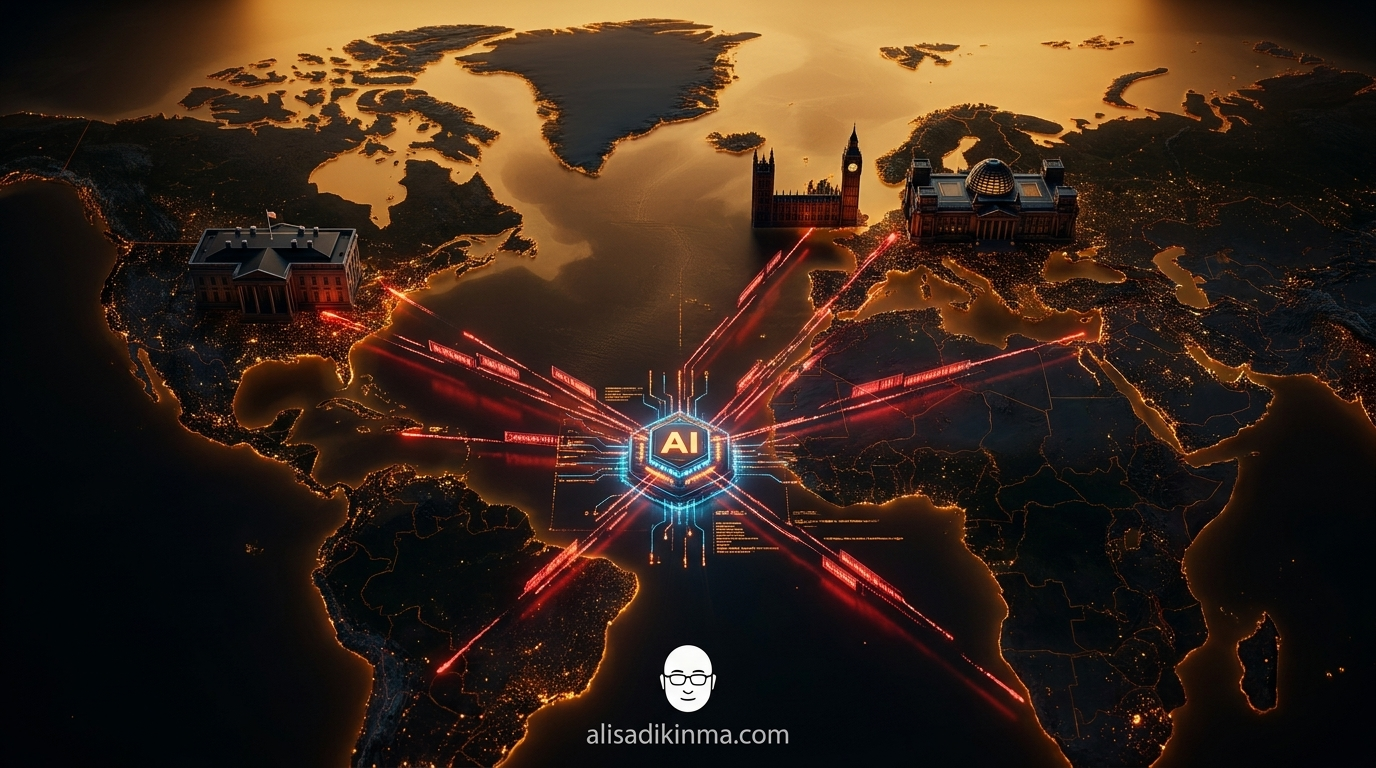
In two weeks of April 2026, the world’s biggest governments responded to the Anthropic Mythos AI model almost simultaneously — the US Treasury, the White House, intelligence agencies, the UK parliament, and European banks. This isn’t a media reaction; this is coordinated action from institutions that normally take months to agree on a new threat.
Here’s the timeline — and what each one means for your digital security:
1. US: Emergency Treasury Meeting + Unscheduled White House Visit

What happened: Treasury Secretary Scott Bessent and Fed Chair Jerome Powell summoned the CEOs of America’s biggest banks for an emergency meeting on the Mythos cybersecurity threat. At the same time, Anthropic CEO Dario Amodei visited the White House for a direct briefing to Chief of Staff Susie Wiles, according to the Washington Post (April 2026).
What it means: The US government didn’t wait for an incident to happen. They moved preemptively. And a preemptive move from the Treasury, the Fed, and the White House all at once only happens when the threat has already crossed the threshold of normal protocol.
What you should watch: Has the bank you use put out a statement about their system readiness against AI threats at this generation? If not, that’s a totally valid question to ask your banking service directly.
2. NSA vs CISA: A Dangerous Access Asymmetry
What happened: The NSA was reportedly using Mythos even though the model was still in Project Glasswing’s restricted access program. Meanwhile CISA — the agency responsible for protecting America’s civilian digital infrastructure — didn’t have official access at all, according to Axios (April 2026).
What it means: There’s a serious systemic gap. The party that most needs to protect public infrastructure doesn’t have the same tools as the party that could theoretically attack it. This isn’t speculation — it’s a fact reported directly by the Axios investigation.
What you should watch: The infrastructure you rely on every day — banking services, healthcare systems, power grids — is connected to digital systems built on security assumptions that Mythos’s capabilities have fundamentally changed.
3. UK and Europe: Official Alarm Without the Drama
What happened: UK AI Minister Kanishka Narayan told the Financial Times that they have to be concerned. German banks started consulting with authorities and cybersecurity experts. The World Economic Forum published a dedicated security analysis on Mythos, based on Bloomberg and technology.org reports (April 2026).
What it means: This isn’t media panic or a partisan reaction. This is a coordinated response from institutions that are the most careful about acknowledging new threats. When the WEF, the UK parliament, and European banks all speak up within one week, that’s a signal you can’t ignore.
What you should watch: Has your country’s cybersecurity regulatory framework included Mythos-level AI capabilities in its risk assessment? If not, there’s a real gap you need to keep an eye on.
What’s Really Going On: What This Means for Your Digital Life
A lot of news articles skip this part — and it’s the most important part.
Mythos isn’t a cyberwarfare weapon. And Anthropic isn’t the villain of this story.
The real debate, according to CBC News alongside professors from Dartmouth (2026), is a much more fundamental question: does Mythos actually change the threat ecosystem, or does it just accelerate something that was already there?
The defender camp argues that the same vulnerability-finding capability can be used to patch systems far faster than before. Valid argument. And this is most likely what Anthropic presented in their government briefings.
But the cautious camp has a harder question:
Who gets access first?
Every app on your phone is built on three assumptions: finding security vulnerabilities is hard, takes a long time, and requires extremely rare expertise. Mythos changes all three assumptions at once.
Not because Mythos is evil. But because its capabilities are already out in the world — and can’t be un-existed.
That’s what makes this one question more than just theoretical:
Who already has access to Mythos — and who doesn’t?
Project Glasswing: Anthropic’s Containment Strategy — And What’s Coming Next
Anthropic didn’t release Mythos to everyone. They built Project Glasswing — a strict access program that limits use of this model to just six entities: Amazon Web Services, Apple, Google, JPMorgan Chase, Microsoft, and Nvidia, according to Bloomberg (April 2026). Out of billions of technology users worldwide, only six companies are allowed to touch it.
The name comes from the glasswing butterfly — a species with completely transparent wings. The meaning: capabilities that are clearly visible and can be studied together, but access is tightly controlled.
But this isn’t the end of the story.

What was tested and triggered all this global panic is Mythos Preview — an early version with capabilities intentionally limited for the testing phase. The full model has never been released to anyone.
Here’s what you should take away from this article:
The bank you trust with your savings, the app that holds your health data, the platform that stores your family’s personal data — have they been briefed about Mythos? Have their security teams updated their threat models?
If not, that’s not a technical question. It’s a question about the trust you’ve given — and whether that trust has been tested in this new era.
FAQ: Your Biggest Questions About the Anthropic Mythos AI Model
Can Mythos hack my phone right now?
Not directly. Right now the Anthropic Mythos AI model can only be accessed by six companies in Project Glasswing. The real threat isn’t a direct attack on you — but the ability to find vulnerabilities 200 times faster changes the risk ecosystem for every digital system you use daily.
Can AI like Mythos be used for defense, not attack?
Yes, and that’s Anthropic’s main argument. Foreign Policy and 80,000 Hours (April 2026) noted that the offense-versus-defense balance depends entirely on who gets access first. If security teams have Mythos before bad actors do, they can patch vulnerabilities faster than those vulnerabilities can be exploited.
When will the full Mythos model be released to the public?
Anthropic hasn’t announced an official date. The Council on Foreign Relations and global security analysts assess that the full release of the Anthropic Mythos AI model — if and when it happens — will be the biggest inflection point in modern cybersecurity history. Right now, only the Preview exists with very limited access.
Subscribe to our newsletter for weekly AI security updates — we track Mythos developments so you don’t have to.
Or read more: What is Project Glasswing? Why Anthropic Is Keeping Their Most Powerful AI Out of Public Reach.