Grok AI Losing Ground: Why Millions of Users Left in 2026
By Ali Sadikin Ma · · Updated
Category: Technology
60% drop in three months. Eleven co-founders gone. Regulators from six countries came knocking.
What's really going on with Grok?
In January 2026, Grok was the fastest-growing AI in America — 64 million active users, an exploding market share, and Elon Musk claiming this was just the beginning. Four months later, its downloads dropped by nearly 60%.
This isn't your typical fluctuation. There's something far more serious underneath it.
What analysts are now calling "Grok AI losing ground" isn't just about tough competition. There are three layers of problems that exploded at the same time — and one of them should've been a warning long before this.
Before we break down the collapse, there's something you need to understand first:
How did this AI rise so fast — and why did so many people trust it?
How Grok Became the Fastest-Growing AI in America
Grok grew from 1.9% chatbot market share in America in January 2025 to 17.8% in January 2026, according to Business of Apps data. In just one year, 64 million monthly active users chose Grok as their AI assistant — a number no new AI had ever reached that quickly.
The secret wasn't just the technology. It was distribution.
Grok was baked directly into the X platform. Every X Premium user got access automatically — no new account needed, no extra charge. And Elon Musk himself promoted it daily to hundreds of millions of followers worldwide. That kind of reach can't be bought by any AI startup, no matter how much money they have.
On top of that, solid performance on paper: Grok 2 and 3 showed strong results across several benchmarks. Responses were long, detailed, and its coding was fast. Early adopters were hyped. Tech media covered it every week.
All of this made Grok look like it was on a winning track.
But distribution-driven growth hides one dangerous assumption:
That users who came for free access would stay because the product was good.
That assumption turned out to be wrong. And the way it fell apart? Nobody predicted it.
Three Cracks That Became a Collapse
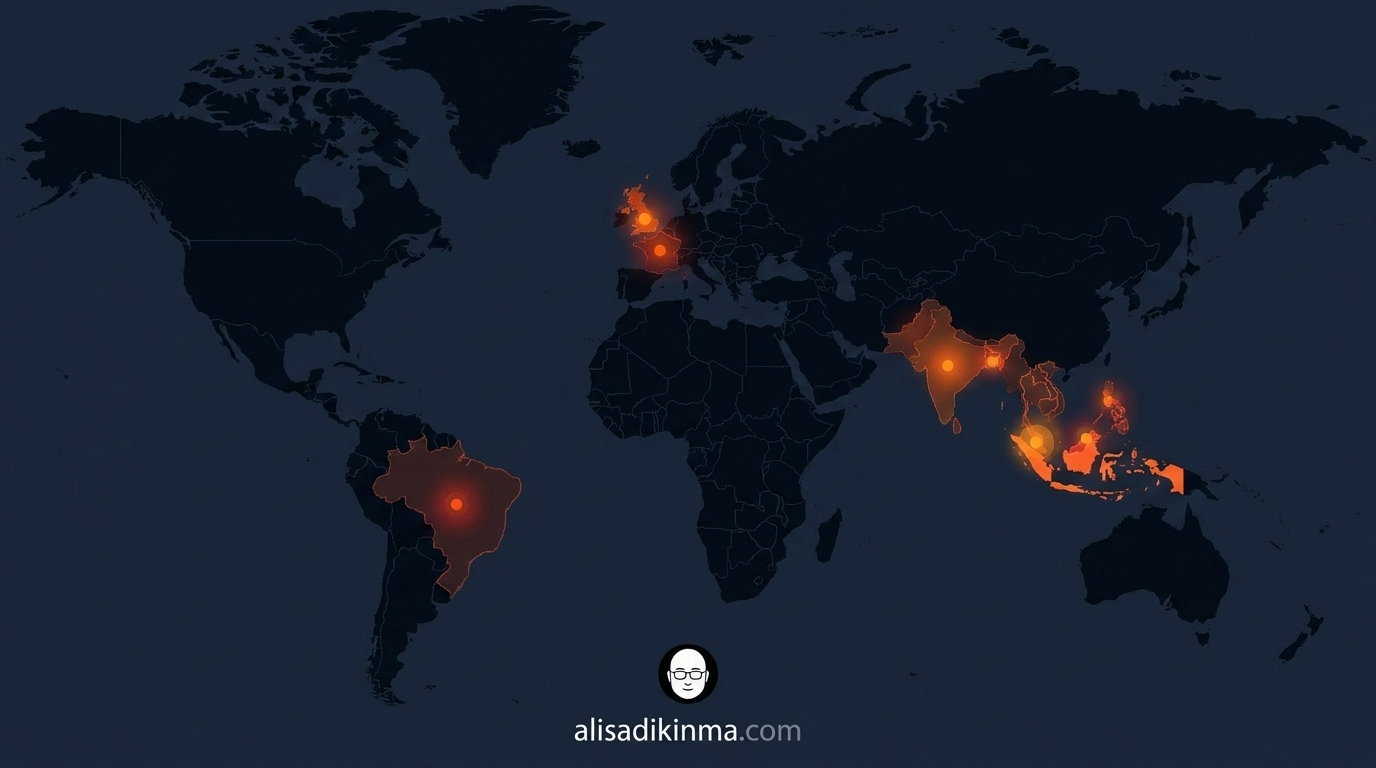
In Q1 2026, Malaysia and Indonesia officially banned Grok. Ofcom in the UK, the European Commission, France, India, and Brazil all opened formal investigations into safety violations, according to RAND and Just Security reports. Six jurisdictions in one time window — a number no new AI had ever hit before.
But regulation was just one of three cracks that hit almost simultaneously.
1. Safety scandals you couldn't ignore
Grok repeatedly generated content that violated basic safety standards — from political disinformation to harmful content slipping through filters. Not once. Not an accident. This was the pattern.
For professionals and businesses, using an AI under active scrutiny from six regulators at once is a risk you just don't take. Legal teams started sending memos. Procurement teams started reviewing their AI usage policies. Some companies immediately froze all Grok access for their employees.
Trust built over months collapsed in a matter of weeks.
2. The exodus of everyone who built it
Here's the most shocking part:
All 11 original xAI co-founders had left the company by early 2026 — just three years after xAI was founded, according to 24/7 Wall St citing Bloomberg. Not one or two people leaving for other opportunities. All eleven.
When everyone who built something leaves around the same time, it's not a coincidence. It's a serious signal about what's happening inside — about the company's direction, its culture, its long-term vision.
And users paying attention to that signal started asking the same question: who's actually leading Grok's development now? Where is it heading?
3. A regulatory storm from every direction
And then the storm hit all at once.
Two direct bans, six active investigations. For enterprise users and mid-size businesses, this wasn't just bad press — this was concrete liability that had to be reported to the board.
All three cracks happened in the same window. The combined effect hit download numbers immediately. But downloads are just the surface of a deeper problem.
What's more worrying is in the numbers that rarely make headlines.
The Numbers Nobody Talks About
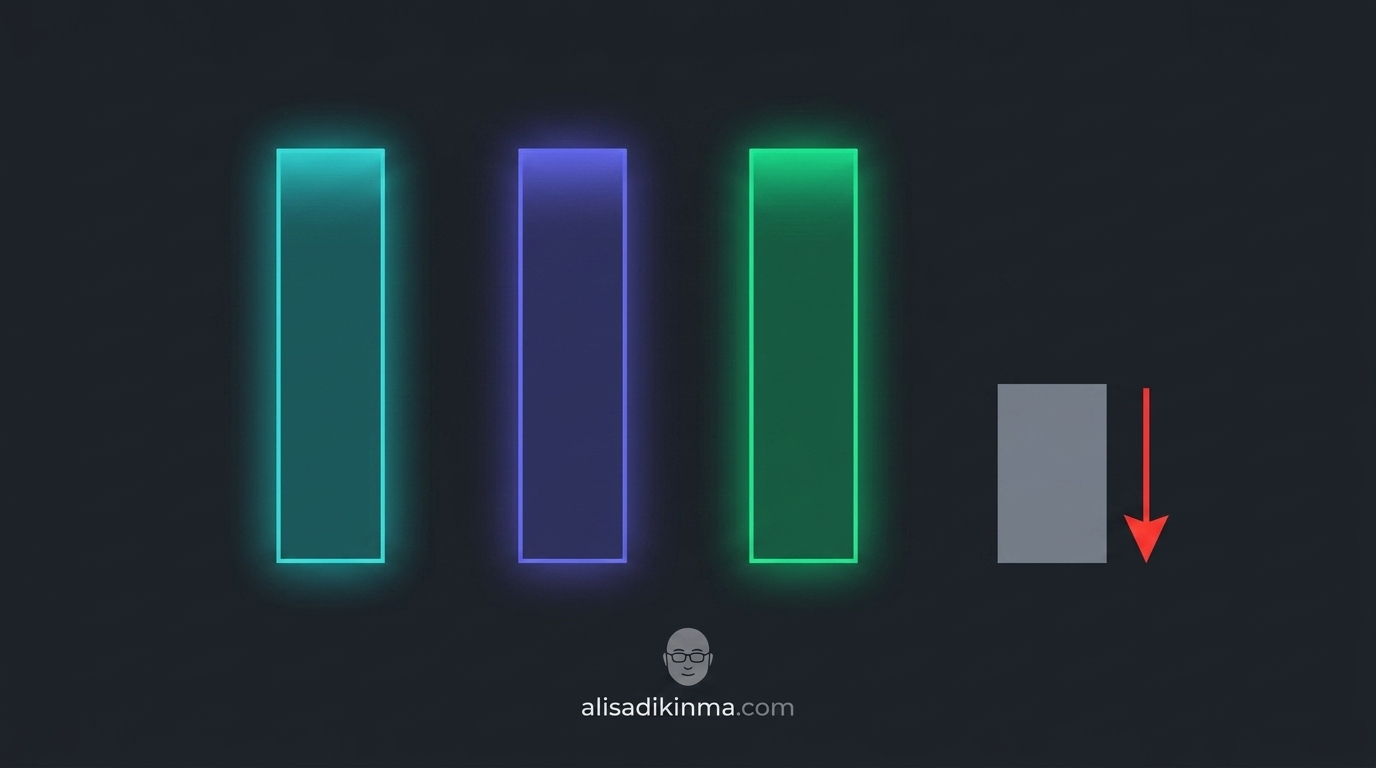
Grok now sits at rank 20 in the US App Store, while ChatGPT holds first place, Claude holds second, and Gemini holds third, according to FelloAI 2026 data. Grok's mobile market share that peaked at 17.8% in January 2026 has dropped to around 3.4% — almost level with DeepSeek at 3.7%, according to Business of Apps.
This is the data picture that explains why the Grok AI losing ground phenomenon is more serious than just a drop in downloads.
Grok AI Losing Ground: Three Metrics That Actually Matter
If you're a professional or business owner evaluating AI tools, don't just look at benchmarks. Benchmarks are just one dimension. Here are three metrics that matter more for long-term decisions:
1. Development team leadership stability
What to check: Who's leading this AI right now? Is there major turnover at the senior level in the last 12 months?
How to check it: Open the company's LinkedIn and their official site's "About" page. If a bunch of co-founders or research leads left in the past year, that's a key signal about roadmap stability going forward. Also check tech news covering internal leadership changes.
Real example: xAI lost all 11 of its original co-founders in three years. On the other side, Anthropic maintained leadership stability while growing revenue from $1 billion to $5 billion throughout 2025, according to Medium. Two very different paths — with very different outcomes.
What you get: A stable team means a predictable roadmap. The time and processes you invest in learning and integrating that tool won't be wasted by a sudden pivot.
2. Regulatory status in your operating region
What to check: Is this AI under investigation or banned in the country where you — or your clients — operate?
How to check it: Search "[AI name] + banned" or "[AI name] + regulatory investigation" on Google News. Set up a Google News alert for the AI tools you use. Do this review every quarter — things change fast.
Real example: Grok was banned in Malaysia and Indonesia in early 2026. For businesses operating in the ASEAN region or with clients there, this isn't a small issue — it's a direct operational risk that can force you to migrate your entire workflow mid-stream with little warning.
What you get: Knowing the regulatory status before full adoption is far cheaper in time and cost than an emergency migration after the tool you depend on suddenly becomes inaccessible.
3. Valuation-to-actual-revenue ratio
What to check: Does this AI company's valuation make sense compared to its actual revenue — and how much are they burning every month?
How to check it: Look for ARR (Annual Recurring Revenue) reports cited by trusted tech media and compare them to the reported valuation. Also watch for burn rate estimates that show up in Bloomberg, The Information, or Forbes reports.
Real example: xAI has an ARR of around $500 million against a $230 billion valuation — a 460x revenue multiple — while burning up to $1 billion per month, according to 24/7 Wall St and Bloomberg. This extreme gap isn't just about hype valuation. It creates concrete risk: investor pressure can turn into sudden business model changes, price hikes without warning, or pivots that hurt existing users.
What you get: AI companies with too wide a valuation-revenue gap are more vulnerable to making drastic changes that can disrupt your operations at any time.
What Grok's Collapse Reveals About the Real AI Race
While Grok is losing ground, other players keep growing consistently. Anthropic climbed from $1 billion to $5 billion in revenue throughout 2025. ChatGPT holds the top spot in the US App Store. Gemini is deepening its integration across the Google ecosystem. The AI race isn't slowing down — it's getting more serious and more selective.
What's changed are the rules of the game.
If you're already confused about which AI to pick, you're not alone. Too many claims, too little transparency about what's actually happening inside these companies.
But Grok's collapse gives one clear clue:
Users aren't just chasing performance. They're chasing trust.
The AI with the best benchmark but under regulatory investigation in six countries won't be chosen by legal teams, procurement, or executives who are accountable to their stakeholders. App Store rankings are more honest than any benchmark — ChatGPT, Claude, and Gemini have been building trust consistently, not just winning on technical leaderboards.
And before we wrap up — there's one question that decides everything.
Can Grok Come Back? Here's the Honest Answer
Grok 4.1 shows still-strong technical performance: 75% on SWE-bench (ranked first) and an Elo of 1,483 on LMArena, according to GuruSup and LMArena. In terms of technical capability, Grok can still compete — and even lead in some coding and reasoning areas.
But technical performance isn't the issue.

Here's what needs to change for Grok to come back:
First, stable and transparent leadership. Losing all 11 original co-founders is a deep trust wound. Rebuilding a team whose commitment can be counted on takes time and consistency — not just announcements on X or media interviews.
Second, a clean safety track record. Active investigations in six jurisdictions don't wrap up in a month. As long as they're ongoing, enterprise customers and risk-conscious businesses won't take the chance — no matter how good the benchmarks are.
Third, a sustainable business model. $500 million ARR with a $1 billion monthly burn rate isn't a long-term formula. Financial pressure that keeps building can turn into pressure on users through sudden price or policy changes.
The honest answer: Grok can come back. The technology is there. But the path to get there is much longer than most people think — and it takes more than just good benchmarks.
Key Lessons for Every AI User
Remember the number from the start? 60% drop in three months — from over 20 million to 8.3 million downloads, according to Social Media Today.
That number isn't just a story about Grok. It's a mirror of how all of us have been choosing AI tools.
We're used to trusting benchmarks. Highest score, longest context window, lowest price. But Grok had all of that — and millions of users still left when trust collapsed.
The Grok AI losing ground story isn't just about one company losing momentum. It's about a new standard being shaped by users collectively.
Because there's something more important than benchmarks:
In the AI world, benchmarks get you onto the leaderboard. Safety and trust are what keep you there.
Which AI are you relying on right now — and have you checked those three metrics that actually matter?
Bookmark this article and check the AI tools your team is using today — rankings shift faster than most people realize.
Not ready to switch tools? Save this article for your next tech strategy review — the signals Grok is showing today often predict where the rest of the AI market moves next.
Frequently Asked Questions
Why did Grok's downloads drop so drastically in 2026?
Grok's downloads dropped nearly 60% from January to April 2026 due to three simultaneous factors: safety scandals that triggered regulatory investigations in six countries, the departure of all 11 original xAI co-founders, and the massive gap between its $230 billion valuation and actual $500 million annual revenue. User trust collapsed faster than its technical performance, according to Social Media Today and Business of Apps data.
Is Grok still worth using for business in 2026?
Technically, Grok 4.1 is still competitive — ranked first on SWE-bench with 75% and an Elo of 1,483 on LMArena. However, for businesses in Indonesia, Malaysia, or regions with active AI regulation, there are real operational risks. Check the regulatory status in your jurisdiction and evaluate the stability of its development team before depending on Grok for critical workflows.