Elon Musk Anthropic Deal: From ‘Evil’ to $4 Billion Partner
By Ali Sadikin Ma · · Updated
Category: Technology
Three months ago, Elon called them evil.
Not just social media drama. Elon Musk publicly called Anthropic "evil" and "misanthropic" on X — his own platform. He went even further, claiming Claude, Anthropic's AI, "hates Whites & Asians." According to Fortune (2026), this wasn't a slip of tongue. It was a deliberate attack.
And last week?
He became their landlord through the biggest Elon Musk Anthropic deal of the year.
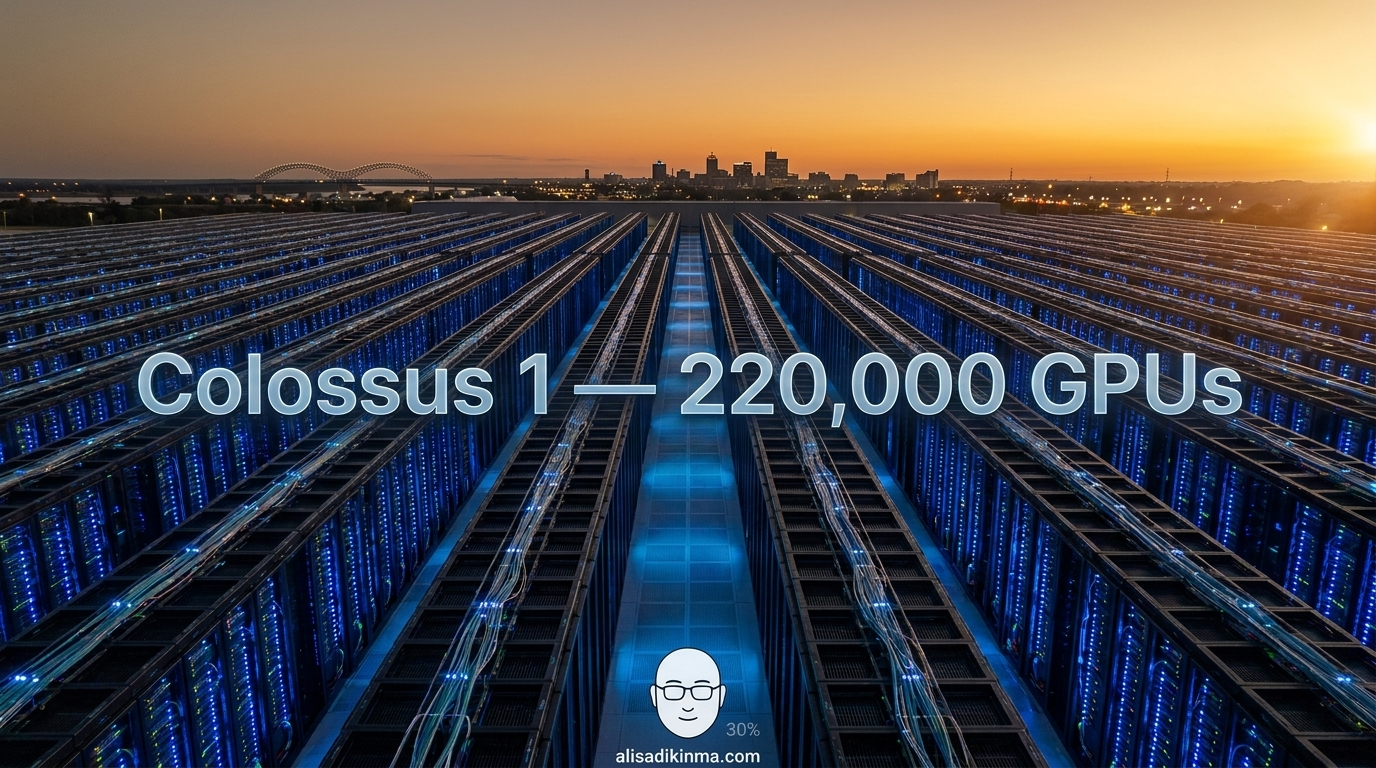
SpaceX just signed a deal with Anthropic worth $3–4 billion per year. 220,000 Nvidia GPUs. 300 megawatts of compute. Colossus 1 in Memphis, Tennessee — a massive supercomputer that's now the brain behind Claude, the AI that Elon supposedly hated just three months ago.
But this Elon Musk Anthropic deal isn't about Elon suddenly liking Anthropic.
There are three reasons why this Elon Musk Anthropic deal happened — and one insight that'll change how you see the entire AI race forever. But before we get there, we need to be honest about one thing we've all been getting wrong.
And if you still think this AI rivalry is purely about ideology, you're probably watching the wrong match.
How the "AI War" Narrative Was Created — and Why We All Believed It
Anthropic grew 80x in revenue and usage in Q1 2026 — far beyond their own expectations. CEO Dario Amodei admitted the company only planned for 10x growth. That number fundamentally shifted the competitive AI landscape and made the entire CEO "war" narrative look like irrelevant side drama.
We've all read the headlines:
"Elon vs. OpenAI." "Elon vs. Google." "Elon vs. Anthropic." This war narrative felt convincing because part of it was actually real — not media fiction.
In January 2026, Anthropic actually blocked xAI from using Claude. xAI engineers were caught running Claude via Cursor — a popular coding tool — which directly violated Anthropic's terms of service. That wasn't Twitter drama. That was a real business action with real consequences.
But look at the numbers:
xAI generates under $1 billion in revenue. Anthropic? Already at $30 billion in annualized revenue by 2026 — up 3x from the previous year, according to Fortune and Tom's Hardware. This isn't an equal rivalry. This is a massive market imbalance.
And that imbalance is what makes this deal not an ideological betrayal. It's very simple business logic.
But before you can understand why this happened now, you need to know the backstory that the media often skips...
The Forgotten Backstory: Where All This Started
In 2015, Elon Musk gave $38 million to OpenAI when the company was just starting out. OpenAI is now valued at $800 billion — and Elon has no stake in it whatsoever, according to MIT Technology Review (2026). That's the biggest investment he never got to keep.
Then in 2021, Anthropic was born. Founded by Dario Amodei and Daniela Amodei — two senior executives who left OpenAI over strategic differences. For Elon, Anthropic wasn't an old enemy. They were just part of an increasingly crowded AI landscape.
Things changed fast:
Right when Elon was suing OpenAI in 2026, Anthropic's growth exploded. Dario Amodei himself said they didn't expect growth this fast — targeted 10x, got 80x. Not just good growth. That's a company transformation in a single quarter.
That's when the logic behind the Elon Musk Anthropic deal started forming. Business math speaks louder than principles.
Elon built Colossus 1 in Memphis — 220,000 Nvidia GPUs, 300 megawatts of capacity. Massive infrastructure that needs big customers to justify its operating costs. Without big customers, Colossus 1 is a liability, not an asset.
Anthropic needed compute more than anyone else in 2026.
Those two needs met at the negotiating table — and the result was a deal that nobody would've dared predict three months earlier. But honestly, anyone paying attention to the numbers could've seen this coming.

3 Reasons the Elon Musk Anthropic Deal Makes Perfect Sense
The Elon Musk Anthropic deal covers 220,000 Nvidia GPUs and 300 megawatts from Colossus 1 in Memphis — projected to generate $3–4 billion in annual revenue for SpaceX, with over $2.5 billion in cash profit, according to analyst Antoine Chkaiban from New Street Research (2026). This wasn't a coincidence. Three mechanisms worked together to make this deal inevitable.
1. SpaceX needed big revenue — and Anthropic was the only one that could pay
What happened: Colossus 1 is the biggest compute infrastructure SpaceX has ever built. But infrastructure without customers is a liability, not an asset — and liabilities aren't great for the IPO prospectus they're preparing.
How it works: Anthropic, with $30 billion in annualized revenue and 80x growth in a single quarter, is the only independent AI company with the financial capacity for a deal this size. Renting to small startups wouldn't cover Colossus 1's massive operating costs — the math just doesn't work.
Real example: Antoine Chkaiban from New Street Research projects this deal generates over $2.5 billion in cash profit per year for SpaceX — a number that directly strengthens SpaceX's balance sheet ahead of its June 2026 IPO, as reported by Coindesk. This isn't small revenue. It could be one of the biggest line items in their prospectus.
The result: Colossus 1 is no longer a cost burden. It becomes a revenue machine that directly strengthens the investment case for SpaceX's IPO — and that's far more valuable than any ideological statement Elon could make on X.
2. Anthropic was running out of compute — and there was no other option big enough
What happened: Anthropic grew 80x in a single quarter. CEO Dario Amodei admitted they only planned for 10x. That growth required compute far exceeding their existing capacity — and new data centers take years to build from scratch.
How it works: Anthropic already had a $100 billion+ AWS deal over 10 years, plus a Google/Broadcom deal for 5 gigawatts of compute, according to Fortune (2026). But it still wasn't enough. When you're growing 80x, you need all the compute you can get — from anyone, immediately.
Real example: Colossus 1 with 300 megawatts was one of the largest compute clusters available on the market as of May 2026. Turning it down for ideological reasons when you're running out of capacity is a business decision that makes no sense — and Dario Amodei knew that better than anyone.
The result: Anthropic gets the compute they need to maintain their growth momentum without waiting years. Speed to market beats ideology — always, in a tech world that moves this fast.
3. A shared enemy makes everything easier
What happened: Both Elon and Dario Amodei have the same enemy — Sam Altman and OpenAI. Not in a metaphorical sense. Literally, both are fighting OpenAI's market dominance from different directions.
How it works: Elon was suing OpenAI in 2026. Anthropic competes directly with OpenAI on every enterprise deal out there. When two rivals share a bigger, more powerful enemy, pragmatism beats principle — and that's not a weakness, that's strategic intelligence.
Real example: Tech market researcher Ben Pouladian summed it up perfectly on X: "Elon's enemy is Sam. Dario's enemy is Sam. Enemy of my enemy is a compute partner." One sentence that explains a billion-dollar deal.
The result: Neither side forgot their differences. They were smart enough to set them aside while there was something bigger to win together. And Elon admitted it himself after signing the deal: "I spent time with senior members of Anthropic's team... No one set off my evil detector." Three months is a long time for an 'evil detector', but that's how big business works.
What This Means: The New Rules of the AI Race
The Elon Musk Anthropic deal signals a new era of AI competition: compute infrastructure beats ideological loyalty. Ben Pouladian from the tech research community summed it up precisely — a shared enemy (OpenAI/Sam Altman) turned two rivals into compute partners within months, shifting the "AI war" narrative to a more fundamental question about who controls infrastructure.
You've probably been focusing on the wrong question all along.
Not "whose AI is the smartest?" Not "which CEO is the most visionary?" What determines the winner of the AI race in 2026 is one simple question:
Who controls the compute?
Anthropic has already locked in three massive compute sources: AWS (over $100 billion, 10 years), Google/Broadcom (5 gigawatts), and SpaceX/Colossus 1 (220,000 GPUs, 300 megawatts). They're not fighting about ideology — they're quietly building an infrastructure monopoly.
And Elon? He just became part of that infrastructure — not as an ideological rival, but as a well-paid compute provider.
You're not witnessing peace. You're witnessing a realignment of interests — and that's far more powerful than any ideological reconciliation.
What to Watch in the Next 90 Days
Remember the question we opened with? "Is this true love — or a forced business marriage?" These three things will give you the answer within the next 90 days.
First, the SpaceX IPO. Coindesk reported the Colossus 1 deal was announced right before SpaceX's planned June 2026 IPO. Anthropic's revenue goes straight into the prospectus. If the IPO numbers strengthen significantly because of this deal, you'll know the real motivation — not reconciliation, but valuation.
Second, whether Anthropic comes back for more capacity. The initial deal is always a test of infrastructure quality. If within 90 days Anthropic expands or extends the contract, it means Colossus 1 is actually working at the scale they need — and this isn't a one-time transaction.
Third, how Elon talks about Claude on X. Words are the easiest leading indicator to track. If criticism of Claude and Anthropic stops flowing from @elonmusk — that's not a coincidence. That's a signal that this deal has strategic dimensions deeper than just GPU rental.
We're not at the end of this story. The Elon Musk Anthropic deal is just the opening of a much longer new chapter.
FAQ: Questions About the Elon Musk Anthropic Deal
What does the Elon Musk Anthropic deal include?
SpaceX is leasing access to the Colossus 1 supercomputer to Anthropic — 220,000 Nvidia GPUs and 300 megawatts of compute capacity from its facility in Memphis, Tennessee. The deal is projected to generate $3–4 billion in annual revenue for SpaceX, with over $2.5 billion in cash profit, according to analyst Antoine Chkaiban from New Street Research (2026).
Why did Elon agree to a deal with Anthropic after just calling them 'evil'?
Because the numbers were too big to turn down. SpaceX needed big customers for Colossus 1 to make its infrastructure profitable — and Anthropic, with 80x growth in a single quarter and an urgent need for compute, was the most logical choice in the market. Elon admitted it himself after meeting directly with the Anthropic team: "No one set off my evil detector." Business beats principles when the scale is big enough.
Does this deal mean the AI competition is over?
No. It means the AI competition is entering a new phase where compute infrastructure matters more than brand loyalty or ideology. Anthropic and xAI are still competing directly in the enterprise AI market. This deal is a business transaction driven by a shared enemy — OpenAI and Sam Altman — not an ideological reconciliation between Musk and Amodei.
Share this article with your friends who still think the AI rivalry is purely about ideology — the reality is far more interesting than you'd imagine.
Or save it for later. In 90 days, we'll know whether this is really a détente — or just a forced business marriage.