Claude Code Source Leak: 3 Anthropic Plans Exposed
By Ali Sadikin Ma · · Updated
Category: Technology

Anthropic's biggest mistake just handed you their entire AI roadmap — for free.
Everyone's read the headline.
But almost no one's talking about what actually leaked from the Claude Code source.
The Leak Nobody Actually Explained
On March 31, 2026, Anthropic accidentally exposed roughly 513,000 lines of unobfuscated TypeScript. How? Through a 59.8 MB JavaScript source map file that got bundled into npm package version 2.1.88. According to The Register and InfoQ, the .map file was never supposed to be there.
But it was.
And before Anthropic could pull the package, the file had already been mirrored, downloaded, and analyzed by a lot of people.
If you only read the headline about the Claude Code source leak, you might think it's just a technical incident — a careless dev, one file that slipped through, fix it and move on.
But inside those 1,906 leaked files, there were three things the public was never supposed to see.
First, there's a fully-built system called KAIROS — that's never been announced to anyone outside Anthropic.
Second, there's a three-layer memory architecture — not designed for your typical chatbot, but for an AI that can build context about you over time, even when you're not actively using it.
Third, there are codenames for unreleased models — including one tier that goes beyond Opus — and Anthropic has already confirmed its existence.
We're going to break down all three. But first, there's a narrative we need to set straight.
What Most People Think Happened
In March 2026, the Bun runtime generates source maps by default during builds. Anthropic's team forgot to exclude *.map from .npmignore or from the files field in package.json. One missed config line. As InfoQ reported, this is a root cause that's simple enough to happen to any team.
And that narrative is correct — technically.
But that's not the story.
Picture this:
You're not a small dev shop that forgot one config line. You're an AI company that's hit $2.5 billion in annualized recurring revenue — with 80% of that revenue coming from enterprise, according to IANS Research. That means your clients are large companies paying a premium precisely because they trust you to protect their assets.
And you just handed your competitors a very complete blueprint.
Most analysis about the Claude Code source leak stops there — packaging incident, fix it, move on. But that framing misses something far more important than just a security incident.
Because it's not the leak mechanism you should care about.
What you should care about is what was inside that package.
Why That Narrative Misses the Point

The New Stack reported that the Claude Code source leak revealed 108 fully-built modules hidden behind feature flags — none of which exist in the public package you can install. Among them: ULTRAPLAN, BUDDY, and the most interesting one to unpack, KAIROS.
108 isn't a small number. This isn't one or two experimental features that aren't done yet.
This is an entire product layer — fully built, fully tested, and actively hidden from users until Anthropic decides the timing is right to ship.
But before we get into KAIROS, there's one more layer that leaked and almost nobody's covering it.
Engineers Codex and WaveSpeedAI documented what they call the Self-Healing Memory architecture — a three-layer memory system hidden inside Claude Code. The three layers:
- Layer 1:
MEMORY.mdas a concise pointer index, about 150 characters per line - Layer 2: Topic files called on-demand when context is relevant
- Layer 3: Raw transcripts never fully re-read — only grepped for specific identifiers
Why do these three layers matter?
Because a reactive AI doesn't need a memory architecture this complex. This system is designed for an AI with persistent cross-session context — one that still remembers the project you worked on last week without you needing to re-explain everything from scratch.
This isn't a small upgrade. It's a fundamental shift in how AI coding tools operate.
And KAIROS is the top layer of all of this.
Claude Code Source Leak: What Actually Leaked

The three things that leaked from the Claude Code source leak aren't just hidden features. They're a strategy declaration — a blueprint for where Anthropic wants AI coding tools to be in the next 18 to 24 months.
KAIROS: The AI That Doesn't Wait for Instructions
According to The New Stack and DEV Community, KAIROS is an autonomous daemon mode — a background agent that's always on, working proactively without waiting for user commands.
It maintains append-only daily observation logs — daily notes that can only be added to, never modified or deleted. And it can trigger actions on its own, based on context it's collected while interacting with you.
Behind it is a process called autoDream: when you're idle — not actively using the tools — the agent independently consolidates memory. It merges separate observations, removes logical contradictions, and turns fuzzy insights into more concrete facts, according to WaveSpeedAI Blog.
This isn't an AI that waits for your questions.
This is an AI that's actively building its understanding of you, your projects, and your work patterns — even when you're not in front of the screen.
Memory Designed for Long-Term Relationships
The leaked three-layer architecture makes one thing very clear: Claude Code isn't designed to be session-by-session. It's designed for a long-term relationship between developer and agent.
The design is highly efficient — grep, not full re-read. That means even in very long work sessions, context doesn't get lost and doesn't flood the model with irrelevant data. Engineers Codex calls this the foundation for something far beyond a conventional coding assistant.
The Model Roadmap the Public Wasn't Supposed to Know
This is the most surprising part of the whole leak.
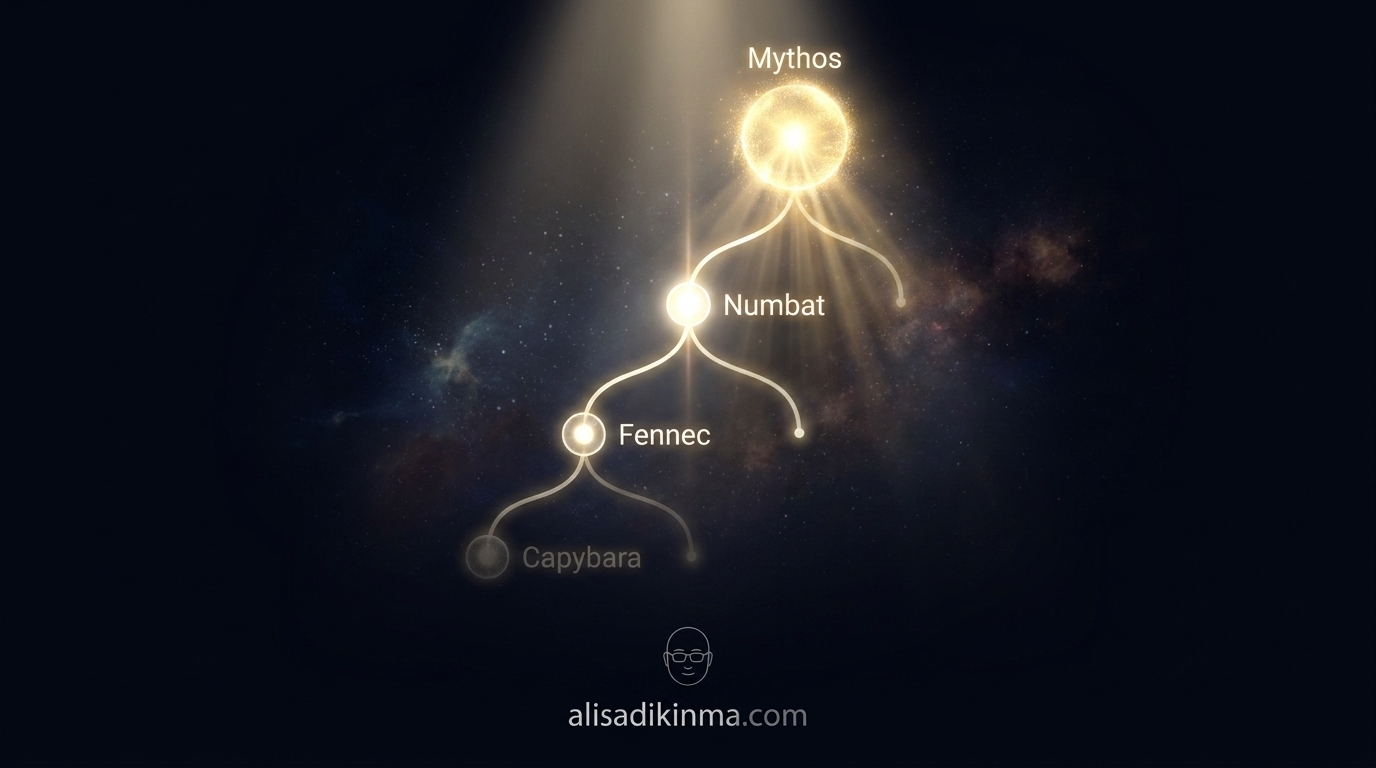
IANS Research and Bloomberg confirmed that the Claude Code source leak exposed internal codenames for unreleased Anthropic models:
- Capybara — a Claude 4.6 variant
- Fennec — Opus 4.6
- Numbat — an unreleased model still in internal testing
- Mythos — a new model tier above Opus, and Anthropic has already confirmed it's in early-access testing as of April 2026
A model above Opus. Not a new version of Opus — a completely different tier.
And all of it was in the source code you could download from npm three weeks ago.
3 Things You Need to Change Right Now
You know what leaked. Now the question is: what does it mean for how you work and choose tools going forward?
-
Stop Evaluating AI Tools by Their Current Features
What you need to change: The most common way to evaluate AI tools — open the pricing page, see what features are available, compare — isn't enough anymore. You're comparing an old photo of a fast-changing product.
How to do it: Start looking for hidden roadmap signals. Watch job postings from AI teams you're considering — are they hiring for autonomous agent infrastructure or persistent memory systems? Read their API changelog carefully — are there entries where the purpose isn't clear? Monitor their developer communities on GitHub and Discord — what aren't they officially announcing but internal engineers are already discussing?
Real example: If you evaluated Claude Code versus Cursor last month and chose based on the features available that day — you weren't accounting for KAIROS, autoDream, and Mythos that were already in the pipeline. That decision was made based on an old version of something that's changing fast.
The outcome: You choose tools based on where they'll be in 12 to 18 months, not where they are today. With Anthropic at $2.5 billion ARR and 80% of revenue from enterprise, their development pace isn't slowing down.
-
Distinguish Reactive AI from Proactive AI Before It's Too Late
What you need to change: KAIROS — revealed through the Claude Code source leak — shows that Anthropic has picked a side: the future of AI is proactive. But most developer workflows today are still built on the assumption that AI only moves when asked.
How to do it: Audit your workflow now. List all the routine tasks you delegate to AI — then mark which ones AI could do before you ask, if it had enough context about your project. That's the part that will change the most when KAIROS goes public.
Real example: Developers who've already been experimenting with KAIROS-like architecture on DEV.to reported that with an agent proactively consolidating context through a process similar to autoDream, they needed 40% fewer prompts to continue work in the next session — because the agent already knew where they'd left off.
The outcome: You're not caught off guard when KAIROS goes public. Your work infrastructure is already ready to welcome proactive AI without having to redesign your workflow from scratch.
-
Watch These 3 Signals to Know When Mythos Goes Live
What you need to change: Mythos, the model tier above Opus exposed through the Claude Code source leak, is already in early-access testing according to IANS Research. But Anthropic won't announce it with a big splash — they typically give quiet access to select enterprise clients first, then announce publicly a few weeks later.
How to do it: Watch these three signals consistently: (1) Changes in the Claude API changelog, especially the addition of new model IDs or changes to endpoints related to the highest tier. (2) Anthropic job postings for new model reliability or alignment evaluation positions. (3) Reports from enterprise engineers on platforms like X or Hacker News — they're usually the first to get access and the fastest to share findings.
Real example: Before Claude 3 was officially announced, the same pattern played out — there were subtle changes in the API docs, then 48 to 72 hours later benchmarks appeared on Twitter before Anthropic's official announcement. Those who watched those signals got on the waitlist earlier and got access to the new API tier before the queue filled up.
The outcome: You're on the Mythos waitlist before its official name is announced to the public, and your team gets the advantage of Anthropic's highest model tier before your competitors even know it exists.
What You Should Be Watching Next
Almost every analysis of the Claude Code source leak treats it as a security incident. But there's one thing that keeps getting missed.
KAIROS isn't just a new feature Anthropic is adding to Claude Code.
KAIROS is a philosophical statement: truly useful AI isn't the kind that waits for you to ask for help. Useful AI is the kind that's already working before you even realize you need it.
Every architectural choice that leaked — the three memory layers, autoDream, append-only observation logs, the always-on daemon mode — all point to the same conclusion.
Anthropic has picked a side.
And because of a .map file that was never supposed to exist, you now know exactly where they're headed.
There's only one question left:
Is the AI you're building your workflow toward right now — reactive or proactive? Because Anthropic has already answered that question for their own product.
Frequently Asked Questions
Is the Claude Code source code leak dangerous for regular users?
For regular users, this leak doesn't expose personal data or conversation history. What leaked is Anthropic's internal code — their product architecture. The risk is at the competitor level, where they now have a blueprint to build similar products faster, not at the individual user data level.
What is KAIROS and when will it go public?
KAIROS is an autonomous daemon mode found hidden behind a feature flag in the leaked Claude Code source code. It's a background agent that works proactively without waiting for user instructions, equipped with an autoDream process for memory consolidation during idle time. Anthropic hasn't announced a release date, but the architecture was fully built as of March 2026.
How is the Mythos model different from the current Claude Opus?
Based on the Claude Code source leak and confirmation from IANS Research and Bloomberg, Mythos is a new model tier designed to go beyond Opus 4.6 — not just a version update. The internal codename indicates this is a different model class entirely. As of April 2026, Mythos is already in early-access testing but hasn't been released to the general public.
Now It's Your Turn
The roadmap is already in your hands.
Follow the three signals — API changelog, job postings, and reports from enterprise engineers — to know when KAIROS and Mythos go live. Be the first one ready before the market knows.
Not ready to act now? Save this article and come back to it before you evaluate your next AI tool.