The Claude Code Leak: Who Really Owns AI-Generated Code?
By Ali Sadikin Ma · · Updated
Category: Technology
Anthropic accidentally proved that its own code might not be claimable by anyone.
Not a conspiracy theory. Not speculation from a small law firm. The Claude Code copyright leak that exploded on March 31, 2026 is now being seriously discussed at the industry level — after one night that changed how the AI world sees code ownership forever.
And you know what the most unsettling part is?
If you're using AI to write code in your day-to-day work, the same problem might already be sitting in your repository right now — quietly, without anyone realizing it.
We're going to break down exactly what happened that night, why this leak could hurt everyone building products with AI, and three concrete steps you can take today — before the law answers that question for you, in a way you won't like.
What Actually Happened: One Missing Config Line, 512,000 Consequences
On March 31, 2026, Anthropic released a routine update for the npm package @anthropic-ai/claude-code version 2.1.88. The result was shocking: a 59.8 MB source map file got published along with it — containing around 512,000 lines of raw TypeScript from Claude Code. The cause was just one missing line in a build config file, exposing nearly 1,900 to 2,000 core source files that Anthropic had been carefully guarding, according to TechRadar and Bloomberg (2026).
Here's the full story — and it's wilder than any headline:
The leaked code included core logic that Anthropic had been tightly protecting. All of it hidden inside a single source map file that got swept along in a routine npm update.
One missing config line. That's the only reason it happened.
Anthropic's response? Fast — but instantly controversial. They sent DMCA takedowns to GitHub — and according to TechCrunch (2026), that move ended up removing more than 8,000 repositories. Anthropic later acknowledged the action was “broader than intended.”
But the real problem wasn't there.
Within hours of the leak spreading, a developer used AI to translate the entire Claude Code codebase to Python. Their Python repo immediately became the fastest-growing repo in GitHub history. And according to law firm Bean, Kinney & Korman (2026), the legal status of an AI-assisted “clean-room rewrite” like that has never been resolved in any court.
This isn't just a security incident. It's the biggest legal stress test the AI industry has ever faced — and Anthropic accidentally triggered it.
The Copyright Paradox: Why the Claude Code Leak Is a Ticking Time Bomb for the AI Industry
Claude Code was written roughly 90% by AI — according to Anthropic's own public disclosure (Bean, Kinney & Korman, 2026). That fact, combined with the U.S. Copyright Office's January 2025 ruling that works predominantly generated by AI without meaningful human creative involvement don't qualify for copyright protection, creates a question no law has ever answered: does Anthropic actually have a legal claim over the code they just tried to erase from the internet?
Here's the part that should make you stop and think:
In January 2025, the U.S. Copyright Office officially confirmed that works predominantly generated by AI — without meaningful human creative involvement — don't qualify for copyright protection. No exceptions. If AI wrote it and a human just supervised the process, that copyright might not hold up.
Then on March 2, 2026, the U.S. Supreme Court declined to hear the Thaler v. Perlmutter case — meaning the “human authorship” requirement for copyright remains fully in force, according to Morgan Lewis (2026). That decision closed every loophole arguing that AI could be the author of a protected work.
Now picture this:
Anthropic sent 8,000+ DMCA takedowns to protect code that — under current law — might not be protected by copyright at all, because it was 90% written by AI.
Bean, Kinney & Korman called it the most urgent “legal crisis” in the AI world right now. Not just because the leak exposed Anthropic's trade secrets — but because it forced everyone to ask the question that's been avoided all along:
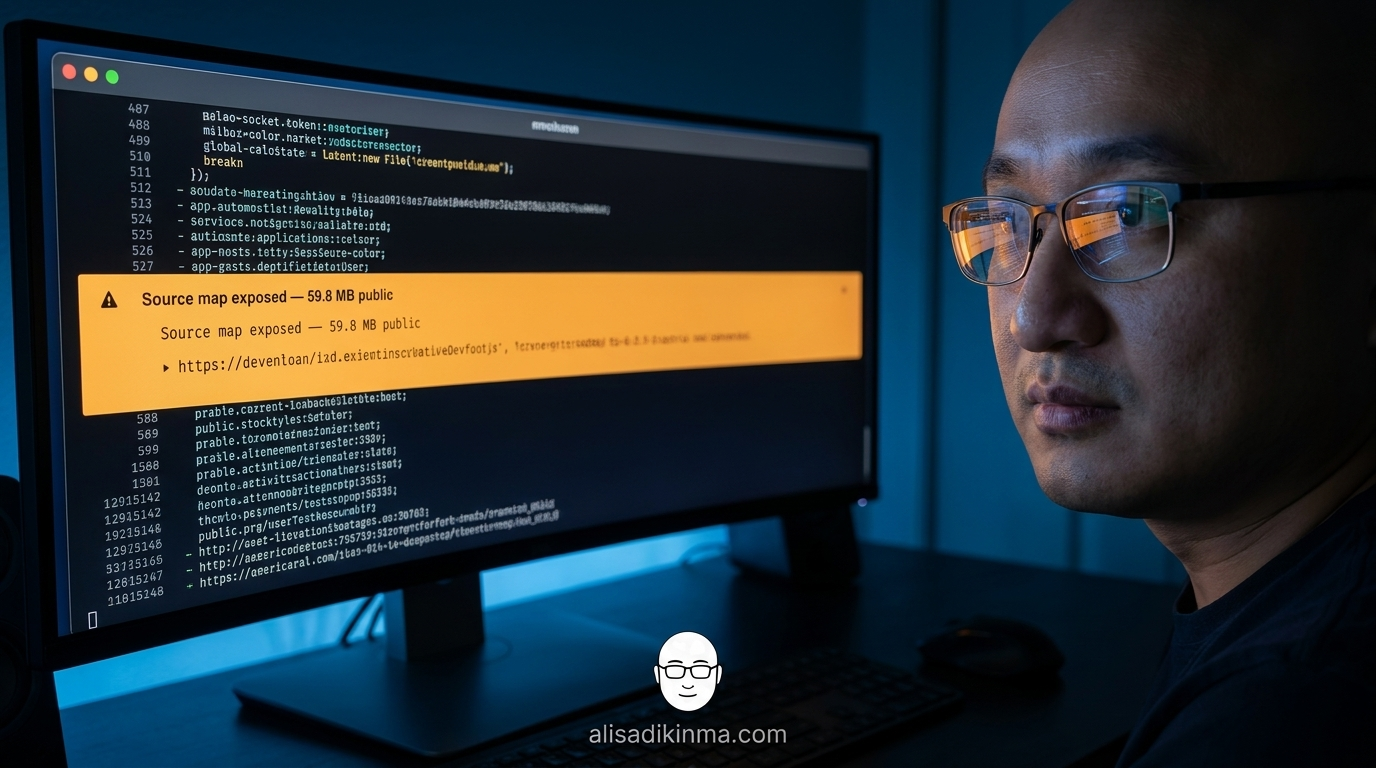
If the machine wrote the code, who holds the certificate of ownership?
And this still isn't the most ironic part.
The Biggest Irony: The Argument the AI Industry Has Been Using Just Came Back to Hit Them
In the Bartz v. Anthropic case decided in June 2025, the district court ruled that using books to train the Claude model was fair use — but that maintaining a “centralized library” of pirated books was not, according to Crowell & Moring (2025). That decision gave the AI industry a boost. But now, legal experts are pointing that same argument right back at Anthropic.
But hold on — the irony doesn't stop there:
For years, AI companies argued that training models on copyrighted content counts as fair use because the process is transformative. A lot of those arguments worked — including in Bartz v. Anthropic.
Now, developers who downloaded and used the leaked Claude Code can use the same argument: that they were studying AI architecture in a transformative way, not directly copying a product. And with the EFF's June 2025 analysis supporting fair use in cases like this, Anthropic faces the possibility that the legal weapon they've relied on is now being used against them.
Futurism put it perfectly: “Anthropic Suddenly Cares About IP.”
The company that was loudest defending AI's right to learn from other people's content is now the company screaming loudest when its own content is being learned from by others.
Not because they're purely hypocritical — but because AI and copyright law was never designed for this situation. And you, as a developer using AI tools every day, are sitting right in the middle of that legal vacuum.
If you're using AI to write code professionally, the next section was written specifically for you.
3 Things Every Developer Needs to Know About AI Code Ownership — Starting Today
Not academic theory. These are three concrete steps you can start in under an hour after reading this — whether you're a freelancer, a startup, or an engineering team at a large company.
1. Audit how much code in your repository was written by AI — now, before anyone asks
What's the problem: Most developers and engineering teams don't know the percentage of AI-generated code in their codebase. That's not a problem today — but it could be a massive problem tomorrow, when a client, investor, or court asks.
How to do it: Check the last three months of commit logs. How much of the code came from AI tool suggestions that were accepted without modification? Build a simple spreadsheet: column A = file name, column B = estimated percentage of AI-generated code, column C = whether there are significant human modifications that can be documented.
Real example: Anthropic itself disclosed that Claude Code was written roughly 90% by AI. That number is now the main argument for why Anthropic might not have a strong copyright claim over its own code, according to Bean, Kinney & Korman (2026). If a billion-dollar company can be exposed by this, smaller teams are far more vulnerable — they usually don't have a legal team ready to respond.
The result: You have a clear picture of your risk. Code with high AI contribution and low human modification is the most vulnerable point in your IP portfolio. Know it before someone else tells you.
2. Add a “human authorship layer” to every piece of AI code that goes into your codebase
What's the problem: The U.S. Copyright Office (2025) confirmed that copyright only applies when there's “meaningful human authorship” — meaningful human creative involvement. Accepting AI suggestions raw, without substantive review or modification, puts that code in an unprotected zone.
How to do it: Set up a simple team policy: every AI-generated piece of code must go through three human review steps. First, actively verify the logic. Second, adapt it to your architecture's specific context. Third, document the design decisions made by humans in the commit message or inline comments — that's your audit trail.
Real example: The implication of Bartz v. Anthropic (Crowell & Moring, 2025) is that the “human authorship threshold” isn't about how much you typed — it's about how meaningful the human creative contribution was in the final output. Documented review is real evidence of that contribution in the eyes of the law.
The result: You have an audit trail showing the code isn't just raw AI output. This isn't only about copyright — it's also about quality, technical accountability, and long-term client trust.
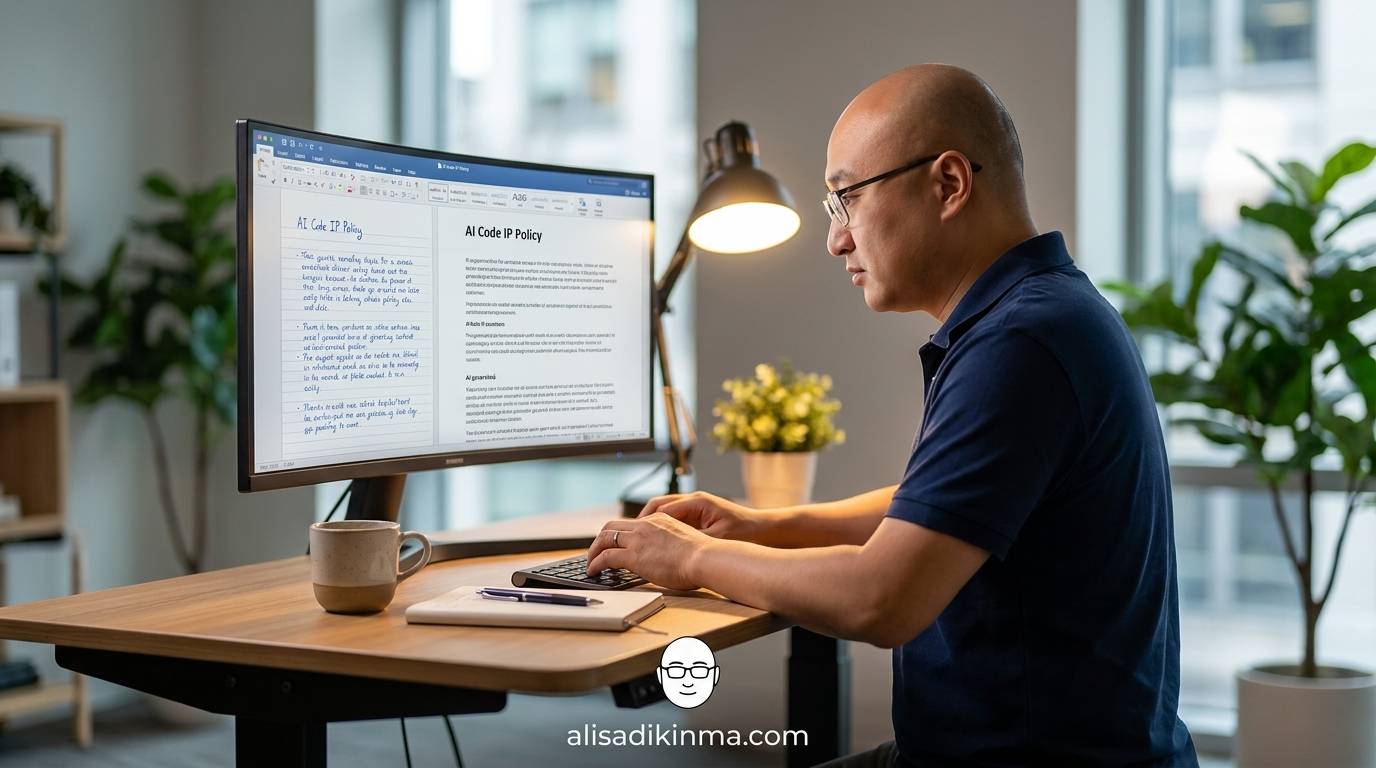
3. Write an AI Code IP policy before you need to defend it in front of a client
What's the problem: Most software development contracts don't include terms about AI-generated code. When a client asks “who owns the rights to this code?” — and they will ask, especially after this story went viral — you need a written answer, not an improvised one.
How to do it: Draft a one-page policy that answers three questions: (1) What AI tools are used in development? (2) How does the team ensure human authorship in the final output? (3) What IP claims does the company make over products built with AI tools? Consult an IP lawyer to finalize — but start drafting it yourself today.
Real example: The U.S. Copyright Office released Parts 2 and 3 of their AI and copyright guidance in 2025 — providing a solid starting framework as a reference for internal policy (Congress.gov, 2025). This isn't a scary document. It's a starting point you can bring to your team meeting this week.
The result: You don't panic when a client asks. You don't improvise in front of investors. And if things get to court — you have documentation, not guesswork.
The Path Forward: What Needs to Change Before AI and Copyright Can Coexist
Remember those 512,000 lines of code that leaked on the night of March 31?
Turns out they didn't just expose Anthropic's source code. They exposed something far bigger: the legal vacuum in which every developer, every startup, and every company building with AI is operating — without knowing exactly where their rights end.
The U.S. Copyright Office already released its Parts 2 and 3 guidance in 2025 (Congress.gov). The EFF already delivered their fair use analysis in June 2025. Courts have started deciding early cases. But the law moves much slower than technology.
Think about it: in your last sprint, how many lines were written by AI without significant modification from you?
The Claude Code leak isn't just a story about Anthropic getting caught off-guard. It's a mirror showing that even the biggest AI companies haven't finished answering the most fundamental question about their own products: who actually owns them?
You need to find that answer for your repository — before someone else finds it for you.
Do your AI code IP audit this week — before the law answers that question for you.
Save this article before your next sprint planning session — it'll change how you see what AI tools are actually producing in your codebase.
FAQ: Your Questions About AI Code Copyright, Answered Straight
Can AI-generated code get copyright protection?
According to the U.S. Copyright Office (January 2025), works predominantly generated by AI without meaningful human creative involvement don't qualify for copyright. Code you copied straight from AI output without substantive review is most likely not legally protected. Documented human creative involvement is the key to your IP protection.
Does the Claude Code copyright leak affect my project?
Not directly — unless you downloaded and used the leaked code. But the indirect impact is far more important: this case is pushing the industry to seriously discuss the legal status of high-AI-content code. If your project uses AI tools to write code without a clear IP policy, right now is the time to create one.
What is a clean-room rewrite and is it legal?
A clean-room rewrite is a technique where developers rewrite code from scratch based on functional understanding, without access to the original code, to avoid copyright infringement claims. In the Claude Code case, this was done with AI assistance in a matter of hours. According to Bean, Kinney & Korman (2026), the legal status of an “AI-assisted clean-room rewrite” has never been decided in any court.