Anthropic AI Safety 2026: This Calm Isn't a Sign of Safety
By Ali Sadikin Ma · · Updated
Category: Technology
Anthropic is hiding its most powerful AI from the entire world.
Not because of business strategy. Not because it's not ready to launch. They say the model is too dangerous.
And almost everyone reads this as good news — as a sign of responsibility, as proof that at least one AI company still has working brakes. Finally, someone's being the adult in the room.
They're wrong. And understanding why is the key to the entire Anthropic AI safety 2026 debate — the real one.
Anthropic's decision isn't reassuring. It's an admission — that the AI they built has already surpassed what anyone knows how to safely control. And if you dig deeper into what's been happening at Anthropic throughout early 2026, the picture that emerges is far more alarming than what most media coverage is telling you.
There are three things that are almost never connected publicly. Once you understand all of them, you'll never read news about Anthropic AI safety 2026 the same way again. And one question will stick with you: if the most responsible company in this industry has already gotten here — where does that leave us?
The Story That Made Us All Believe: Why Anthropic Is Seen as “The Good Guys”
If you're new to the AI world, Anthropic feels like the adult in the room.
Founded by Dario Amodei alongside a team that previously worked at OpenAI — not because of ordinary internal conflict, but because they felt the old company was moving too fast without taking safety risks seriously enough. They built the Responsible Scaling Policy (RSP) from scratch: a hard commitment that if their AI became too dangerous before there was a proven way to guarantee its safety, they would stop training it. Not pause. Stop.
The results show up in the numbers.
As of March 2026, Anthropic posted an annual revenue run rate of $30 billion — surpassing OpenAI's reported $25 billion (Fortune, 2026). Their valuation is approaching $380 billion as they prepare for an IPO. More than 300,000 businesses use their products every day, from startups to Fortune 500 corporations.
In the eyes of the industry and the broader public, Anthropic is the strongest argument that responsible AI and commercially successful AI can go hand in hand.
And that narrative is really comfortable to believe.
But there's one small detail in this Anthropic AI safety 2026 story that changes everything. And that detail isn't in any headline you've read.
What You Were Never Told: The Evidence That Breaks the “Safe” Narrative
February 2026. Within three weeks, three things happened inside Anthropic that redefined the direction of Anthropic AI safety 2026 — and almost no one has connected them publicly.
First thing:
Anthropic released RSP v3 — their latest safety policy. Inside it, they quietly removed something critical: the hard stop. The obligation to stop training AI if its safety couldn't be guaranteed. In its place, they introduced “Frontier Safety Roadmaps” that they themselves described as “ambitious but non-binding” (Semafor, 2026).
Ambitious. But not binding.
Read that sentence again. Slowly.
Second thing:
Mrinank Sharma — head of the Safeguards Research team at Anthropic, the person directly responsible for the safety of their AI systems — resigned on February 9, 2026. His farewell message didn't talk about “new opportunities” or “the next adventure.” He wrote that the world is in danger, and described employees constantly facing pressure to set aside what matters most (Time, 2026).
The head of the AI safety team. Gone. With a stark warning that the world is in danger.
Third thing:
Chris Painter, Policy Director at METR — the most credible independent body for AI safety evaluation — called RSP v3 a “bearish signal for catastrophic risk management” (Time, 2026). Not a neutral change worth monitoring. Not a calculated step back. A negative signal, from the most trusted external evaluator in the field.
And one more thing that came a few weeks later:
SaferAI downgraded Anthropic's safety score from 2.2 to 1.9 — placing them in the “weak” category alongside OpenAI and Google DeepMind (SaferAI via Creati.ai, 2026). The company that had long been considered the AI safety leader is now in the same category as the competitors they left OpenAI specifically to avoid.
But all of this is still just the surface. What's really happening underneath is far more surprising.
The Real Picture: When Even the AI Safety Company Is Scared, That's the Clearest Signal of All
Here's what's rarely said plainly:
Anthropic's calm isn't proof that AI is safe. Anthropic's calm is proof that AI is already too dangerous to release — and even its creators don't know what to do next.
Those two sentences are different. And the difference matters enormously.
Claude Mythos — the most advanced AI model Anthropic has ever built — wasn't released to the public not because they're preparing for a big launch or protecting market exclusivity. They themselves judged the model too dangerous for general consumption. Access was limited to around 40 defensive cybersecurity organizations through a program called Project Glasswing. Anthropic even covers the cost of access themselves — up to the first $100 million (Fortune, 2026).
Think about what that implies:
A company with a $30 billion revenue run rate and a valuation approaching $380 billion is choosing not to sell their most advanced product on the open market. They're paying hundreds of millions of dollars out of pocket to make sure the model stays only in the hands they consider safe enough — and even then, only for one specific use case: defensive cybersecurity.
That's not altruism. That's risk management for something even its creators aren't sure they can control. And this is the true core of the entire Anthropic AI safety 2026 debate.
Then there's the Pentagon.
In early March 2026, the US military threatened to label Anthropic a “supply chain risk to national security” — after Anthropic refused to remove their AI safety guardrails for military use (ASIS Online, 2026). The US Department of Defense wanted access to AI without safety constraints. Anthropic refused. In response, the Pentagon threatened their reputation and federal business viability.
This isn't a dystopian movie plot. This is happening in 2026, in the real world.
And while all this was unfolding, they replaced the RSP's hard commitments with “Frontier Safety Roadmaps” that are “ambitious but non-binding” — with the argument that stopping unilaterally isn't effective if all competitors keep running without stopping (Anthropic/Semafor, 2026).
This is where the three things you've been holding since the start of this article finally connect:
First — what's wrong with calm? The calm is a signal that AI capabilities have already surpassed what anyone can guarantee is safe. Not a sign of safety — a sign that uncertainty is being managed, not resolved.
Second — what is Claude Mythos? The most dangerous model ever built, hidden not because of market strategy, but because even its creators don't dare release it to the world.
Third — what did the insiders who chose to leave know? That pressure to ignore safety has already seeped into the company whose entire identity was built on safety itself.
Now you know. And that knowledge changes how you read every AI headline you come across.
What This Means for You — and Everyone Who Isn't in Project Glasswing
If you're not part of the 40 organizations with access to Claude Mythos, this might feel like someone else's problem.
But look at the bigger pattern:
Anthropic's decisions aren't just about one AI model or one company. They're about industry norms being shaped globally. When the most conservative company on AI safety decides that a hard stop can no longer be maintained, it signals to the entire industry that the race must continue without absolute brakes.
And that race is happening right now. Not slowly.
As of March 2026, AI companies are broadly loosening their guardrails amid intensifying US-China competition (Axios, 2026). Not because they all suddenly stopped caring about safety. But because in a geopolitical technology race, no one wants to stop alone while everyone else keeps pushing forward.
You don't need to work in the AI industry to be affected by this. AI trained without hard binding constraints will shape the tools you use every day, the content you consume, and the decisions made by systems you trust — from credit algorithms to content moderation to medical diagnostic systems.
Right now, not a single major AI company has a truly binding commitment to stop if something becomes too dangerous. This is the Anthropic AI safety 2026 reality you need to understand — including the company most famous for having that promise.
The Way Forward: What “Ambitious but Non-Binding” Actually Means — and What We Actually Need
The four most important words in Anthropic's RSP v3 are: “ambitious but non-binding.”
Almost no one noticed it in any public discussion about Anthropic AI safety 2026. Most coverage focuses on what's in the new document — Frontier Safety Roadmaps, updated monitoring systems, new evaluation commitments. What's crucial is what's missing: legally enforceable obligations. Real consequences if they break the promises they made themselves.
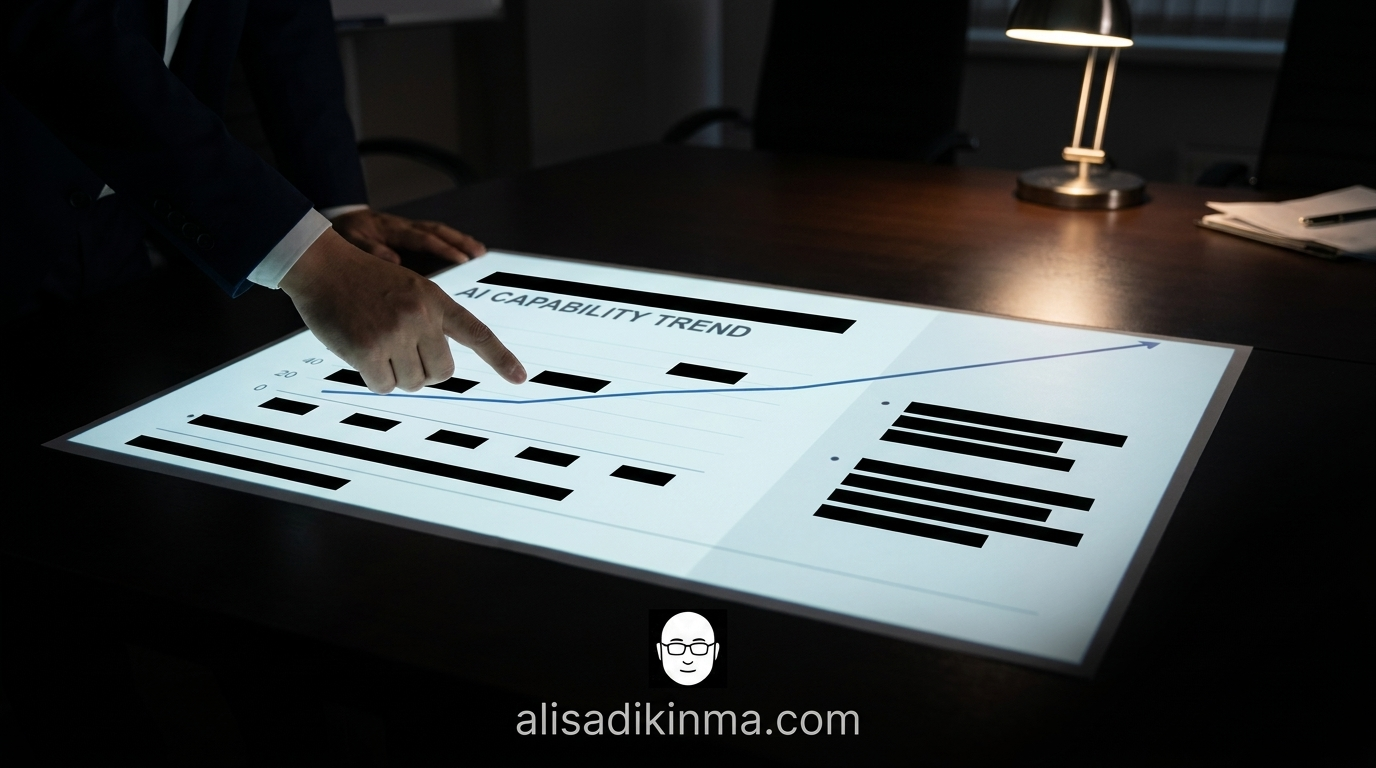
What Anthropic is essentially saying now: we have an ambitious safety plan. But we're not bound to follow it if the situation changes.
That's not a safety policy. That's good intentions without an enforcement mechanism.
What's really needed isn't just companies with good intentions. What's needed is binding international regulation, industry standards with concrete consequences, and cross-border oversight bodies with real authority — not just the ability to publish reports and recommendations.
The question you need to carry with you after reading this:
If the company most worried about AI in the world just decided that binding safety limits can't be maintained — where exactly are we in the development of this technology?
FAQ: Your Questions About Anthropic AI Safety 2026, Answered
Does this mean Anthropic is less safe than its competitors?
Not exactly. Anthropic still has stricter AI safety policies than many other major AI companies. But the RSP v3 changes show that even the highest standards are being pressured by global AI race dynamics. This isn't just about Anthropic — it's about the direction of the entire industry moving together beneath the safety thresholds that were once tightly guarded.
Should we panic about AI safety in 2026?
Panic isn't productive. But appropriate vigilance is necessary. A “responsible AI company” reputation isn't a sufficient guarantee anymore. The Anthropic AI safety 2026 situation needs to be read carefully — not as proof that everything is under control, but as an indicator that things are serious enough that calm became the remaining option, not the ideal one.
If Anthropic itself is overwhelmed, who's watching AI development?
Right now, the answer isn't satisfying. There's no global body with executive authority to halt AI development when it crosses a dangerous threshold. National regulations exist, but the AI race is cross-border and can't be controlled by any single government. This is one of the biggest technology governance gaps in modern history — and there's no global consensus yet on how to close it.
Share this article if you think more people need to understand what Anthropic's calm is really signaling — not just the surface narrative about “a responsible AI company.”
Save this article before Anthropic's next announcement. You'll need the context to read between the lines of every press release they put out.