AI Demand Inflated 2026: Why Is Anthropic the Only Honest One?
By Ali Sadikin Ma · · Updated
Category: Technology
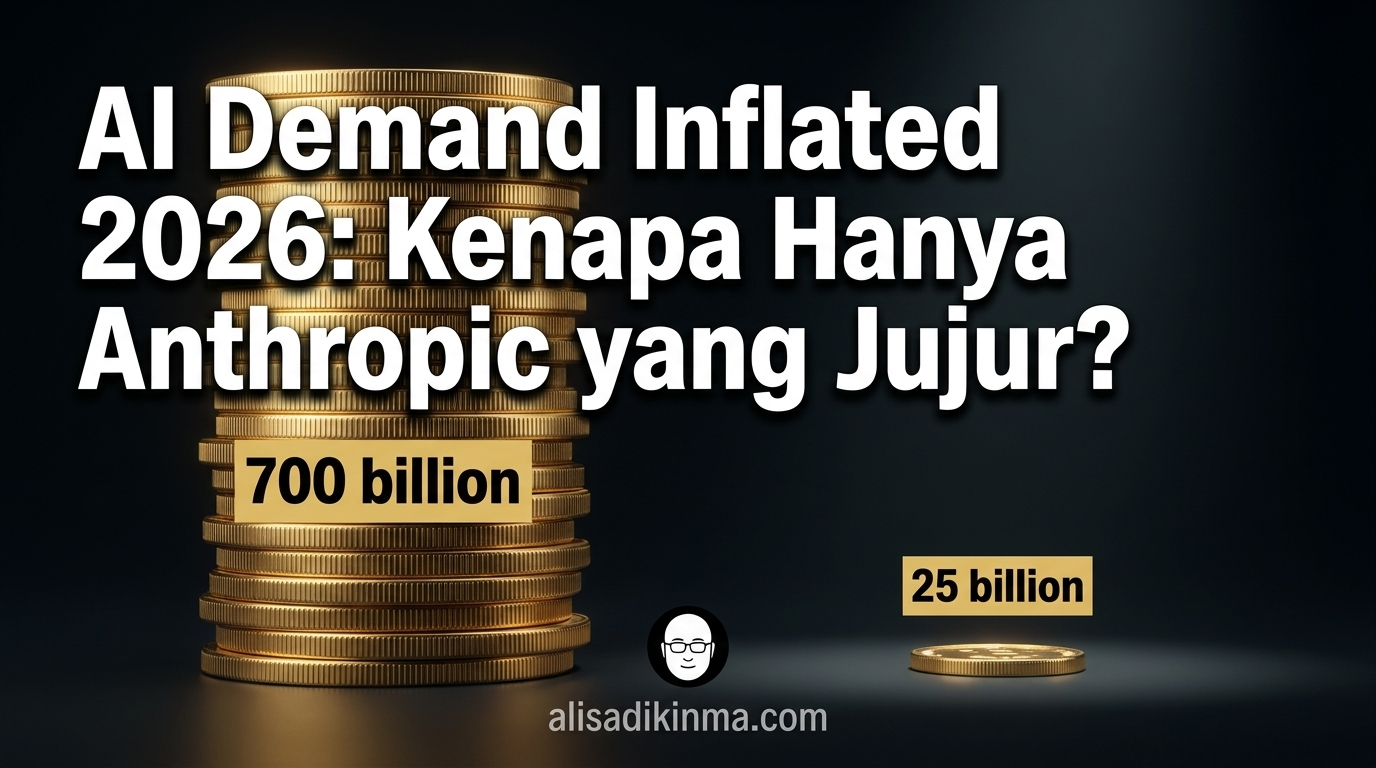
AI companies spent $700 billion this year.
Total AI revenue? $25 billion.
That's the root of the AI demand inflated 2026 phenomenon that almost nobody talks about honestly.
For the past two years, the dominant narrative has been that AI is transforming everything — and anyone who's not in now will get left behind. The world's largest hyperscalers, from Amazon to Google, backed it up with hard-to-believe numbers: more than $600 billion in AI infrastructure spending in 2026 alone — up 36% from last year, according to IEEE ComSoc.
But there's one company quietly building a completely different strategy from everyone else.
And there's data behind this dominant narrative that almost never makes the headlines — data that should change how you make AI decisions this year.
If you're an investor, founder, or executive weighing a big AI bet — this might be the only analysis that isn't trying to sell you something.
The Consensus Narrative: Why Everyone Believes AI Demand Is Infinite
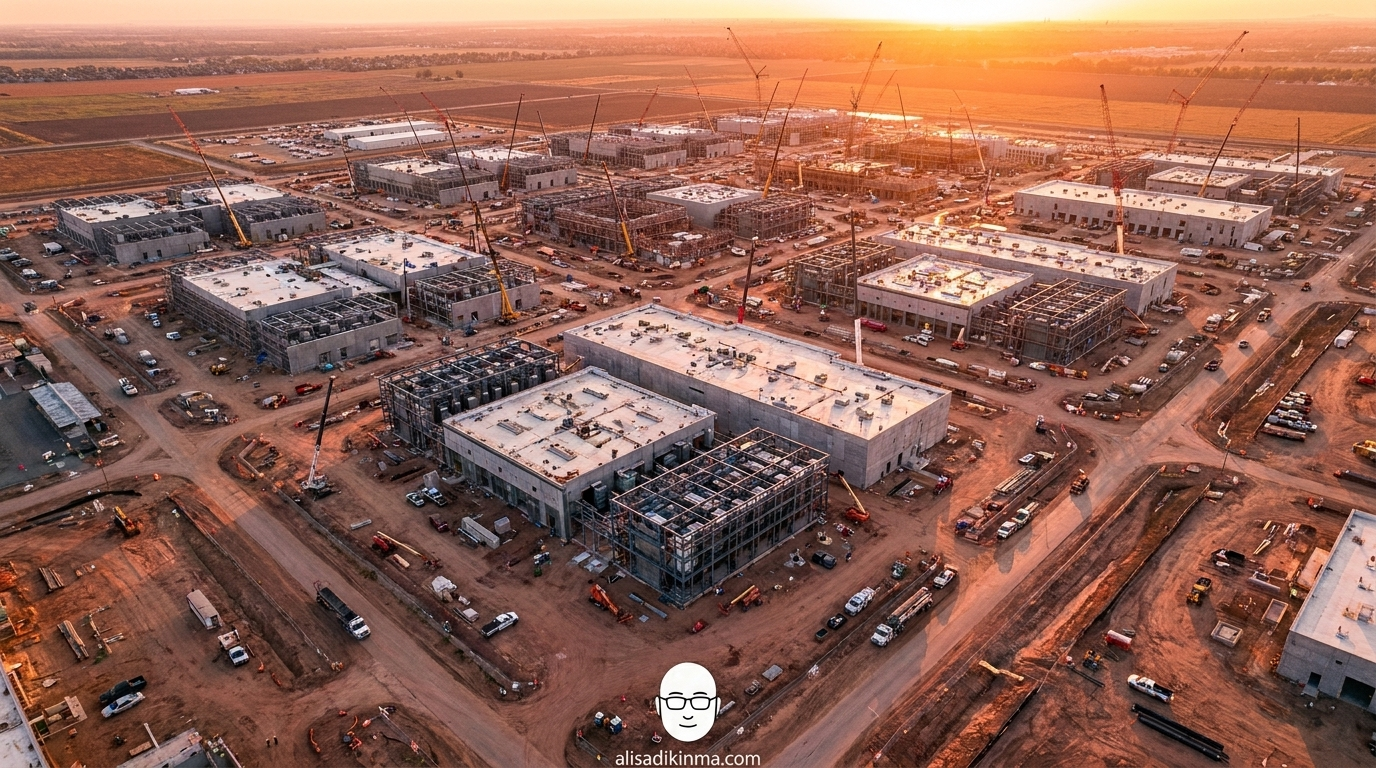
The market has reached a consensus that AI demand is unlimited — backed by the fact that Amazon, Google, Meta, and Microsoft are spending nearly $700 billion on AI infrastructure in 2026, with capex hitting 45-57% of their revenue according to CreditSights, matching the capital intensity of heavy utility industries. These bullish projections didn't come from nowhere.
CEOs talk about unprecedented transformation. Wall Street analysts keep raising their targets. New language models drop every few months. The infrastructure is real and visible — new data center buildings going up in dozens of cities worldwide.
Logically, it all makes sense:
If the most capital-rich companies on the planet are betting hundreds of billions of dollars, there must be demand that justifies those bets. A company the size of Amazon doesn't miscalculate that easily, right?
Well, that's exactly where most analysis stops — at the surface of big capex numbers, without digging into what's happening on the other side of that equation. The steelman is solid. But the data behind it tells a very different story.
Here's what happens when you actually look at the numbers:
The Numbers Nobody Wants to Talk About
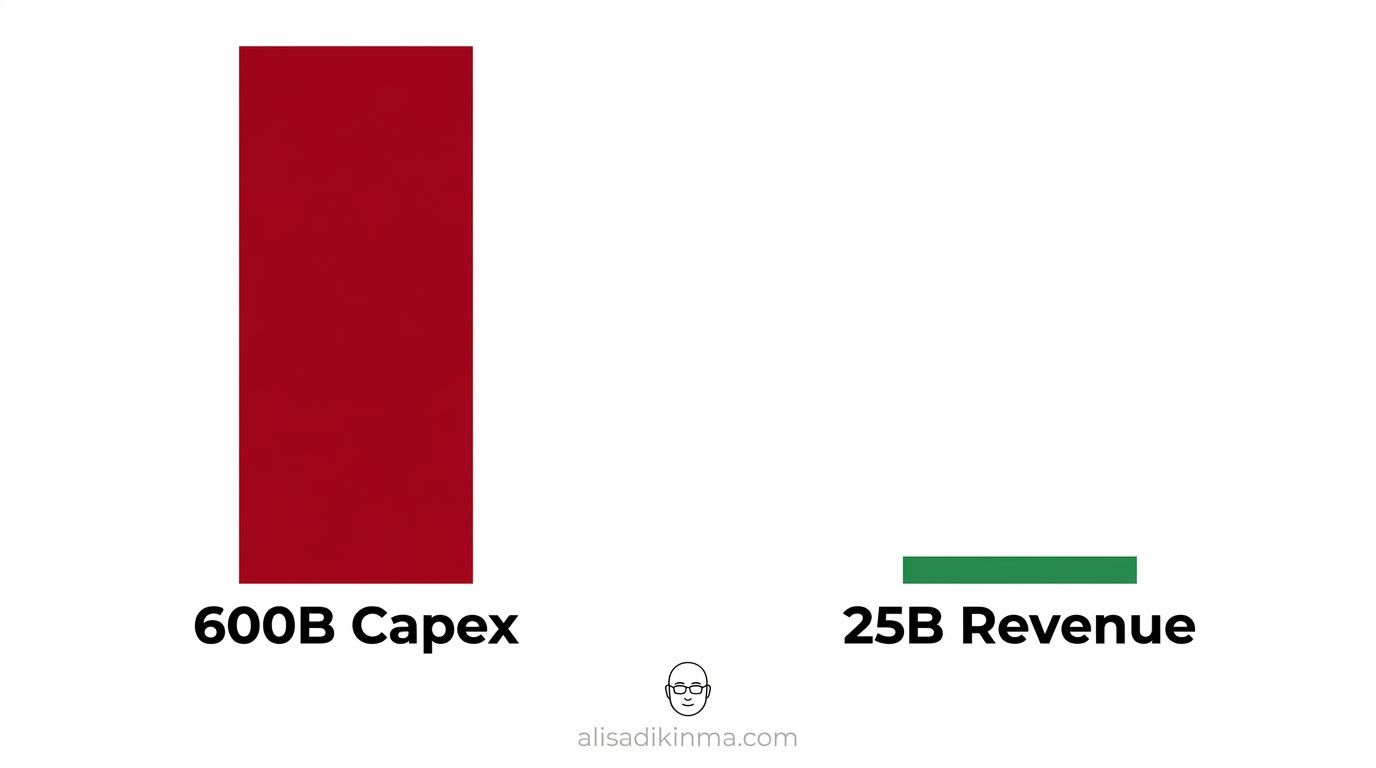
Hyperscalers spent more than $600 billion on AI infrastructure in 2026, while total industry AI service revenue was only $25 billion in 2025 — a $575 billion gap. The National Bureau of Economic Research (February 2026) found 90% of companies aren't seeing any measurable productivity impact from AI. Only 25% of AI initiatives reached expected ROI, according to Futurum Group. This is what doesn't make the headlines.
Hold on. The next numbers matter — read these slowly.
NBER published a study in February 2026 finding that 90% of companies reported zero measurable impact from AI on their workforce productivity. Ninety percent. Even as those same executives are still projecting that AI will increase productivity by 1.4% and output by 0.8% in the future.
They're spending billions on something they can't yet measure the results of.
And the deeper you dig into the data, the heavier the picture gets:
MIT noted that 95% of generative AI projects fail inside companies — not because the technology doesn't work in the lab, but because the implementation can't be executed in the real world.
According to Futurum Group and CreditSights (2026), only 25% of AI initiatives deliver ROI as expected. Less than 20% successfully scale across the entire organization — meaning most companies are still stuck at proof-of-concept and can't make it to real production.
And OpenAI — the current AI revenue leader — is still projecting $74 billion in operating losses in 2028 alone, according to NPR. Even the market leader isn't profitable yet.
Those four data points aren't coincidences. They paint the same pattern: infrastructure investment is running way ahead of real demand.
So why is almost nobody talking about what this all means?
Because one company spotted this pattern earlier than anyone else — and rebuilt its entire business model as the answer.
3 Concrete Ways Anthropic Is Pricing for Reality, Not Fantasy

Anthropic hit $30 billion ARR in March 2026 — growing 1,400% year-over-year from $1 billion in December 2024, according to The AI Corner. In a market pouring $600 billion in capex against unverified demand, Anthropic's growth is built on real usage through per-token billing. Three structural decisions prove it.
If the AI market corrects, one company has already built itself to stay standing. Here are exactly three things they're doing differently from everyone else.
1. Per-Token Billing: Revenue That Reflects Real Usage
Anthropic shifted from flat-rate enterprise to per-token billing — every dollar that comes into their treasury reflects actual usage, not a vendor's assumption about how much you'll consume.
How it works concretely: every API request is billed based on the number of tokens processed — both input and output. No enterprise bundle that makes you pay for unused capacity. And no financial incentive for Anthropic to inflate usage projections to investors or prospective customers.
According to GetPanto.ai and Business of Apps (2026), this model is different from competitors who still use usage projections as the basis for their enterprise pricing. Competitor revenue might reflect overly optimistic market expectations — not usage that's already actually happened in the real world.
The result: genuine alignment between Anthropic and its customers. If actual usage drops, Anthropic's revenue drops too. No enterprise contract that pays but doesn't consume can hide a deeper demand problem for months.
2. A CEO Who Acknowledges Uncertainty Out Loud
Dario Amodei, CEO of Anthropic, said something you almost never hear from any AI industry leader.
In an interview with CNBC (April 2026), Amodei spoke directly without hedging: Data centers take one to two years to build, so companies are committing billions now for demand they cannot yet verify. If you are off by a couple years, that can be ruinous.
What that practically means: the hundreds-of-billions-of-dollars infrastructure bets being made right now — for demand that can't yet be empirically verified — could be a financial catastrophe if the timing slips by just two years. And slipping two years in a technology cycle is extremely common.
Other AI CEOs are selling dreams to investors. Amodei is selling probabilities to executives who have to make real decisions with real money. That difference is very material if you're weighing a major investment in AI infrastructure, mass engineering hiring, or long-term strategic partnerships this year.
The result: trust from enterprise buyers and institutional investors who are tired of projections that never materialize. In an industry drowning in overselling, honesty about uncertainty is an incredibly valuable competitive advantage.
3. Growth Backed by Data, Not Just Narrative
Anthropic doesn't just talk about realistic demand — they prove it with a revenue trajectory you can verify number by number yourself.
The journey from $1 billion to $30 billion ARR in 15 months wasn't driven by inflated VC valuations or excessive media hype. It's recurring revenue from customers who are genuinely using the product and paying per token they consume every day.
According to The AI Corner, Anthropic surpassed OpenAI's revenue run-rate in early 2026 — even though OpenAI has a significantly larger brand recognition advantage in the market. Not because Anthropic went more viral on social media — but because their per-token model locks in customers who are actually active users, not just subscribers who go dormant after onboarding.
The result: a business model that's far more resilient to market corrections. Usage-based revenue is far more stable and predictable when investors start questioning the valuations and growth expectations that have been projected too high for too long.
What This Means for You and Your Decisions This Year
More than half the companies making big AI investments haven't measured ROI in any concrete way — and many won't be able to, because they didn't set the right metrics from the start of evaluation. You don't want to be in that position when the market starts questioning valuations.
Think about the last AI tool your company evaluated or bought.
Was the pricing based on what you actually use — or based on the vendor's assumption of how much you'll consume month after month?
If something's felt off about the AI demand narrative up until now, you're right to feel that way.
Sam Altman, CEO of OpenAI, admitted to Fortune in August 2025 that investors overall are too excited about AI. Not from a skeptical analyst or outside-industry critic — but from the person who benefits most from that narrative staying strong.
And Amazon is now facing projected negative free cash flow of $17-28 billion in 2026 from its $200 billion capex commitment, according to Morgan Stanley and Bank of America via CNBC. Those aren't numbers that come out of a healthy, sustainable AI ecosystem.
In the context of AI demand inflated 2026, what needs adjusting isn't whether you believe in AI's long-term potential — it's how you distinguish signals of real demand from what's been inflated by market expectations.
How to Read Real Signals Before Everyone Else Does
We started with a confusing gap: $700 billion spent, $25 billion earned. Now you've got a concrete framework to understand it — and three questions you can use right now.
First: is the revenue of the AI company you're considering based on real usage or projected contracts? Second: does the CEO acknowledge uncertainty openly or just sell vision without clear caveats? Third: is their capex supported by healthy free cash flow or subsidized by unproven future demand assumptions?
Amazon is projecting negative FCF of $17-28 billion in 2026, according to Morgan Stanley and BofA. That's a signal visible long before mainstream media starts reporting on it seriously — and you now know how to read it.
The real question isn't whether AI will matter long-term.
The actual $700 billion question is: will the companies building its infrastructure survive long enough to see it become real?
Now you know which one has already answered that question.
FAQ: AI Demand Inflated 2026 — Answers to the Real Questions
Is AI demand actually inflated, or is this just hype about the hype?
The data shows a real imbalance. Hyperscalers spent more than $600 billion on AI infrastructure in 2026, but total industry AI service revenue was only $25 billion in 2025, according to Futurum Group and CNBC. The NBER study from February 2026 found 90% of companies aren't seeing measurable productivity impact from AI. This gap between investment and real output suggests current demand is still more driven by expectations than proven widespread usage.
Why is Anthropic's per-token billing model considered more realistic than competitors?
Per-token billing means Anthropic only collects revenue from usage that actually happens. Competitors with flat-rate enterprise pricing can charge based on access or projections, not actual consumption. According to GetPanto.ai (2026), this model creates a direct alignment between Anthropic's revenue growth and real demand — different from assumption-based models that can inflate revenue numbers on paper.
What should businesses do if AI demand corrects in 2026-2027?
Audit all AI contracts based on actual usage, not purchased capacity. Prioritize vendors with transparent usage-based pricing. Measure ROI with concrete, trackable metrics — not transformation potential. And watch whether hyperscalers start redirecting capex — that's always the earliest demand correction signal, visible in their financial reports long before mainstream media starts covering it seriously.
Subscribe to this newsletter for AI analysis that cuts through the hype — no cheerleading, just data.
And save this article before your next strategy meeting or AI investment discussion. It'll change the questions you ask in the room.